May 14, 2026
Long before he became famous for documenting the far north, award-winning photographer and cinematographer Martin Greguš Jr. was a curious child paging through stacks of National Geographic magazines.
Inspired by his father, a photographer, he picked up a camera for the first time at age eight.
Greguš has travelled to the Canadian Arctic more than 40 times — half of those trips were to the region around Baffin Island.
“There are so many stories, not just people stories, but wildlife stories,” Greguš said. “So I kept coming back year after year, eventually building really close relationships with those Inuit communities.”
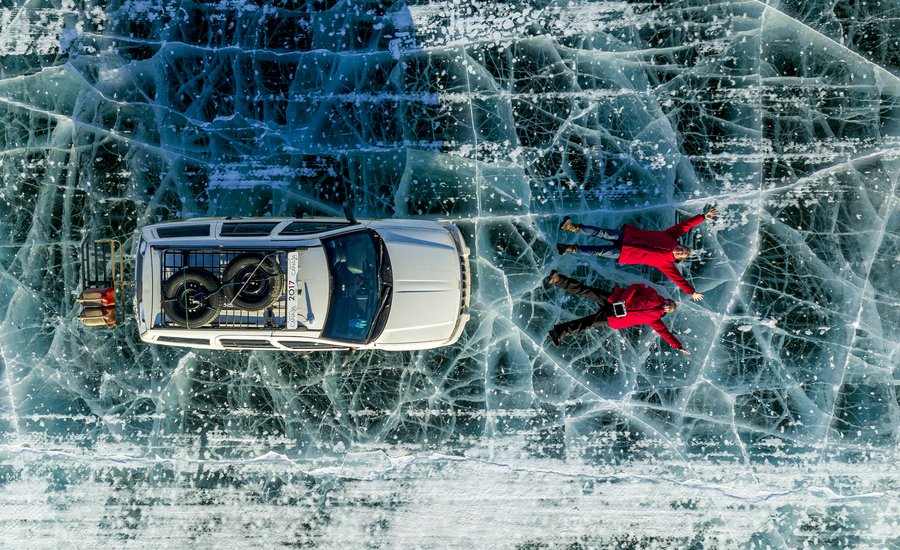
Martin Greguš Jr with his father. Inspired by his father, a photographer, he picked up a camera for the first time at age eight.(Credit: Martin Greguš Jr.)
His first trip to Baffin Island was in 2015, when he accompanied his father on a project to document every community in Canada for the country’s 150th anniversary. The experience of camping on the sea ice in the remote north stuck with Greguš.
With over 700,000 followers, Greguš’s Instagram page showcases some of his award-winning work, including pieces featured in National Geographic and projects for Disney, BBC, and Netflix. He’s won numerous awards, including Wildlife Photographer of the Year from the Natural History Museum.
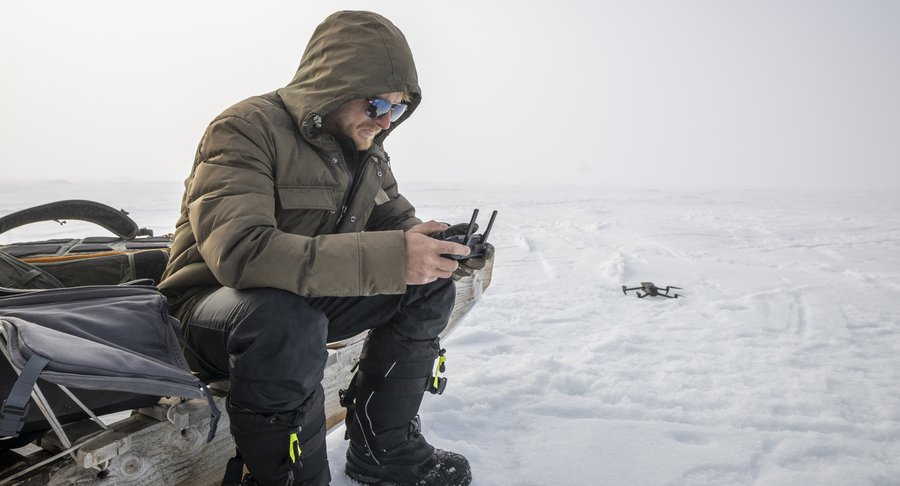
With over 700,000 followers, Greguš’s Instagram page showcases some of his award-winning work. (Credit: Martin Greguš Jr.)
Greguš also works with adventure companies to coordinate logistics and camps in the Arctic and serves as an expedition guide. At TEDxCapilano, he shared his experience on the 33 Days Among the Bears expedition, where he spent more than a month living near polar bears.
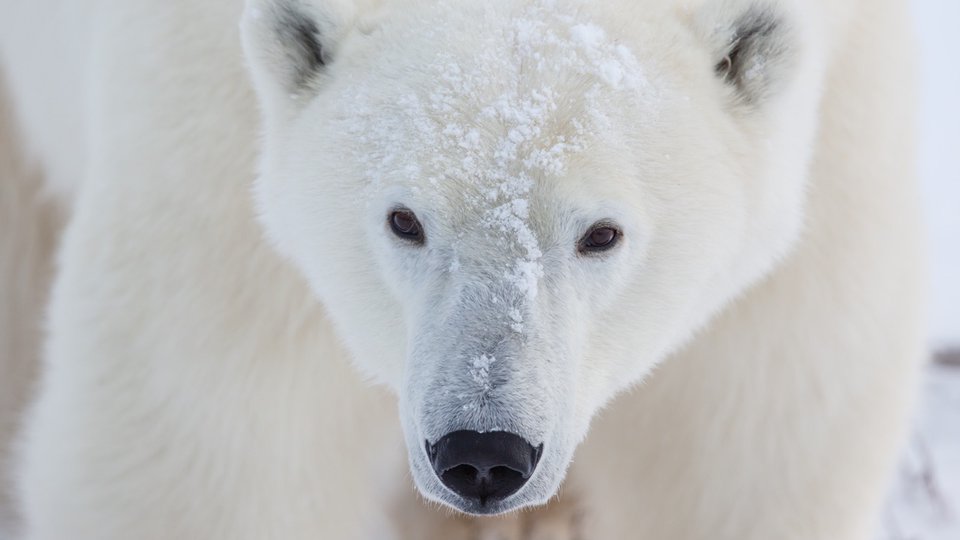
Some of his most famous images feature those enormous animals, including an iconic drone shot of a bear napping in a field of purple and magenta flowers, a photo of a swimming bear with a splash seemingly frozen midair, and one of a mother nursing her two cubs.
“Every time I think of a place,” said Gregus, “I see the pictures in my head of what that place could produce.”
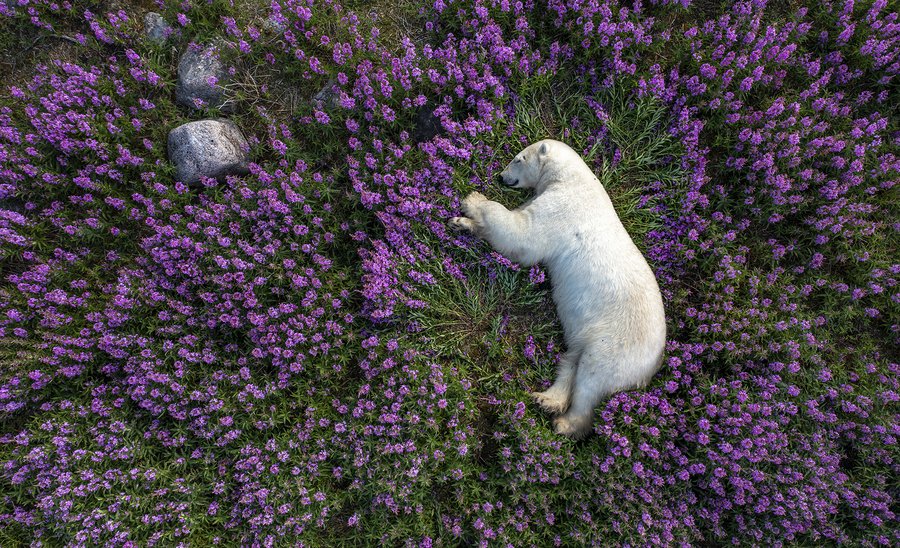
Iconic drone shot of a bear napping in a field of purple and magenta flowers. (Credit: Martin Greguš Jr.)
Greguš often works alongside fellow Vancouverite Thomas Gasior, a longtime collaborator who has joined him on photographic and cinematic projects. Together, they work to capture still and moving images of polar bears, narwhals, walrus, penguins, and other wildlife, as well as spectacular Arctic and Antarctic landscapes.
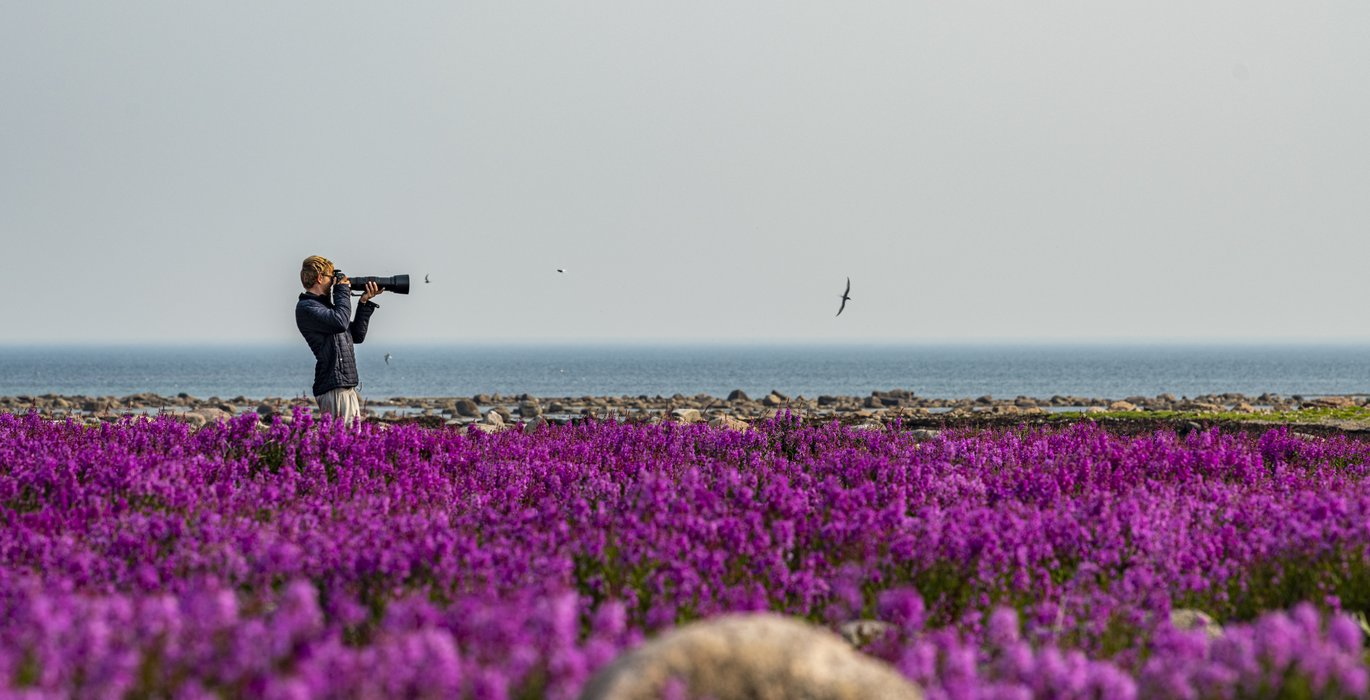
When photographing wildlife, Greguš pilots a drone for wider context shots, movement, and to provide a sense of scale, while Gasior focuses on long-lens work from the ground.
“That split helps us cover the same moment from two perspectives — close, cinematic behavior on the ground and big environmental storytelling from above,” Gasior said.
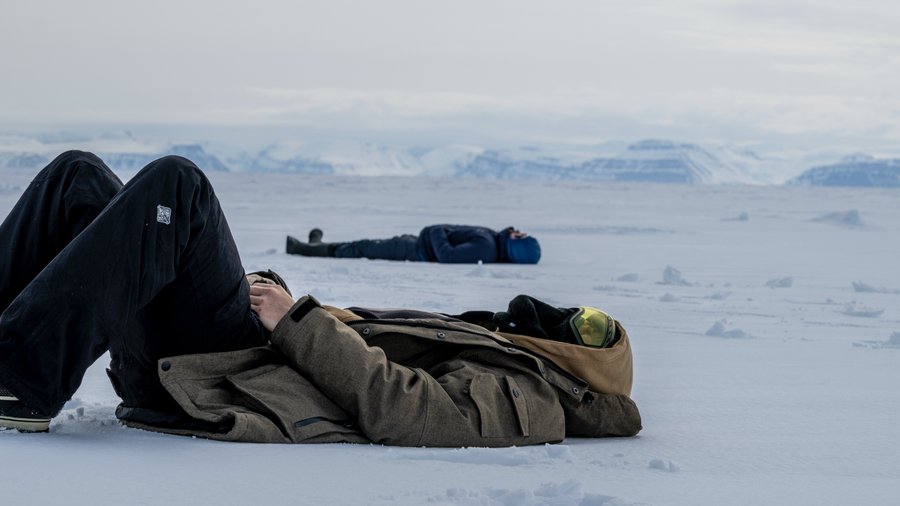
Greguš often works alongside fellow Vancouverite Thomas Gasior, a longtime collaborator. (Credit: Martin Greguš Jr.)
Gasior also focuses on behind-the-scenes work, including organizing and backing up footage, preparing cameras, and post-production editing and finishing.
“A big part of my role is making sure we can work efficiently in a remote environment — so I handle a lot of the technical execution and logistics: planning the kit, keeping setups practical and lightweight, managing media and batteries, audio, filters, rigging, cables, and troubleshooting so nothing slows us down when the moment happens.”
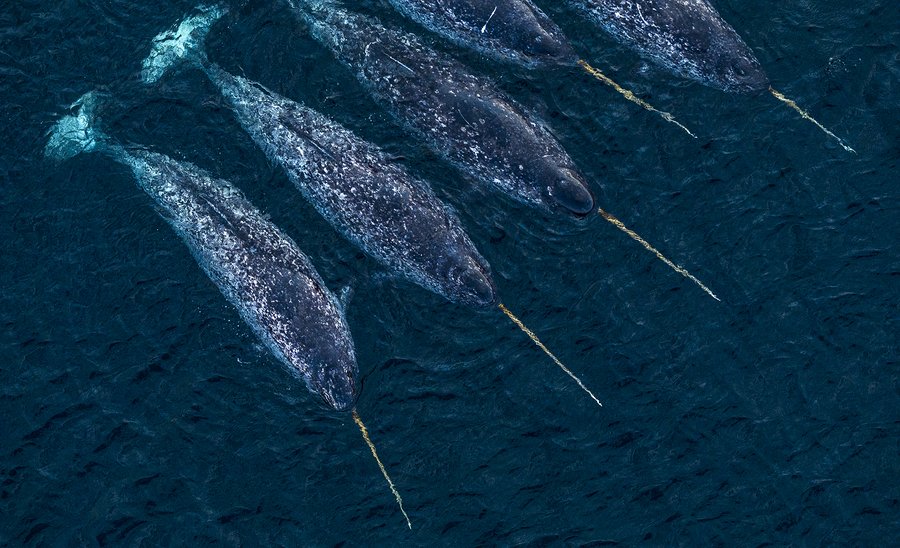
When photographing wildlife, Greguš pilots a drone for wider context shots, movement, and to provide a sense of scale, while Gasior focuses on long-lens work from the ground. (Credit: Martin Greguš Jr.)
Beyond their work in the Arctic, Greguš and Gasior have also turned their attention to Antarctica. On a recent trip to the Ross Sea aboard Aurora Expeditions’ ship, Douglas Mawson, they captured wildlife such as penguins, leopard seals, and whales, and stayed up until the wee hours watching light transform the ice as the sun dipped low on the horizon.
Travelling to remote stretches of the Arctic can be time and resource-intensive, so Greguš typically begins conversations with local contacts a year or two before the shoot. He seeks out recommendations for local guides, bear guards, boats, and cabins or huts to rent during his time in the field.
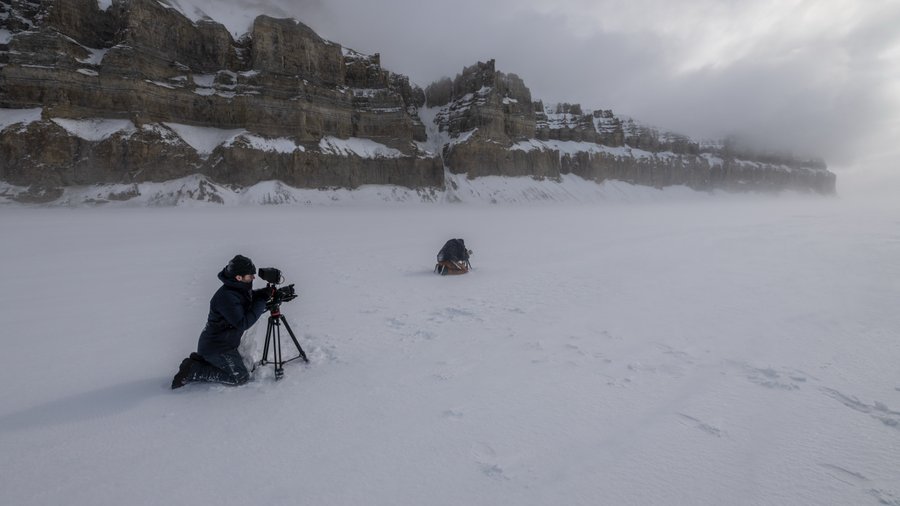
Travelling to remote stretches of the Arctic can be time and resource-intensive. (Credit: Martin Greguš Jr.)
Furthermore, the logistics of operating in such isolated regions are formidable.
Greguš and Gasior travel with cases of camera bodies, lenses, video equipment, tripods, drones, and underwater gear. They also pack wetsuits, snorkelling equipment, camping supplies, first aid kits, food, and cold-weather clothing. In many areas, safety equipment is essential, including bear deterrents ranging from bear bangers to firearms.
However, Greguš said cost is the main challenge they face.
“The poles are the most expensive places to visit on the planet. A very small shoot can turn into a $50,000 project very quickly.”
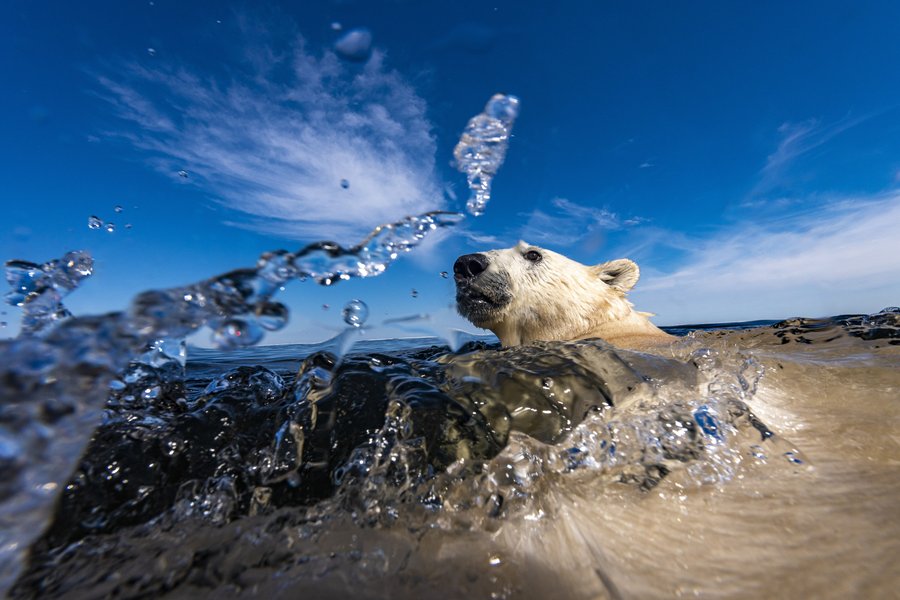
The logistics of operating in such isolated regions are formidable. (Credit: Martin Greguš Jr.)
The rapidly changing climate in the polar region is also a contributing factor to those costs. Since seasons are less reliable, choosing the right time for shoots has also become more unpredictable. For example, while planning a project to photograph and film narwhals, Greguš had to pore through 20 years of Arctic ice imagery trying to strategize the best time to go. He says he found that some years the ice melts in early June, while in other years it won’t melt until late July.
“It used to be pretty predictable, so you could go for two weeks and nail it,” he said. “Now you have to almost go for four or five weeks and still maybe not nail it,” he said. “ So the costs just go exponentially up, because you have to go for longer.”
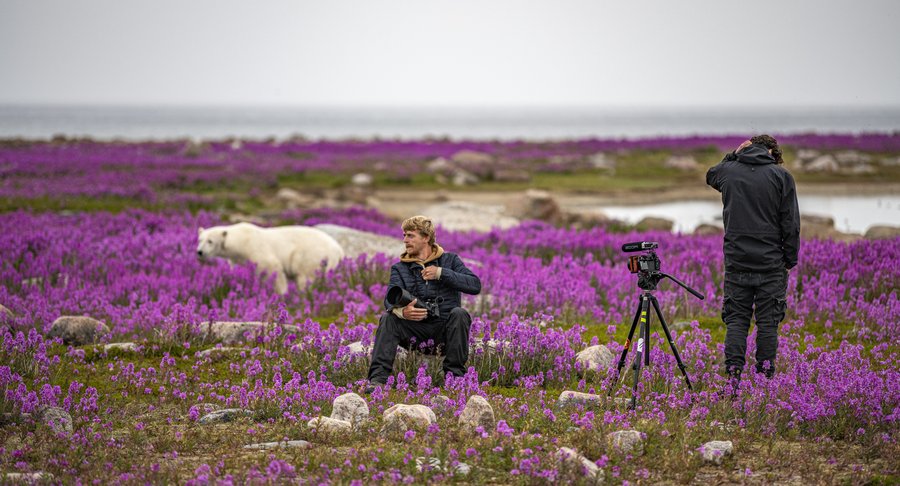
Since seasons are less reliable, choosing the right time for shoots has also become more unpredictable. (Credit: Martin Greguš Jr.)
The unpredictable conditions also make field conditions challenging.
“It changes where we can safely travel, what access points are usable, and how we schedule our days,” Gasior said. “We build in more flexibility, make conservative decisions around safety, and stay ready to pivot—because the difference between a productive shoot day and a shutdown can be a sudden change in wind, visibility, temperature, or ice conditions.”
This summer, Gasior and Greguš plan to return to Baffin Island to gather more footage and aspire to photograph narwhals underwater, a rare feat. They hope the project will help people learn about, and connect with, the Arctic.
“My goal is always to bring back footage that’s not only visually strong, but respectful and honest, “Gasior said, ”something that helps people feel connected to these animals and environments.”