September 17, 2026
ArcticNet is investing $9.3 million in Indigenous- and northern-led research across Inuit Nunangat and the broader Canadian North, funding 13 projects and expanding research management and governance capacity across the region.
The investment is through ArcticNet’s North-by-North program, which directs funding to Indigenous governments and organizations, northern post-secondary institutions, and northern research centres.
Across the 13 projects, 25 organizations are represented. This approach reflects a broader shift in how Arctic research is conducted in Canada: moving decisions about research priorities, funding, and methods closer to the communities where the research takes place.
For ArcticNet CEO Dr. Pierre Bilodeau, putting resources directly into northern hands is an important departure from how Arctic research has traditionally been funded.
In the conventional model, Bilodeau explained, a researcher at a southern university might develop a hypothesis and research project before travelling north and engaging with the people living in the region.
That approach can overlook the diversity of northern regions and communities, where meaningful engagement means understanding the local context and building relationships with the communities and people connected to the issue.
“There’s not only one North, there’s many different Norths,” Bilodeau said. “Depending on the problem that you want to face, you have to talk to the right people in the right environment.”
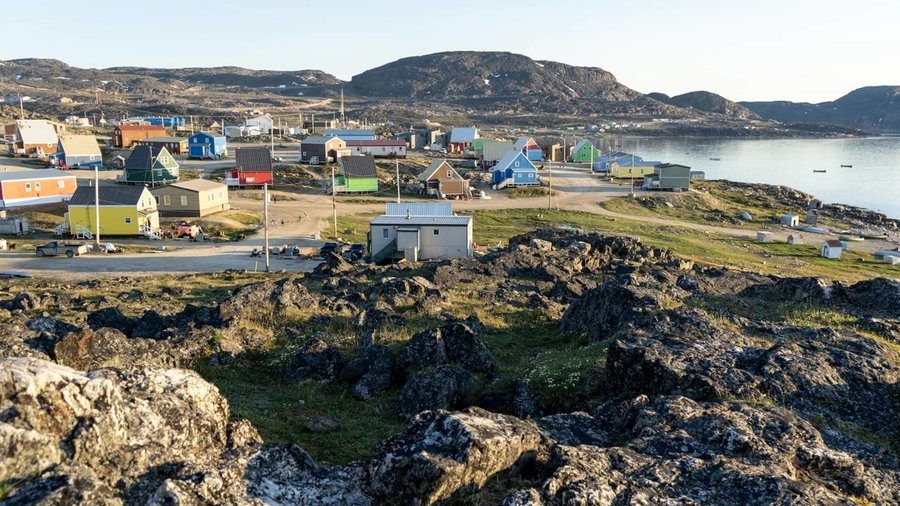
ArcticNet's funding approach reflects a broader shift in how Arctic research is conducted in Canada. (Credit: ArcticNet
Through the North-by-North program, ArcticNet instead works with northern communities and institutions to identify research needs and adapt funding models, timelines and priorities accordingly.
The $9.3 million is distributed through five funding streams.
The Inuit Qaujisarnirmut Pilirijjutit program, described by ArcticNet as the first Inuit-led, governed, and directed research program, will receive $1.6 million over three years for seven projects approved by the Inuit Research Management Committee. These projects will support better decision-making in areas such as resource management, health, housing, infrastructure, and harvesting by documenting Inuit knowledge and strengthening research and observational capacity.
One of the funded projects is based in Baker Lake, Nunavut, where the funding will allow the community to bring diabetic retinopathy screening directly into the community. The program grew out of concerns raised by community members and frontline health workers about rising diabetes rates and barriers to timely screening.
“Access to diabetic eye screening in remote communities is limited and often depends on visiting specialists,” said Autumn Watson, a team member of the Baker Lake Program.
She added that the funding gives the community an opportunity to shape how the screening service and research work.
“Through this initiative, Baker Lake is able to test a community-based model while building the local capacity needed to support it over the longer term.”
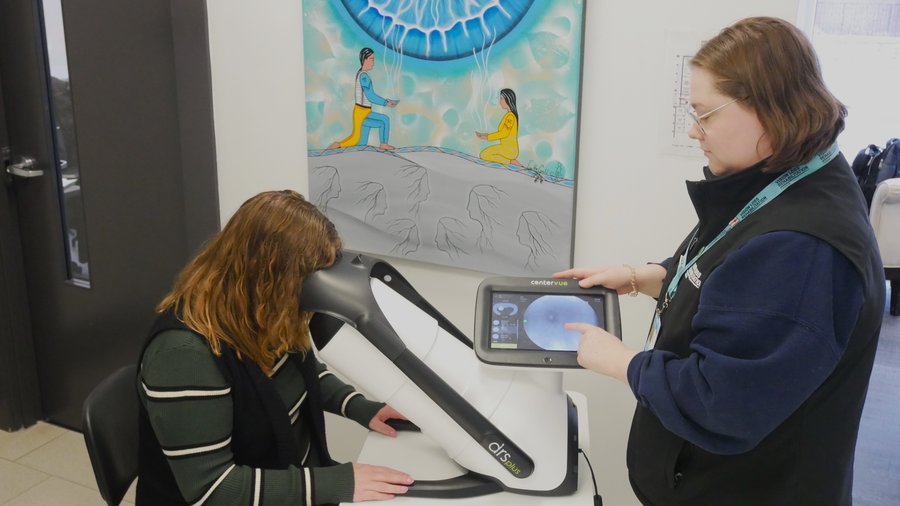
One of the funded projects is based in Baker Lake, Nunavut, where the funding will allow the community to bring diabetic retinopathy screening directly into the community. (Credit: EHSI)
Another $2.4 million over four years will support the Northern Research Leaders Program (NRLP) to build research leadership and institutional capacity at Nunavut Arctic College, Yukon University, and Aurora College.
A new First Nations funding stream, the First Nations Research Program (FNRP), will receive $950,000 for community-led research, including monitoring and preservation of the Bathurst caribou herd and development of a Yukon First Nations data strategy.
A further $3.6 million over five years will be invested across Inuit Nunangat, along with $750,000 for Yukon, the Northwest Territories, and Eeyou Istchee to strengthen the people and organizations responsible for managing and overseeing research.
These investments will also strengthen operational capacity and support the long-term sustainability of regional research initiatives—a critical part of changing who holds authority within northern research.
“It’s also putting the money directly in the hands of the local people, the Northerners, so that they have control over the resources, what’s happening, the protocol and methodology that they want to use,” Bilodeau said.
This model extends local control beyond how research is conducted to questions of who controls the information and knowledge it produces. It intersects with a growing discussion around Indigenous data sovereignty: the principle that Indigenous Peoples should have authority over information and data concerning their communities, lands, and knowledge.
“It changes where the research starts, who it is accountable to, and who the resulting data belongs to,” Watson said.
For ArcticNet, that control can begin even before data is collected. It includes deciding which questions should be researched in the first place and who controls the resources used to answer them.
These investments will also strengthen operational capacity and support the long-term sustainability of regional research initiatives. (Credit: Canva)
Historically, Bilodeau said, Canadian research funding has largely been directed to universities and university researchers. Northern organizations might participate as partners, but control generally remained with the institution receiving the funding.
“Through the way that we’ve been doing it with North-by-North, it was essential for us not to give the money to the university professor, but to give it to the local researcher and then have the local researcher or knowledge holder engage with the university professor if it makes sense for them.”
ArcticNet itself grew out of the university-centred model it is now working to change. Established in 2003 as a Network of Centres of Excellence, ArcticNet initially operated largely through academic researchers working in the North. Inuit representatives were involved in its governance from the beginning, but Bilodeau said most research projects were still driven by academic researchers.
Over time, that has changed. The organization has introduced mechanisms that give northern researchers, Knowledge Holders and institutions greater control over funding and project selection, including regional evaluation alongside scientific review. A project must demonstrate scientific quality, but it must also show alignment with local communities, include local participation, and produce research that can be applied locally.
“If a project is scientifically strong but isn’t locally applicable, then it won’t be accepted,” Bilodeau said.
The Baker Lake project illustrates what that local applicability can look like in practice.
“The research will examine community perspectives on diabetes awareness, screening, treatment, and emerging health technologies, while the screening itself provides an immediate health benefit,” Watson said.
She added that community members will decide key research questions, methods used, ways of engaging the community and how Inuit knowledge and perspectives will be incorporated into the data analysis or resource produced.
“This community-led program ensures that results are interpreted through a cultural lens and that insights are grounded in the values, lived experiences, and knowledge systems of the community,” she said.
Bilodeau stated that this shift also raises a broader question about how research success is defined, and who makes that determination.
Academic research is commonly measured through indicators such as publications, impact