November 27, 2025
The traditional roles of gender in Inuit communities support the maintenance of their values, specifically prioritizing collective wisdom in decision-making and intergenerational harmonious living (Ferrazi et al. 2019). Yet, in contemporary governance and research across Inuit Nunangat, Western ideas of gendered labour have overshadowed these values, often sidelining Inuit women from leadership roles in managing food and wildlife systems (Natcher 2013).
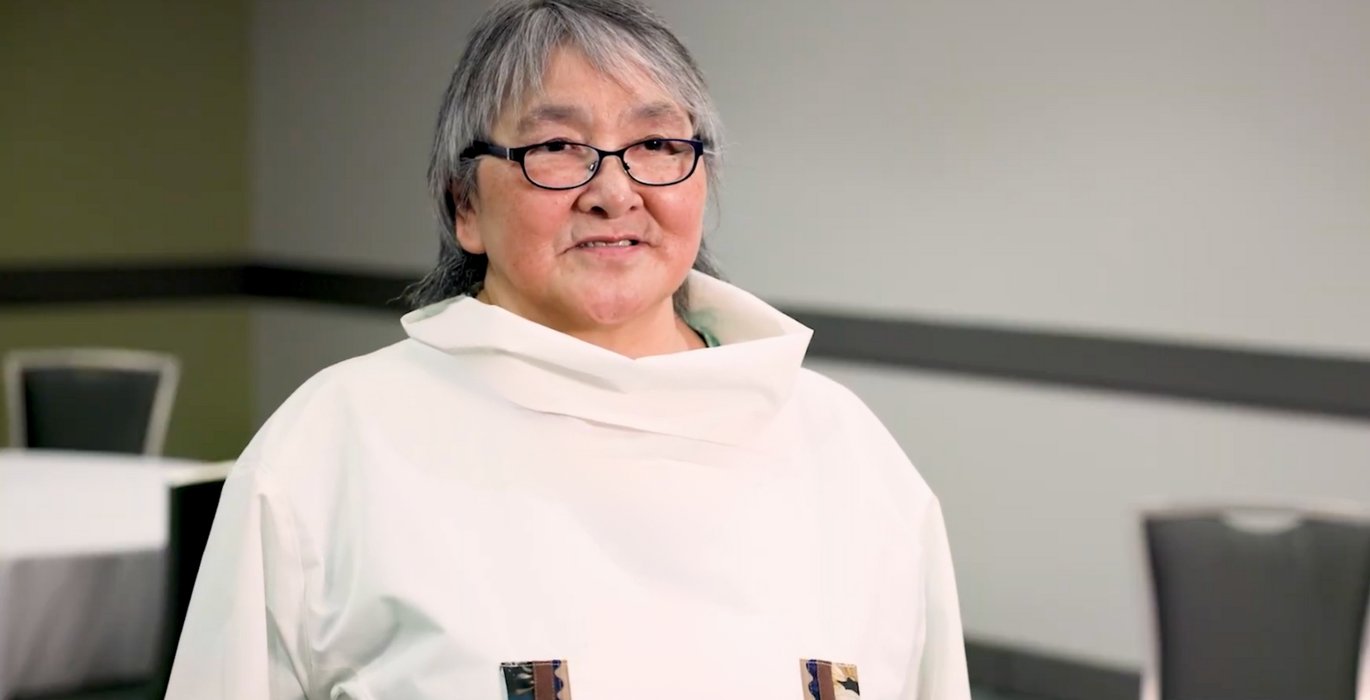
In Taloyoak, Nunavut, a group of women, led by mentors like Elizabeth Ahlogoak Aiyout, are working to change that. Through workshops, interviews, and community-led initiatives, they are reclaiming space for women’s knowledge in food processing, education, and decision-making. Arctic Focus speaks with Aiyout about the movement to support Inuit women’s leadership in wildlife-food systems, and the importance of culturally grounded, self-determined learning.
Arctic Focus: Tell me more about the program in Taloyoak.
It's about putting food on the table in an easier way. We have families at home that struggle and we'd like to put out something to show them that there's other ways to put food on the table, especially when they're on child tax or social assistance. Country food is the main thing at home and it's often easy to get towards the spring, summer and fall. We'd like them to know that those months are the easy time to harvest country food. And there's ways of drying the meat and butchering the caribou, seal, muskox and cutting the fish, storing them for the winter in the freezer.
Arctic Focus: What is country food?
When I say country food to me it's not store bought food. It's mostly caribou, meat, seal meat, muskox, bearded seal, arctic char, trout, anything we harvest from around our home, anything we catch, we call that country food.
Arctic Focus: What are some of the methods you are teaching for storing these foods?
If you cut [the meat] small enough and put them into a Ziploc, you can keep meat longer… saving them for winter. And another way is making dry meat.
You can make dry meat outside in the spring and summer, they can also make dry meat… in the house.
Also when we make dry fish outside in the spring and summer, we dry them. When they're dried enough, not too dry, not too moist, we will cut them into pieces or cut the tail and the bone off. Then put them in a Ziploc and store them in the freezer.
This way you'll have extra food for your family. I know it won't last a long time, but it helps. So we won't always be depending on buying beef, which is so expensive.
Arctic Focus: Are there any other foods you harvest from the land?
We do buy fresh water from the northern store, but a lot of times in the wintertime we use ice water. We chop up ice from the fresh water lake and we drink fresh ice water for tea or drinking water.
Some of us like to go out on the land to pick berries. There's probably maybe three or four different berries that we pick from home. Some of us will pick a whole bunch and put them in a Ziploc, put them in the freezer and then when we have to bake with them.
We use some other leaves… for salad or just munching on.
Arctic Focus: How does the group get together during the program?
We have two or three times a year we like to get women, young ladies, teenagers, young girls and even as old as five years old to come to our meeting. One time we did a whole seal…[The instructor] gave the younger girls and the ladies [the chance] to feel how it would be cleaning a seal skin.
I was in the other room cutting the seal meat into pieces to make stew or cook seal meat. And then we all had a feast that night …all the ladies always enjoy getting together and learning new stuff.
Arctic Focus: What have been some of the barriers to learning these skills prior to the programme?
They go to school in the early years, a lot of them miss a lot of going out on the land and some of their parents may not have skidoos, boats, or Hondas to go out on the land. It's not always easy to watch somebody butcher a muskox, seal, caribou or even living fish.
So for the women, the teenagers and the young girls, it's a good opportunity to watch hands-on activities while somebody's doing that.
Arctic Focus: Why is it so important to give women in the community this opportunity to learn and to be more involved?
It's a good opportunity for women and young girls. A lot of them have many children and most of them may not know how to skin, cut up or cook the meat. So it is a good thing to teach them mostly when they're young.