Republished: June 25, 2026
Nearly 180 years after all 129 men who took part in the Franklin expedition perished in the Canadian Arctic, DNA is finally giving four of them back their names.
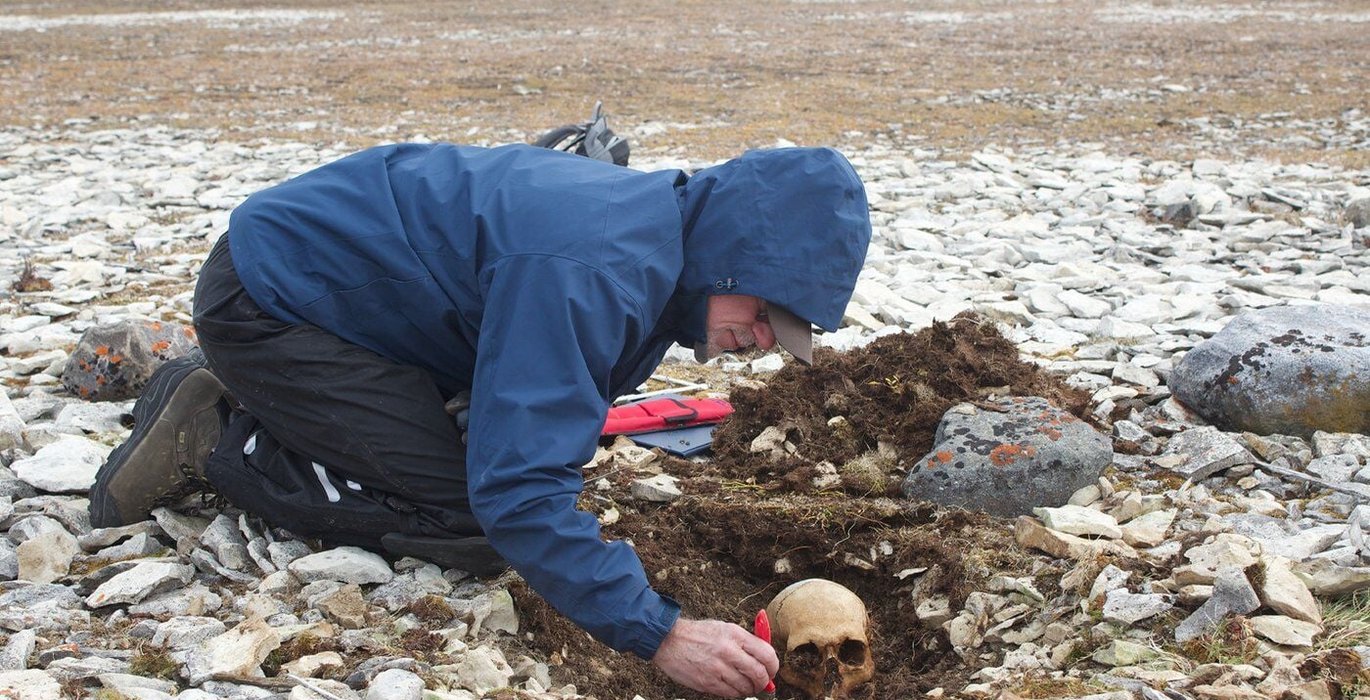
Anthropologists from the University of Waterloo have identified four more crew members from one of history’s most infamous Arctic disasters. Using DNA extracted from skeletal remains found scattered across King William Island and the Adelaide Peninsula in Nunavut, researchers matched genetic profiles against samples volunteered by living descendants of the crew.
The findings, published in two peer-reviewed journals in May, bring the total number of definitively named Franklin expedition sailors to six — and solves a mystery that has baffled historians for 166 years.
Sir John Franklin sailed from England in 1845 with 128 men aboard two ships, HMS Erebus and HMS Terror. On a mission to chart the final stretch of the Northwest Passage through the Canadian Arctic, both ships became locked in pack ice near King William Island, Nunavut.
In April 1848, after nearly two years trapped in the ice and with Franklin himself already dead, 105 survivors attempted to walk south to safety. None made it. Their bones have been turning up across the tundra ever since, largely unidentified and largely unmourned by history as individuals rather than as a collective tragedy.
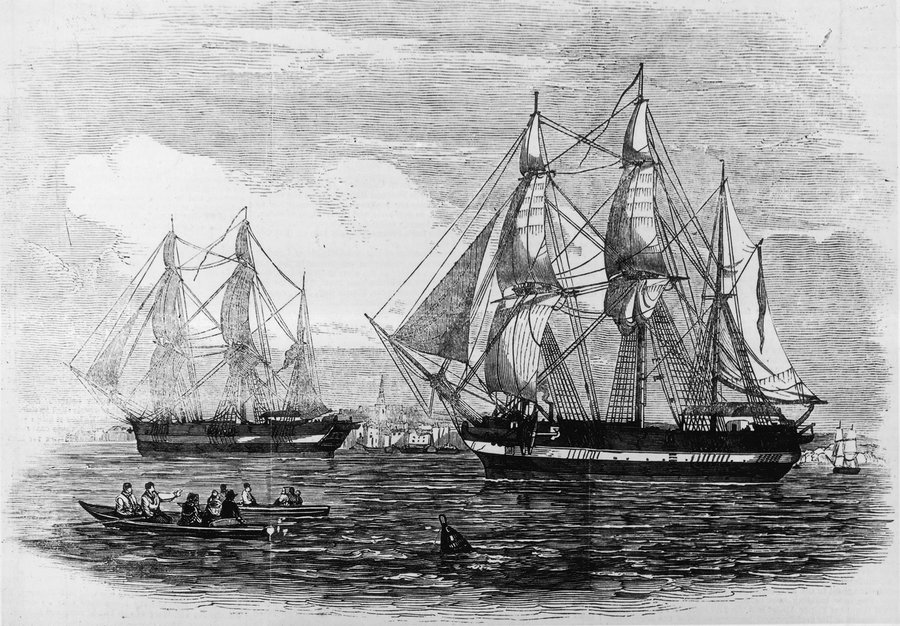
Departure of the “Erebus” and “Terror” on the Arctic Expedition. llustrated London News – Getty, Public domain, via Wikimedia Commons
Three of the newly identified men — William Orren, David Young, and John Bridgens — all served aboard HMS Erebus and died together at Erebus Bay. However, the fourth identification finally put to rest a riddle that had stumped historians for years.
Harry Peglar, Captain of the Foretop on HMS Terror, was found alone at Gladman Point, a remarkable 130 kilometers from the other sailors. His remains had been the subject of fierce debate since 1859, when he was found wearing a lower-ranked steward’s uniform rather than the clothing of a senior sailor. He was carrying his personal papers.
Among those documents were a leather pocketbook with poetry and cryptic backward-written notes. The findings became known as the “Peglar Papers” — among the only written records ever recovered from the disaster.
For 166 years, scholars argued whether the bones were really his or belonged to a shipmate who had been given his documents for safekeeping. Now, DNA matched to his living descendants has finally definitively resolved the debate: it was Peglar. However, it’s still not clear why he was wearing the wrong uniform.
Researchers once believed Peglar may have donned a dead shipmate’s uniform due to a clothing shortage in his struggle for survival. Yet, that idea was largely dismissed due to the discovery of a “four-foot-high huge heap” of warm clothing discarded near the retreat staging camp near Victory Point.
The theory that now seems to prevail is that Captain Peglar could have been demoted mid-voyage for some kind of misconduct. While we may never know why Peglar was wearing a steward’s uniform, or what he may have done to be demoted (if that was the case), scientists can at least settle the question of his identification once and for all.
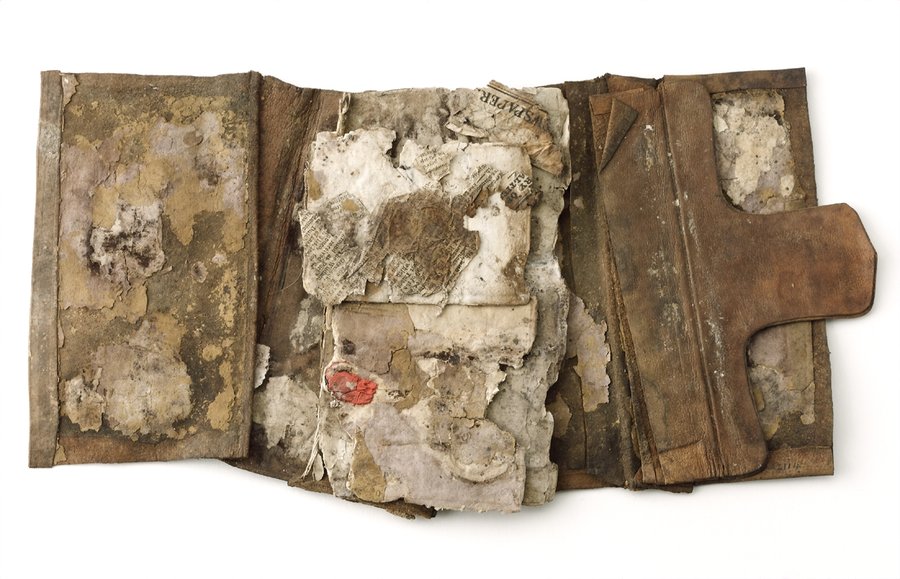
The pocketbook that held the Peglar Papers. National Maritime Museum, Greenwich, London.
Key findings
- Six down, 123 still unknown: Before this research, only two of the 129-man crew had ever been identified through DNA analysis. This study brings that total to six. The team has been excavating at Erebus Bay since 2013, and more identifications may follow as more living relatives volunteer DNA.
- The first sailor aboard HMS Terror ever named by DNA: All previous DNA identifications came from HMS Erebus. Harry Peglar is now the first — and so far the only — member of HMS Terror’s crew to be definitively identified through genetic analysis, a milestone in forensic Arctic archaeology.
- Geography as evidence: The fact that three Erebus sailors died together at one site while Peglar was found 130 kilometres away alone offers new clues about the crew’s final movements. Some men stayed together; others struck out alone across the ice. Each location tells a fragment of a larger story about how survivors tried and failed to escape.
- The “Peglar Papers” re-read: The documents found with Peglar’s remains are among the only first-hand written records ever recovered from the expedition. With his identity now confirmed, historians can revisit them as the genuine voice of Harry Peglar, rather than an unknown crew member.
- History written by living families: The descendants of the original crew volunteered their DNA, making the identifications possible. Dr. Douglas Stenton, the researcher who led the study at the University of Waterloo, emphasized the importance of this participation: “I think it’s very fitting that the descendants of the men who never made it home are helping to write this new chapter about the expedition.”
- Two studies, one breakthrough: The findings appear across two papers; the identifications of Orren, Young, and Bridgens are published in the Journal of Archaeological Science: Reports, while Peglar’s identification appears separately in Polar Record.
The identification of these four sailors is about more than solving an ice-cold case. For the communities of the Canadian Arctic, this story was never lost to begin with. Inuit peoples witnessed the disaster unfold long before European search parties arrived and carried accounts of it for generations, accounts that were largely dismissed and publicly discredited.
Archaeology has since proven them right in nearly every detail, including the location of the ships themselves.
Each new identification adds detail to a shared history that belongs not only to British naval records or the families of the crew, but to the land and communities of Nunavut itself.
THIS ARTICLE WAS FIRST PUBLISHED ON ARCTIC TODAY