July 02, 2026
In the rapidly warming Svalbard archipelago, where declining sea ice threatens polar bears, researchers have uncovered an unexpected twist: their body condition (which can indicate an animal’s health) is improving.
In a finding that defies both predictions and trends observed in other Arctic subpopulations, these bears’ body condition improved during the study period, raising a number of questions.
According to Jon Aars, a senior scientist with the Norwegian Polar Institute in Tromsø, Norway, this discovery was a bit of a surprise. “It was not what we would have predicted,” he said.
This study by Aars and colleagues, recently published in Scientific Reports, was conducted from 1995 to 2019. It examined the body condition of this polar bear subpopulation, potential reasons for their condition, and emphasized the importance of assessing each polar bear subpopulation individually and without extrapolating findings from one subpopulation to another — or to polar bears in general.
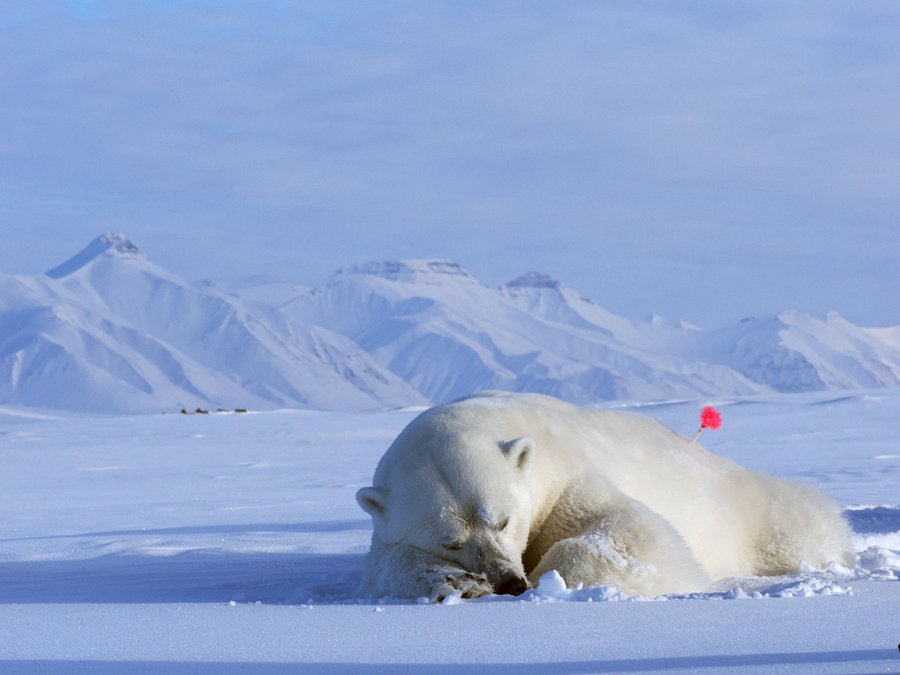
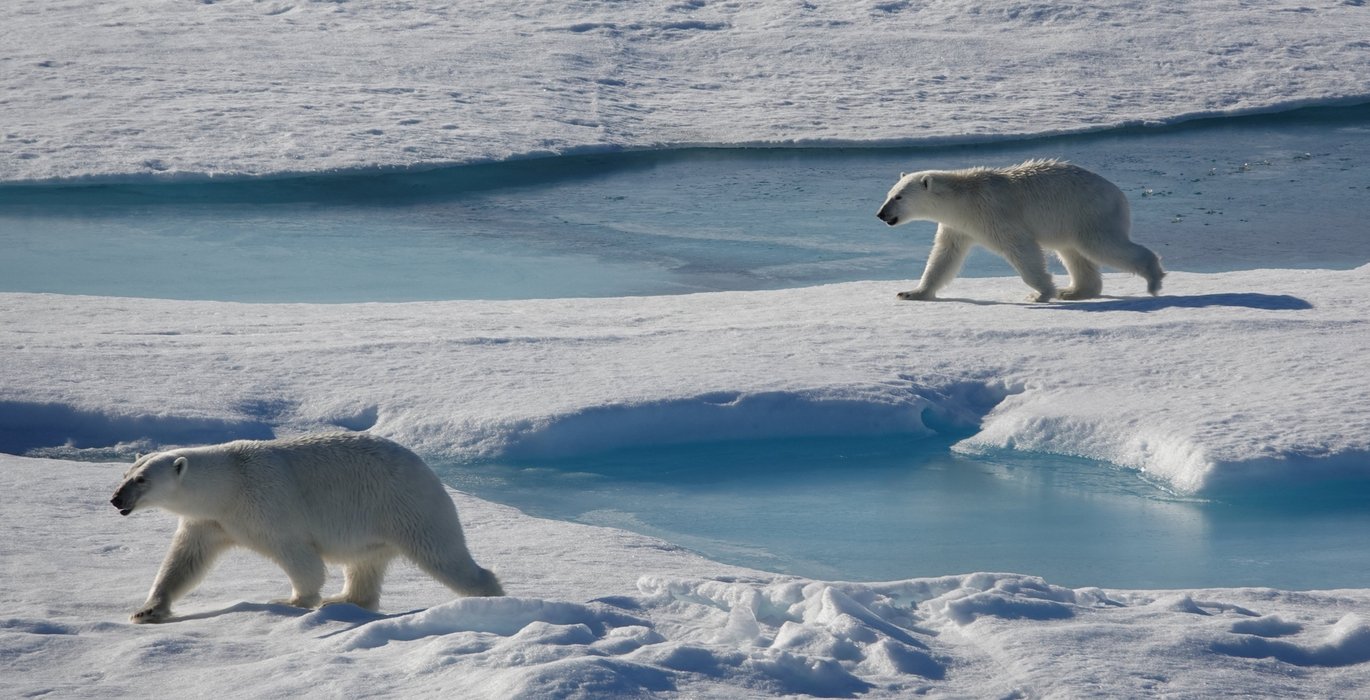
The study conducted from 1995 to 2019 examined the body condition of a polar bear subpopulation in Svalbard. (Credit: Jon Aars/Norwegian Polar Institute)
Across the Arctic, there are 20 different subpopulations of polar bears, ranging from the Barents Sea near Svalbard to East Greenland, Western Hudson Bay, and Russia’s Laptev Sea. They all rely on sea ice as a vital habitat, using it to hunt for calorie-rich prey like seals.
“You don't find polar bears anywhere where you don't have sea ice,” Aars said.
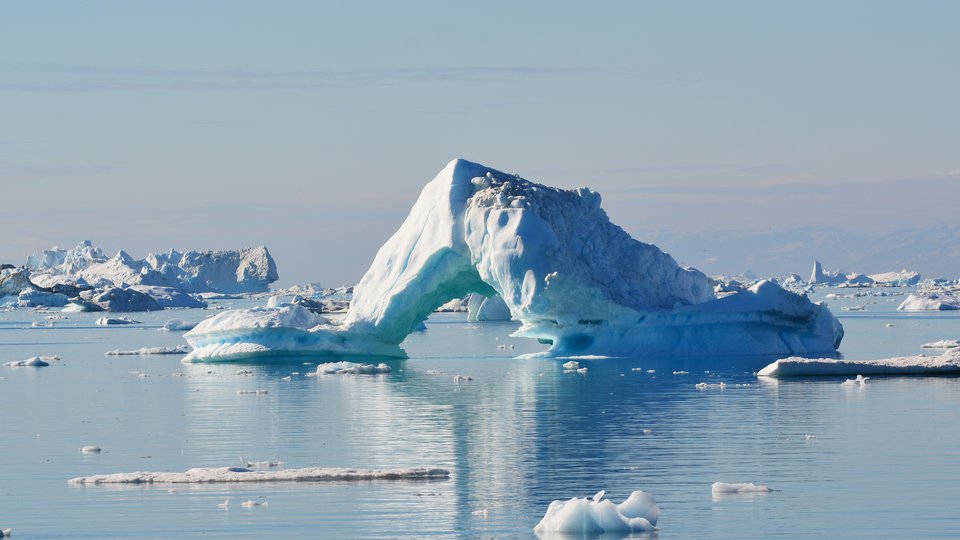
Although the Arctic as a whole is warming rapidly, Svalbard stands out as the fastest-warming region. The Barents Sea region, where Svalbard’s polar bears live, is one of the most climate-impacted parts of the Arctic, with temperatures in some areas rising by as much as 2 degrees Celsius per decade. These rising temperatures have led to an average of four fewer days of sea ice per year between 1979 and 2014, a rate more than double that of other regions where polar bears live. Before 2006, there were no recorded years with more than 175 ice-free days, but after 2006, five different years included more than 200 days with no sea ice.
During the study period, each spring, researchers from the Norwegian Polar Institute monitor Svalbard polar bears, evaluating and measuring a number of bears to assess their condition. They examined the body condition index (an estimate of fat reserves) of 770 adult bears to assess their body condition, which can be an early indicator of future low birth and survival rates.
They found that the bears’ body condition decreased for the first five or so years of the study period, but then began to improve, despite rapidly disappearing sea ice.
“This indicates a complex relationship between habitat, ecosystem structure, energy intake and energy expenditure,” the authors wrote.
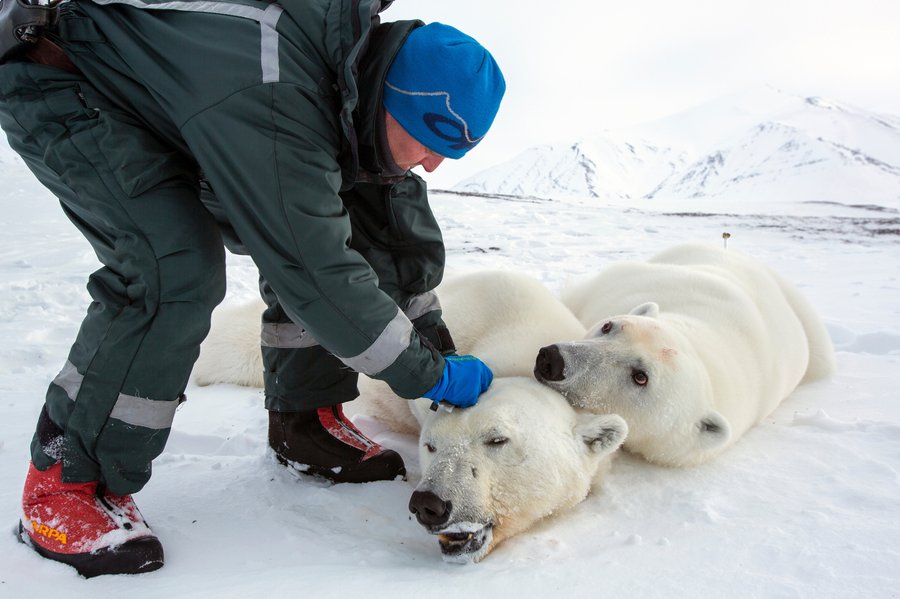
Researchers found that the bears’ body condition decreased for the first five or so years, but then began to improve, despite rapidly disappearing sea ice.(Credit: Jon Aars/Norwegian Polar Institute)
The researchers were surprised to find these results, especially when some subpopulations, such as those in Western Hudson Bay and the Southern Beaufort Sea, faced declines in reproduction and survival following a loss of sea ice.
“I think it would be natural to predict that body condition would decline when you lose so much sea ice,” Aars said.
Svalbard was estimated to have between 1900 and 3600 polar bears as of 2004, though researchers believe this number may have increased since then. Around 240 to 260 of these bears are considered “local bears” that remain close to the archipelago year-round, while a larger number of bears are considered “pelagic,” meaning they roam with the ice.
When sea ice retreats each spring, these pelagic bears can move hundreds of kilometres, often to Russian Franz Josef Land or to the ice edge located to the northeast of Svalbard. As the region warms, this ice edge also retreats farther, and bears heading for this edge now have to travel 200 to 300 kilometres further north than they did two or three decades ago.
Declining sea ice makes it more difficult for pelagic bears to travel, requiring lengthy, energy-intensive swims, and late sea ice formation also makes it more difficult for these roaming bears to reach their maternity dens in east Svalbard. While being a pelagic bear requires more energy to travel significant distances, this movement pattern can also open up the opportunity to find more to eat (including marine food sources) during the ice-free period.
Previous models were developed on the premise that polar bears would not be able to find much nutrient-rich food on land. While this appears to be the case in many parts of the Arctic, the Barents Sea subpopulation seems to be finding terrestrial food sources.
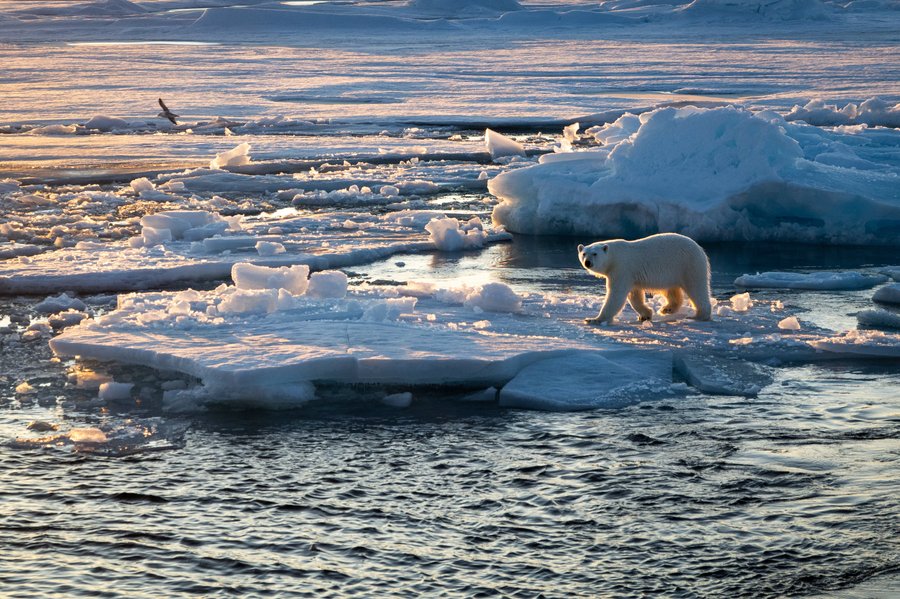
Some polar bear subpopulations faced declines in reproduction and survival following a loss of sea ice.(Credit: Trine Lise Sviggum Helgerud/Norwegian Polar Institute)
Local bears that stay in Svalbard can eat everything from nesting birds and eggs (particularly eider ducks and geese), to washed-up whale carcasses and even walrus carcasses they find. They’ve been known to hunt bearded seals in summer, along with reindeer.
According to Aars, when he began his role in the early 2000s, people did not talk about seeing polar bears hunt reindeer, “then in later years, we got a lot of footage,” he said. “We even saw cases ourselves... that the bears were able to hunt and kill reindeer in several ways.”
Furthermore, with smaller areas of ice, ringed seals and other prey species may congregate on these patches, making hunting easier and less energy-intensive for the Barent Sea bears.
“Bears might have to travel less to actually find the seals, just because there might be high aggregations of seals in the remaining areas with sea ice,” Aars said.
Like the Barents Sea bears, the Chukchi Sea subpopulation near Siberia and Alaska also seems to have high-biomass food sources, such as seals. Researchers have observed that this subpopulation faces shorter periods of sea ice without a decline in body condition.
Researchers emphasize that the 20 polar bear subpopulations can vary widely, and although climate change and melting sea ice affect all of them, the specific effects can differ across locations.
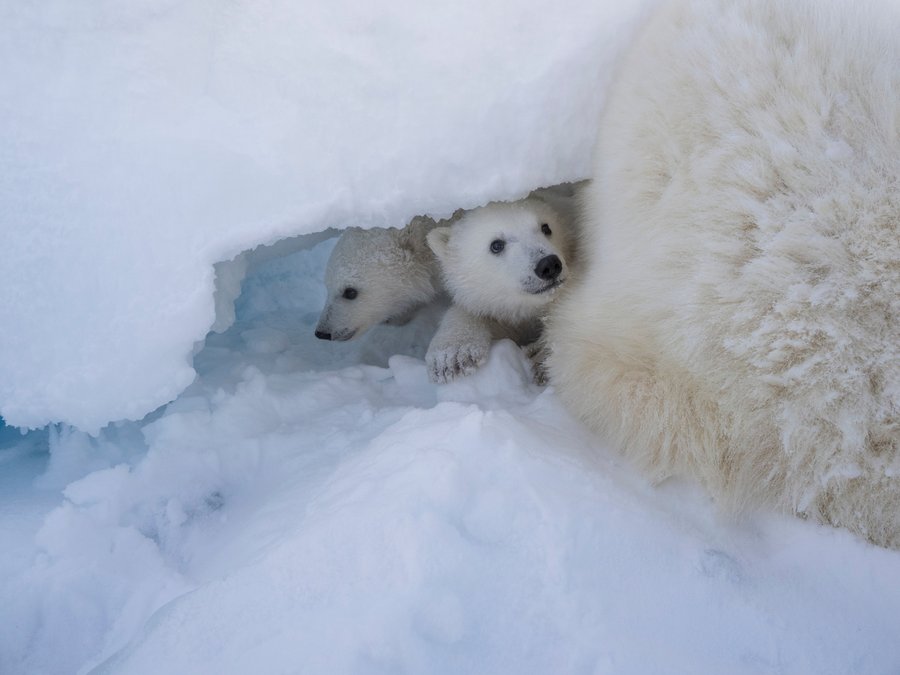
Researchers emphasize the importance of assessing each polar bear subpopulation individually without extrapolating findings from one subpopulation to another. (Credit: Jon Aars/Norwegian Polar Institute)
While the Barents Sea polar bear subpopulation recently improved in body condition, the region is expected to continue rapidly losing sea ice over the coming decades, which could lead to declines in the bears’ body condition as factors change. The authors wrote that these bears are likely to be negatively affected in the near future.
“We also see effects of climate, even though they are still in good condition,” Aars said, noting that although they don’t see large demographic effects on the bears, they are losing some denning areas, and the sea ice edge moving northward is requiring bears to swim much further than they have in the past.
“We see things that indicate that things may change in future years, and we do think that there will be a threshold for how much sea ice loss they can still cope with without seeing negative effects,” he said.
Following extensive hunting a few decades ago, the Barents Sea bears are believed to currently be below the area’s carrying capacity, meaning there are enough resources to support them for now. However, if the subpopulation grows or the carrying capacity shrinks due to declining sea ice and food availability, bears’ body condition may decline once that carrying capacity is reached.
Aars emphasized the importance of continued research in these areas
“It's very important to have long-term data so you can actually study those processes,” he said.
Banner image credit: Marika Marnela/Norwegian Polar Institute