May 21, 2026
While the modern world cycles through wellness fads such as hygge-lit sanctuaries, forest bathing excursions, and Instagrammed cold plunges, in the Arctic, well-being has never been a trend. It is survival, shaped by sila, the animating force that moves through wind, water, ice, and human breath.
“Although Sila doesn’t have a literal translation in English, it sort of means weather,” says Wayne Broomfield, an Inuit expedition guide and adventurer from Labrador. “But it’s more than that. It’s about being comfortable and at peace with your environment—no matter what it is.”
It all starts with the air. In the Arctic, air is never neutral. It can slice across your face with knife-edged cold or hang still above a fjord. It carries the smell of salt and snow, and signals change long before clouds gather. For Inuit communities, reading the air and its subtle shifts in pressure, scent, and temperature isn’t a mere indulgence but a matter of life.
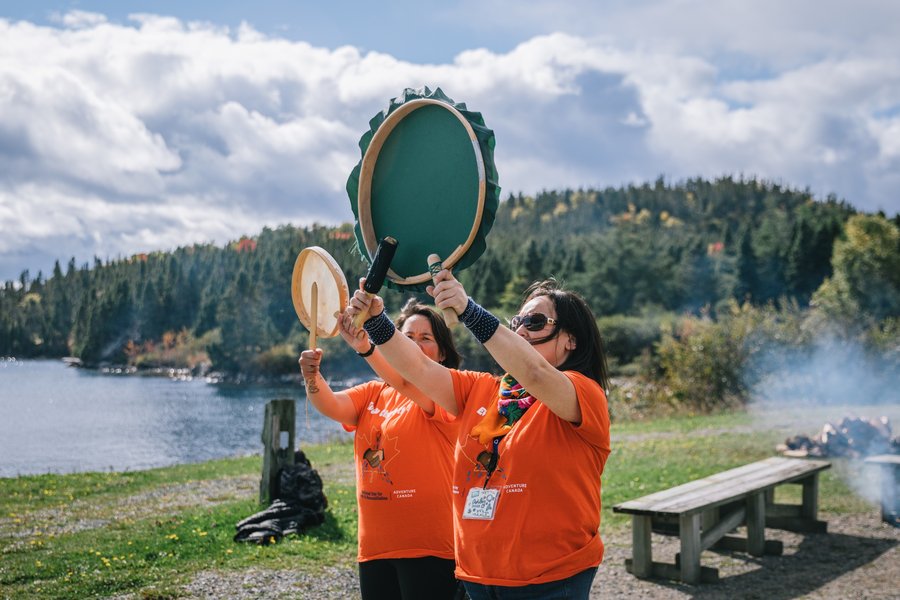
Aka and Ashley drum dancing. Sila is about being comfortable and at peace with your environment—no matter what it is. Aka and Ashley drum dancing (Credit: Karthika Gupta/ Adventure Canada)
Broomfield noted that changes in the air were signs of changing seasons that affected hunting.
“It tells us when to move inland to hunker down for winter or, conversely, head out to sea for fishing,” he notes.
Even animal sightingscan indicate the state of the surrounding environment. Is a seal just sunbathing on the ice, or is it hiding from predators such as whales or polar bears nearby? Has the black bear begun foraging more widely because of an unusual abundance of berries and plants, thanks to rapidly thawing permafrost? Does caribou skin look different from previous years, indicating a shift in grazing conditions due to changing climates?
Where Western Science Meets Indigenous Knowledge
Western science has begun quantifying what Inuit knowledge has long observed. For instance, a 2024 study by the US National Oceanic and Atmospheric Administration shows Arctic migratory caribou herds have declined by about 65 percent over the past two to three decades due to warming temperatures and other stressors that alter their survival, migrations, and reproduction success. However, traditional knowledge from Inuit hunters predicted the decline in caribou health a decade ago.
For communities whose cultural practices are rooted in reading subtle environmental cues and living off the land, these changes can be disruptive to traditional ways of life.
“You realize very quickly that you’re not in control here. The wind, the ice, the tide, and the land set the terms,” Broomfield said.
Aka Simonsen is a Greenlandic historian, archaeologist, and Inuit cultural educator. She acknowledged the resistance she encounters from people accustomed to categorizing experiences into neat boxes — science over here, spirituality over there, humans distinct from animals, culture separate from climate.
“Sila is part of all of us,” she said.“For me, the most important thing to teach is the entanglement of nature, humans, animals, and spirituality."
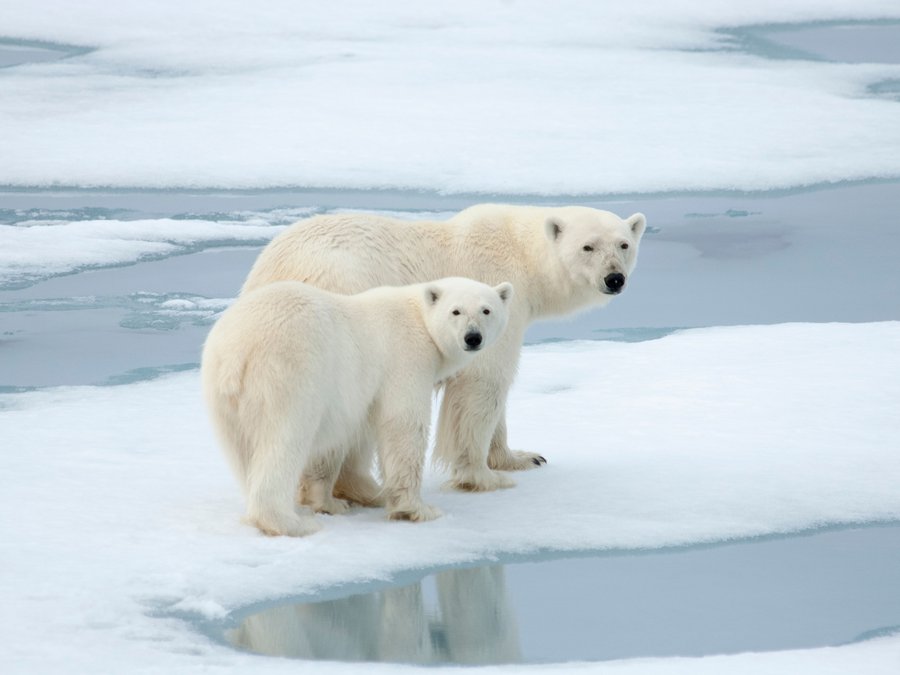
The most important thing to teach is the entanglement of nature, humans, animals, and spirituality. (Credit: Horward Perry/Canva)
Simonsen is not rejecting science. In many Inuit worldviews, there is no hard boundary between the material and the spiritual. Weather is not merely a set of atmospheric conditions but a living entity. Sea ice is not an inert platform; it is dynamic in how it responds and shifts. Animals are not mere resources but fellow participants in our collective ecosystem.
In this recalibration lies the recognition that humans are not separate from the system but active participants within it. Simonsen hopes that sharing Inuit traditional knowledge, customs, and oral stories of her ancestors will add a new dimension to contemporary scientific expeditions, as she is often the only female indigenous voice in many such journeys.
“It is sometimes difficult to make it a concept to Westerners who divide and separate everything and think science is the only way, especially if they are closed to spirituality,” she acknowledges.
Cultural Interpretations of Climate
In the Arctic, Sila is carried in every walk of life, including dance and music. Greenlandic throat singing, known as katajjaq in Inuktitut, is often described as a playful competition between two women standing face-to-face, holding each other. One begins a rhythmic pattern of breathy, percussive sounds, sometimes mimicking the call of a bird or the rush of wind, and the other responds.
The sounds overlap, intertwine, push and pull until one singer breaks into laughter.
“To an outsider, it can seem like a performance. But at its core, throat singing is an echo of the environment,” said Ashley Dicker, an Inuit cultural educator from St. John’s, Newfoundland. “It draws on the textures across the tundra and the sounds of breath shared and returned.”

Students throat singing in Nain school. Greenlandic throat singing, known as katajjaq in Inuktitut. Credit: Karthika Gupta/ Adventure Canada)
Raised in Nunatsiavut, Dicker maintains a deep connection to her people and the land through travel, traditional practices, and lived experience in remote communities such as her hometown of Nain, the northernmost Inuit community in Labrador.
She stated that drum dancing, too, embodies this relationship. The qilaat, a traditional Inuit frame drum, produces a resonant, heartbeat-like rhythm.
“We are taught that the drum follows the sun and the seasons, and when dancers move with the drum, their feet often mirror elements of the natural world like waddles of polar bears or the hop of the Arctic hares.”
Dicker added that together they tell the story of life in the Arctic and the shifting conditions of weather and seasons.
In these performances, Sila is not an abstract philosophy. Instead, it is enacted through breath, voice, and vibration.
Sila: Wellness Redefined
Western wellness culture often seeks techniques that promise measurable outcomes, such as lower cortisol, improved sleep, and optimized focus. However, Sila does not lend itself to metrics. It asks for presence without guarantee.
Guides like Broomfield use it subconsciously, leading mindful walks along rocky shorelines where the ice has recently retreated or foraging for wild mint, asking his guests to notice the crunch of frost under their boots, the direction of the wind on their cheek, or the way light refracts off meltwater.
Breathing rituals are less about optimizing lung function than about awareness of the air and acknowledging that this same air has passed over ancient glaciers. The exercise is simple, but the shift is from consuming a landscape to conversing with it.
Perhaps that is why it is difficult to translate Sila. It unsettles our habit of separating effort and reward. It asks us to hold science and spirituality not as adversaries but as complementary ways of knowing.