September 10, 2026.
As the Arctic warms at nearly four times the global average, Northern communities on the front lines of climate change have become a vital source of environmental monitoring.
Across Northern Canada, community members are using mobile apps such as eBird ,a bird-monitoring app and SIKU, an Indigenous knowledge platform, to document wildlife sightings and changing environmental conditions in real time, creating a growing body of citizen science data that helps researchers track the impacts of these changes on northern ecosystems.
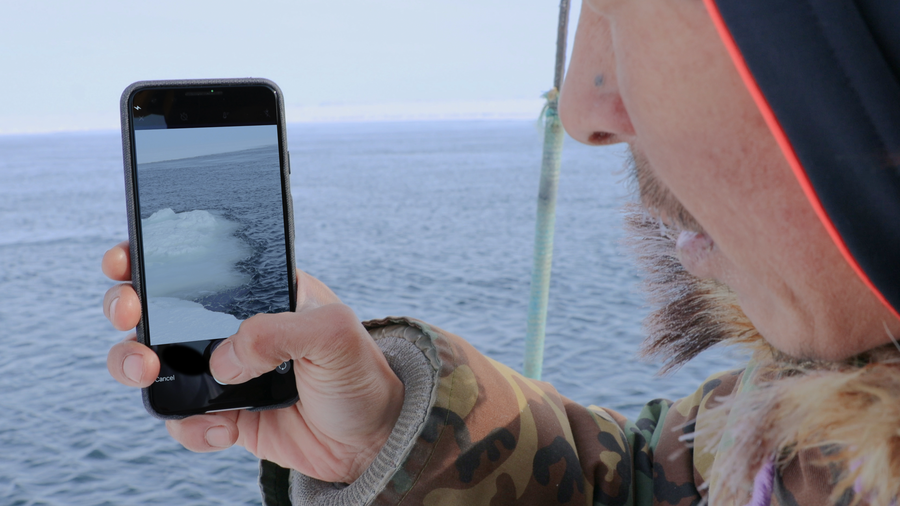
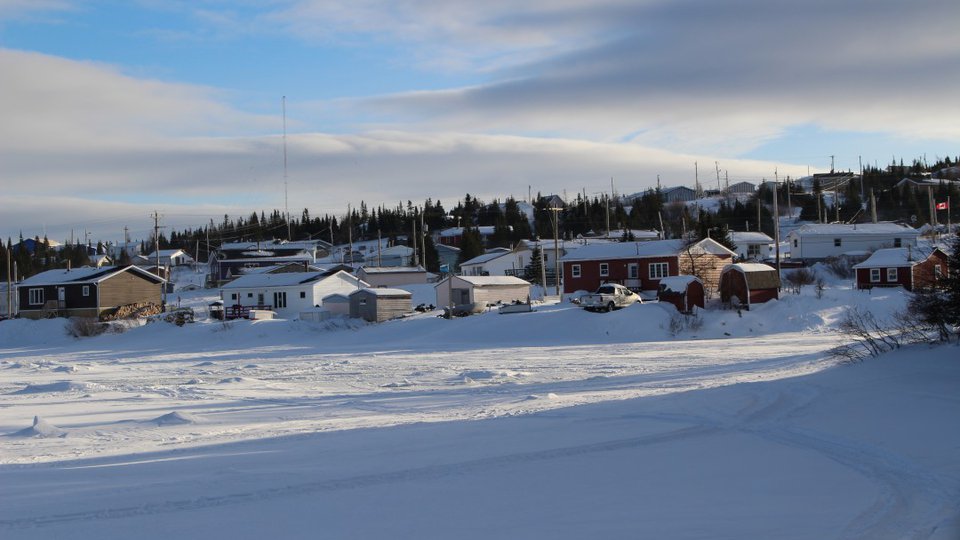
Across Northern Canada, community members are using mobile apps to document wildlife sightings and changing environmental conditions in real time. (Credit: Arctic Eider Society)
Whether walking in the woods or harvesting on the land, individuals can instantly log changes they observe. These community-generated records have become increasingly critical as many Arctic species face disruptions to their habitats, food sources, and migration patterns, alongside the growing threat of invasive species.
For Northern communities—particularly Indigenous communities whose traditions, livelihoods, and cultures have been connected to the land and its wildlife for thousands of years—the stakes are especially high, making their participation in crowdsourced data collection invaluable.
Tracking Birds With eBird
According to Graham Sorenson, an ornithologist and wildlife biologist who manages Birds Canada’s Science in the North program, collecting enough data to study environmental change across Northern Canada remains a significant challenge. The region’s vast geography, remote communities, and high travel costs make it difficult for researchers to gather observations at the scale needed to understand how wildlife populations and ecosystems are changing over time.
“The scale of problems that are happening globally in terms of climate change and big environmental shifts needs really big data to be answered,” said Sorenson.
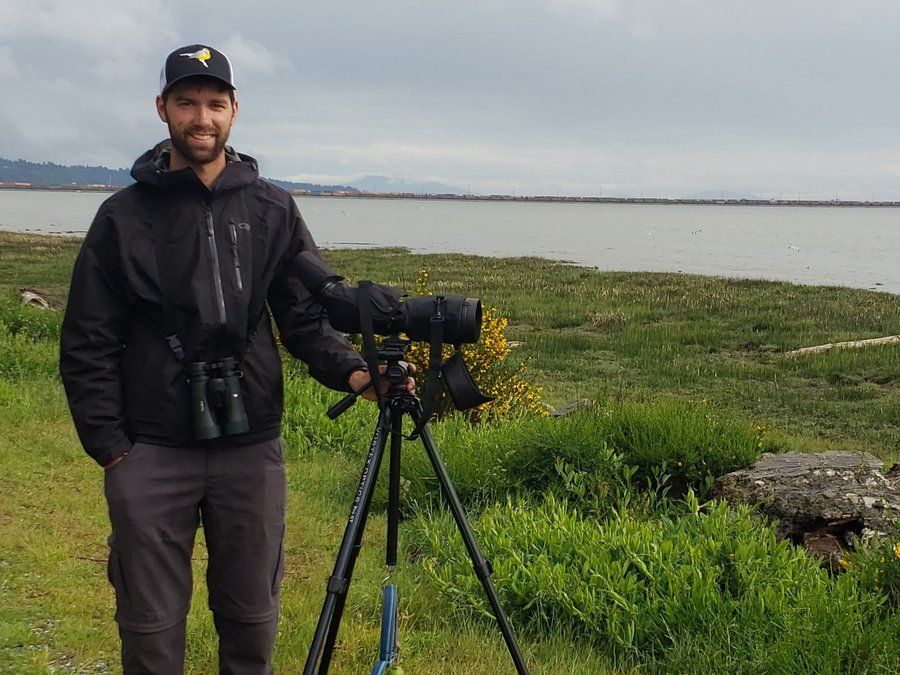
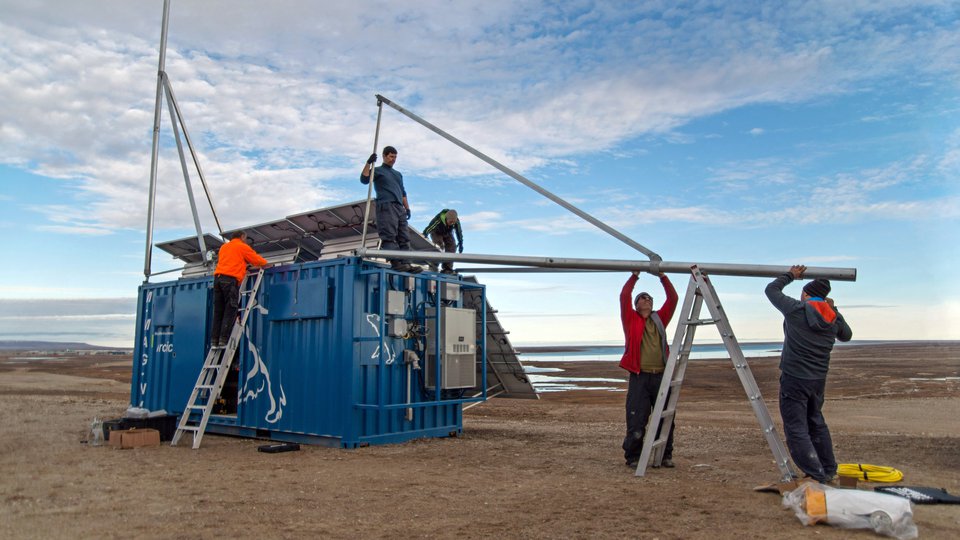
Collecting enough data to study environmental change across Northern Canada remains a significant challenge. (Credit: Graham Sorenson)
He added that crowdsourcing tools such as eBird, an app developed by the Cornell Lab of Ornithology in partnership with the National Audubon Society, help fill critical research gaps across areas that would otherwise be difficult to monitor consistently.
“Even in areas that are densely populated by humans, these tools are incredible, and their value increases even more when there are fewer people,” he said.
Marcus Jackson, a bird enthusiast based in Yellowknife, NWT, is one of eBird’s top users in the region. To date, he has logged over 1,300 checklists on the free bird-tracking app. He noted that the app is highly accessible, automatically prompting users to record observations relevant to their location and the time of year.
“If you see a redwing blackbird in a marsh, and it’s singing, and it’s spring, that’s an indication that the bird is probably looking for a mate,” Jackson said. “As spring and summer progress, you can keep track of how many birds have partners, are nest building or carrying nesting materials, feeding young, or sitting on eggs.”
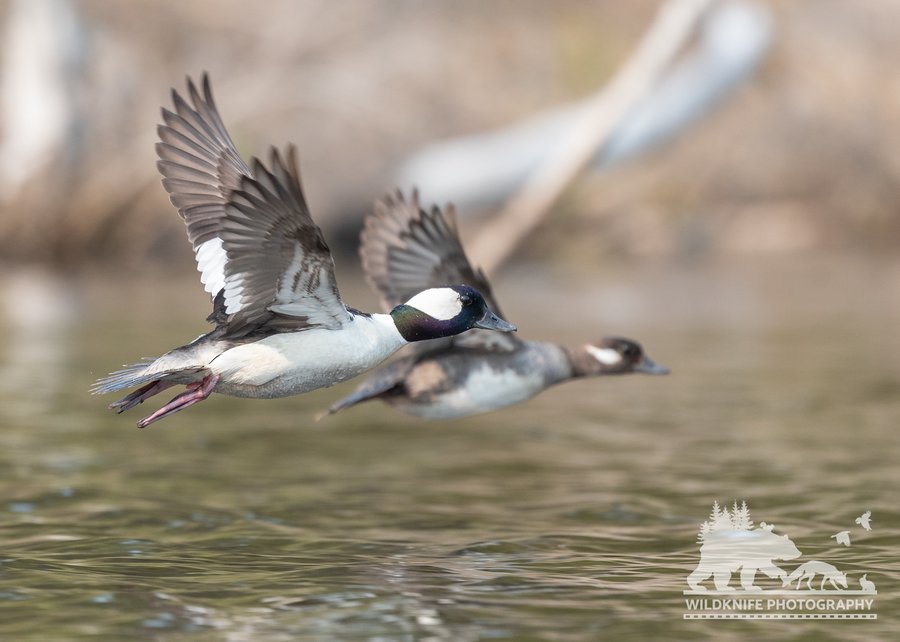
Photo of buffleheads. Crowdsourcing tools such as eBird help fill critical research gaps across areas that would otherwise be difficult to monitor consistently.(Credit: Marcus Jackson)
These detailed, seasonal observations feed into larger datasets. When aggregated across thousands of users and locations, they create a time-stamped picture of how bird activity unfolds across the North.
Data from apps like eBird can also help inform which national parks may experience changes in species composition as the climate continues to shift.
Community-Knowledge With SIKU
Another widely used mobile app in northern communities for tracking local wildlife and environments is SIKU (meaning “Sea Ice” in Inuktitut). This app was launched by the Arctic Eider Society, based in Sanikiluaq, NU.
Designed for both personal and collaborative use, the platform allows users to decide whether observations remain private or are shared with the community.
“When using the app, individuals can choose who sees their posts,” said Candice Sudlovenick, the Outreach Programs Manager for SIKU, highlighting the app’s commitment to Indigenous Data Sovereignty.
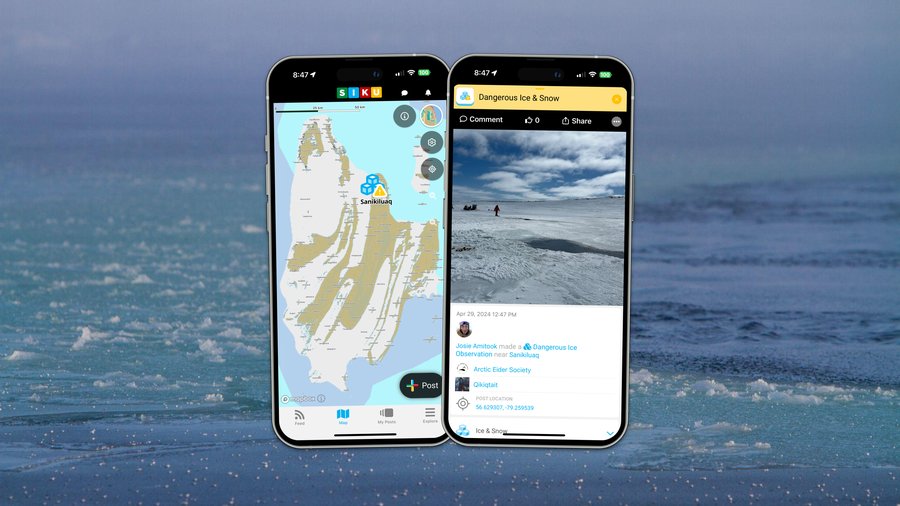
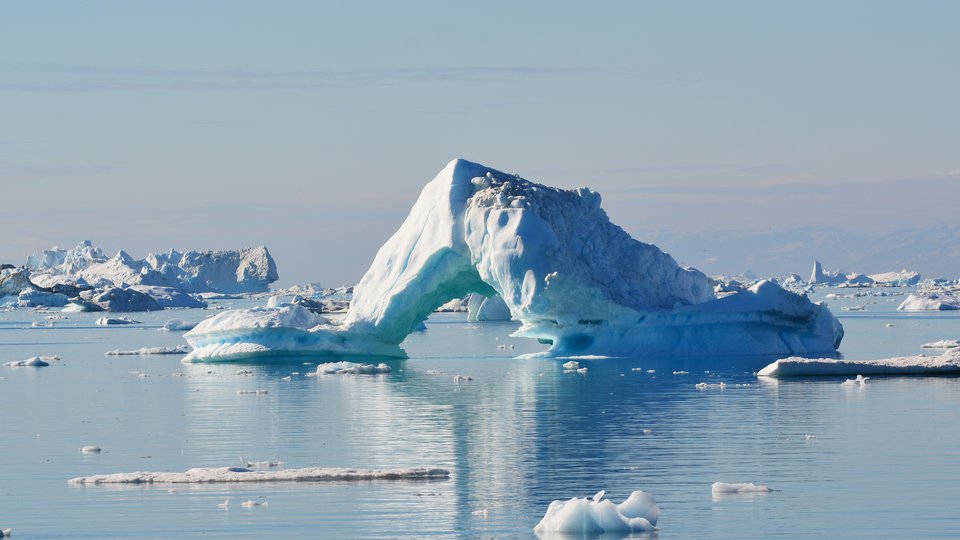
Designed for both personal and collaborative use, SIKU allows users to decide whether observations remain private or are shared with the community.(Credit: Arctic Eider Society)
Those observations can include details such as where animals are seen, their abundance, body condition, and even stomach contents. Over time, these observations can help identify changes in wildlife populations, migration patterns, and ecosystem health.
For communities, these aggregated data support local organizations in monitoring the environment, managing resources, and informing community-led conservation efforts.
“It’s really becoming a vital tool for our communities to adapt to the changes we’re seeing,” Sudlovenick said.
The app also allows users to log observations in multiple languages, including English, French, Greenlandic, Inuktitut, and other First Nations languages. This flexibility allows users to record observations using locally relevant terms and concepts.
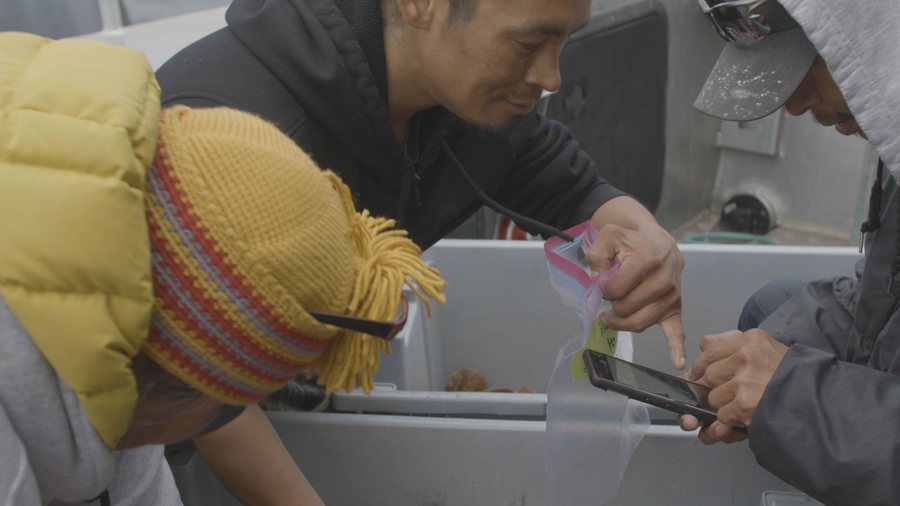
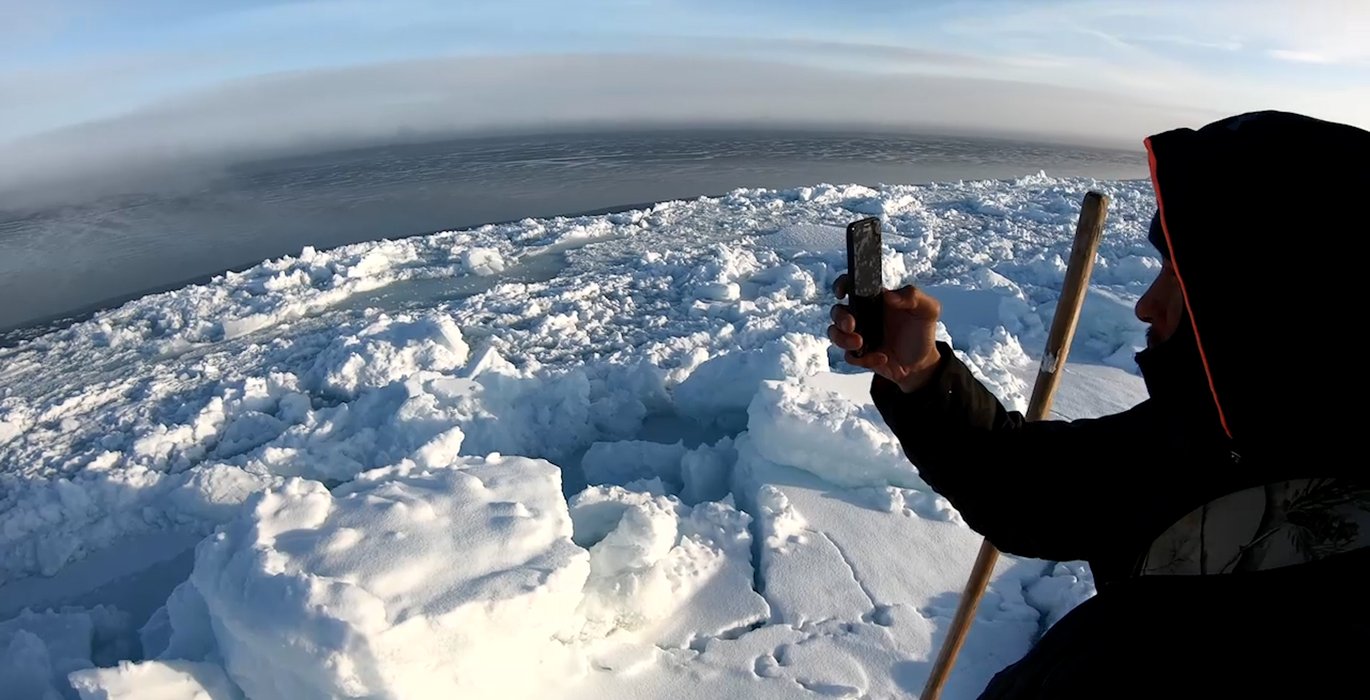
SIKU allows users to log observations in multiple languages, including English, French, Greenlandic, Inuktitut, and other First Nations languages. (Credit: Arctic Eider Society)
According to Sudlovenick, Inuktitut contains a rich vocabulary for describing the environment, allowing users to communicate observations with a level of precision that is often difficult to achieve in English. One example is qinu, a term for the slushy ice that forms during the autumn freeze-up at the winter floe edge — a level of detail a single English word simply cannot convey.
Beyond documenting observations, SIKU also serves as a practical tool for travelling. Users can monitor changing conditions alongside integrated weather forecasts and satellite imagery, combining multiple sources of information to ensure safety on the ice.
As climate change continues to reshape Arctic ecosystems and the world, the future of understanding and responding to these shifts increasingly depends on northern communities documenting change as it unfolds.
Banner Image Courtesy of Arctic Eider Society.