June 04, 2026
Noah Mosesee speaks like old wood croaks—strong and weathered, full of memories shaped by years of push and pull against the Arctic winds. For him, hunting has always been simple. It carries no romance, no debate over morality, only the quiet certainty of survival.
“Since I can remember. When I was in the amauti (traditional baby carrier built into the hood of an Inuit parka), on my mother’s back, I was already going out on the land.”
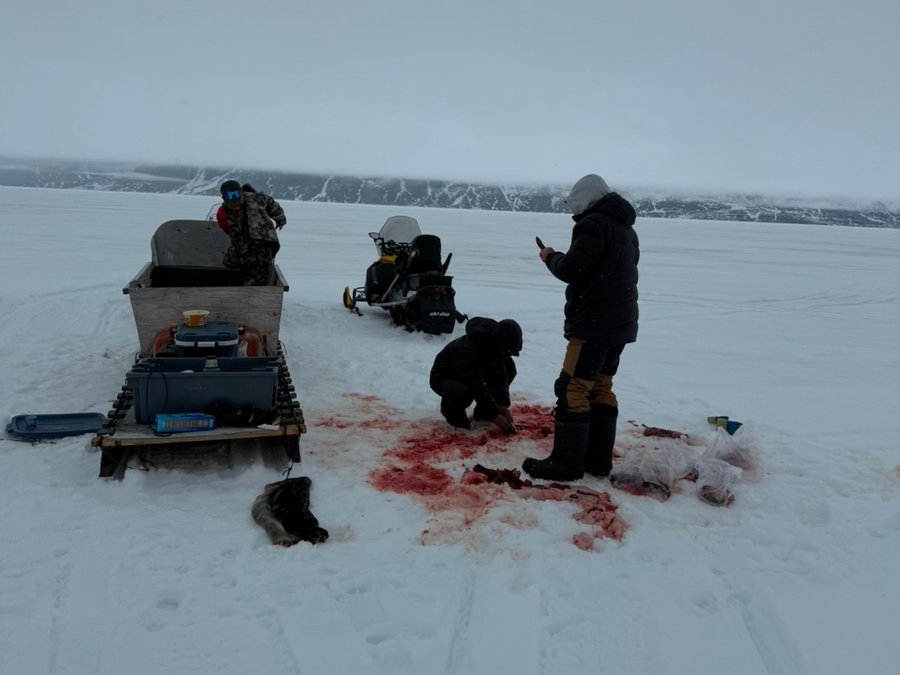
For Noah Mosesee, hunting has always been simple. It carries no romance, no debate over morality, only the quiet certainty of survival. (Credit: Noah Mosesee)
I met Noah Mosesee, 44, while on assignment in Kuujjuarapik, Nunavik. Between meetings, we spoke about the North. He recalled long journeys across the Labrador Sea and described the landscape surrounding his hometown of Pangnirtung, tucked deep within the fjords of Baffin Island. Our conversation eventually turned, as it often does in the Arctic, to hunting.
In southern debates, Arctic hunting is often framed as controversial, with debate over quotas, population statistics, and international conservation campaigns. These discussions often take place far from the communities where hunting actually occurs, too often leaving out perspectives from the land’s peoples.
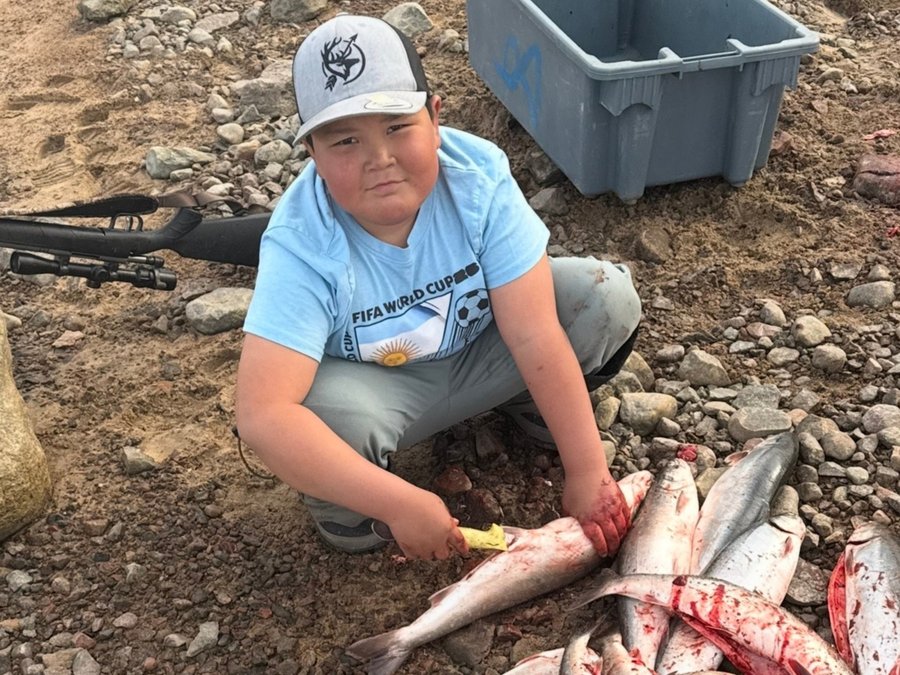
In southern debates, Arctic hunting is often framed as controversial, often leaving out perspectives from the land’s peoples. (Credit: Noah Mosesee)
For many Inuit families, hunting is not simply recreation or an esoteric policy issue. It is a system of knowledge and responsibility learned gradually, beginning in early childhood.
Introducing children to hunting early supports cultural continuity and self-determination. It ensures that the knowledge needed to live on the land remains alive in the next generation.
“Hunting is the first thing we teach,” Mosesee said, adding that the older generation will not always be around to teach youth. “They have to learn before they become adults.”
Observation is central to Inuit learning. Children and youth follow their parents on the land. They watch, listen and absorb how things are done. Knowledge is learned through experience. Patience is developed through time on the land. Respect for animals and the environment is taught through action rather than simple instruction.
“You learn how to use the rifle, how to butcher and how to respect the animal,” Mosesee said.
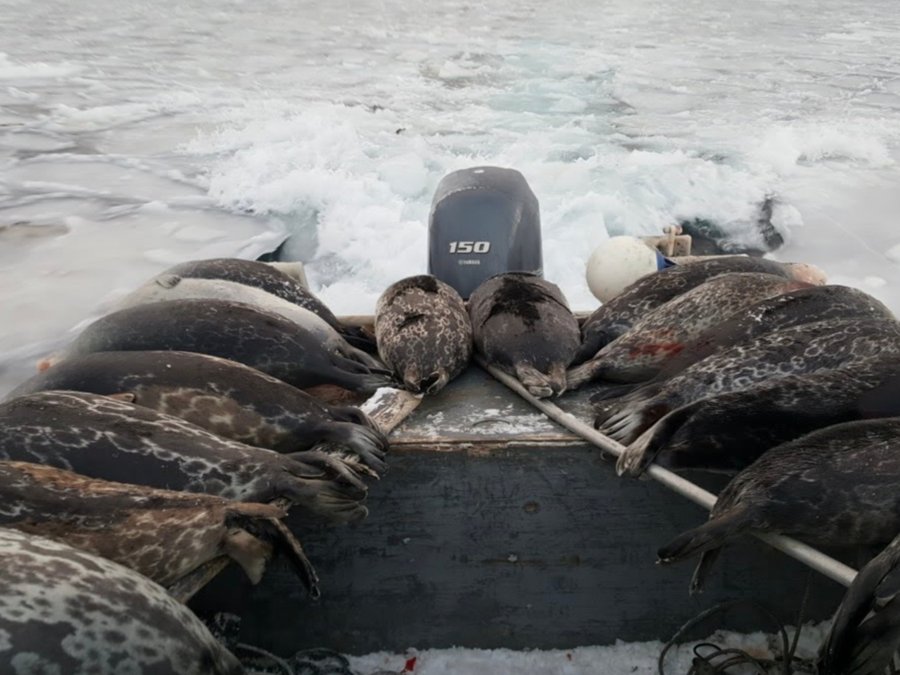
For many Inuit families, hunting is not simply recreation or an esoteric policy issue. It is a system of knowledge and responsibility learned gradually, beginning in early childhood. (Credit: Noah Mosesee)
Children are also taught how to read snow conditions, how wind shapes sea ice and when it is safe to travel. Knowing when not to move can be as important as knowing how to move.
“Safety comes first,” Mosesee said. “When it’s a blizzard or foggy, we don’t travel. We wait. It will be clear in the coming days.”
Mosessee harvested his first caribou at seven years old. The hardest part, he recalled, was not pulling the trigger. It was the work that followed—skinning the animal. Butchering the meat. Learning how to respect and use every part.
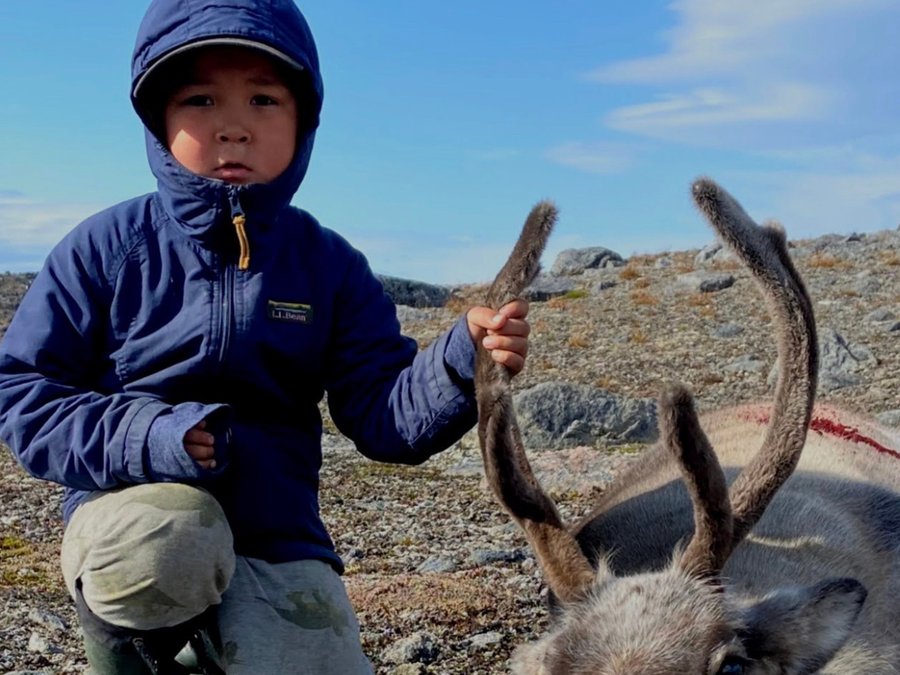
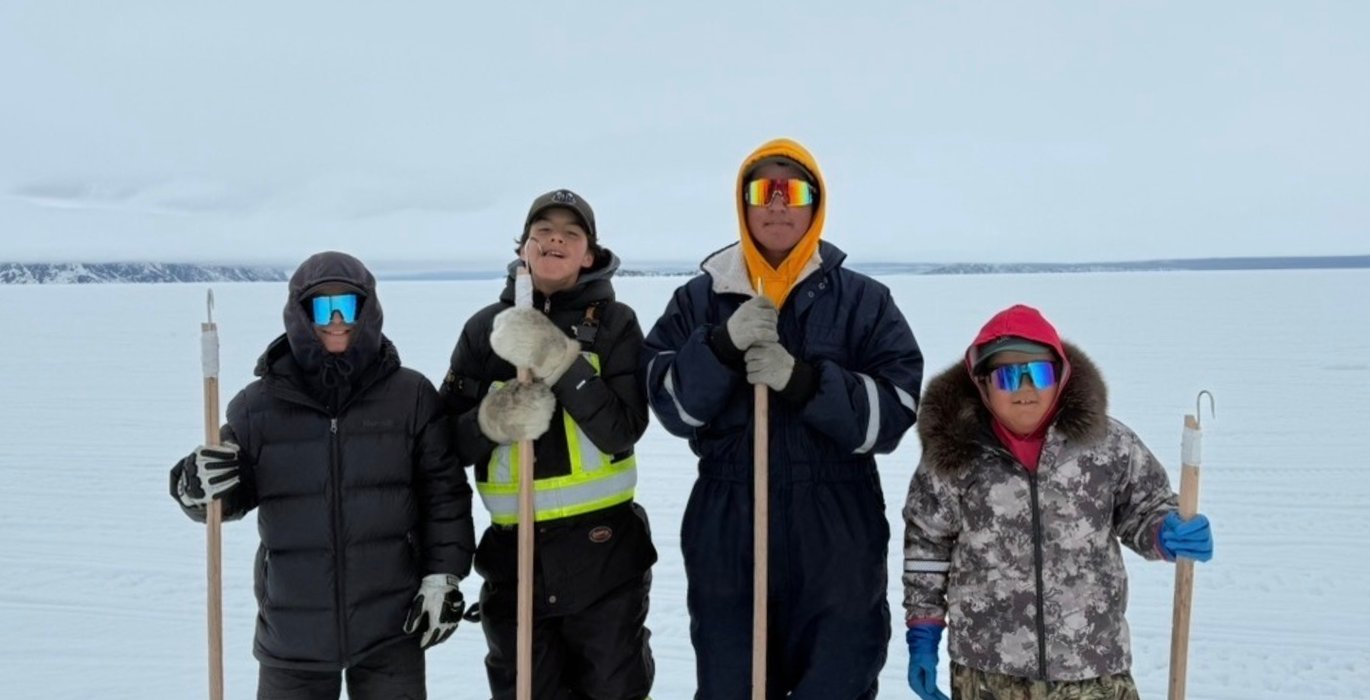
Introducing children to hunting early supports cultural continuity and self-determination. It ensures that the knowledge needed to live on the land remains alive in the next generation. (Credit: Noah Mosesee)
Within Inuit communities, hunting is embedded in a broader system of care, reciprocity, and stewardship. Knowledge about animals, seasons and landscapes is maintained through practice. Hunters learn to read wildlife behaviour, interpret weather patterns and navigate sea ice. These skills form part of a long-standing Arctic knowledge system.
A successful hunt rarely belongs to a single person. Meat is shared widely among relatives, neighbours and Elders. The harvest becomes part of a communal network that ensures people receive country food.
Perhaps most importantly, hunting connects generations. In the Arctic, where survival depends on the careful transmission of knowledge, through the quiet acts of travelling on the land, preparing meat and sharing a harvest with neighbours, knowledge moves forward from one generation to the next.
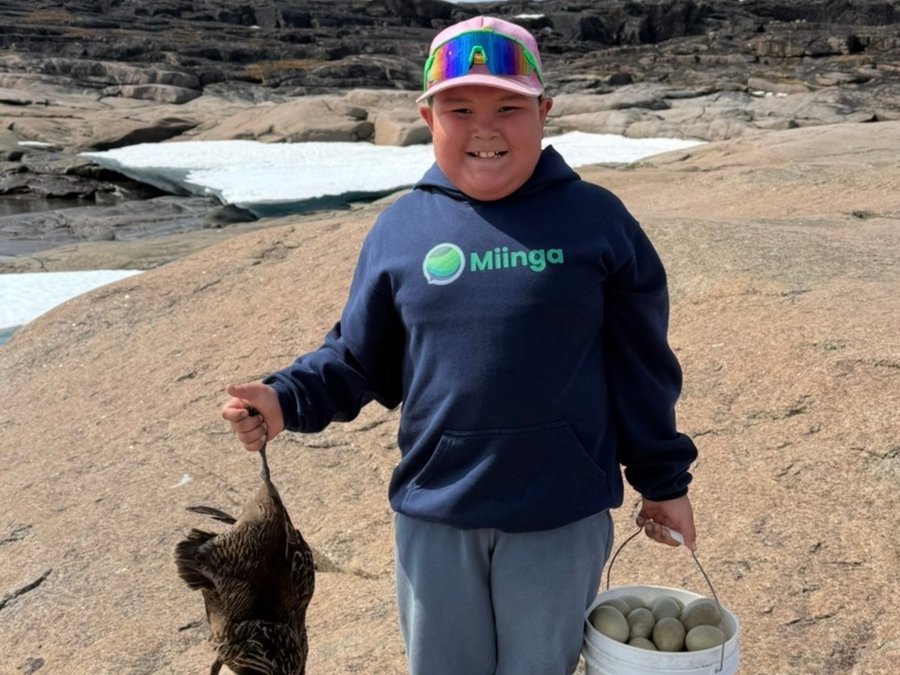
Within Inuit communities, hunting is embedded in a broader system of care, reciprocity, and stewardship. (Credit: Noah Mosesee)
Mosesee began travelling with his son on hunting trips when the boy was three years old. That same year, from a small boat, the child harvested his first caribou. For Mosesee, the moment echoed memories of learning from his own father.
Everything his father taught him, fishing, hunting and travelling long distances across the land, he now passes on to his son. The tools may have changed over time, but the principles remain the same.
Moses recalled the pride he felt when his son harvested his first polar bear. After the hunt, the meat was shared among community members, while the hide was set aside for his son to make warm clothing. Items such as skulls, antlers, and hides are often kept as reminders of the relationship between the hunter and animal.
He noted that his son has already been approached by people interested in buying some of these items.
“He always says no way,” Mosesee said with a smile.