April 23, 2026
Polar bear management in Nunavik has reached a turning point, as wildlife boards consider a proposal that could reshape how one of the Arctic’s most closely watched species is governed.
Across the Arctic, wildlife management is often discussed in terms of numbers: population estimates, harvest limits, and scientific models designed to minimize risk.
In Nunavik, however, wildlife boards are considering a proposal that moves away from simple quotas into a management approach, the new non-quota limitations (NQLs), aligned with more holistic Inuit forms of wildlife stewardship. While quotas set fixed numbers, NQLs set conditions, such as when and where hunting can occur, where it can occur, what reporting is required, and which practices are expected.
The question is not whether science matters, but who defines the rules and how those rules reflect the realities of harvesting on the land. Inuit knowledge, experience, and institutions are central to that conversation.
“This is really about getting away from quotas as the default,” says Tommy Palliser, Director of the NMRWB. “We want quotas to be the very last resort. We’re focusing on non-quota limitations that actually make sense for the region.”
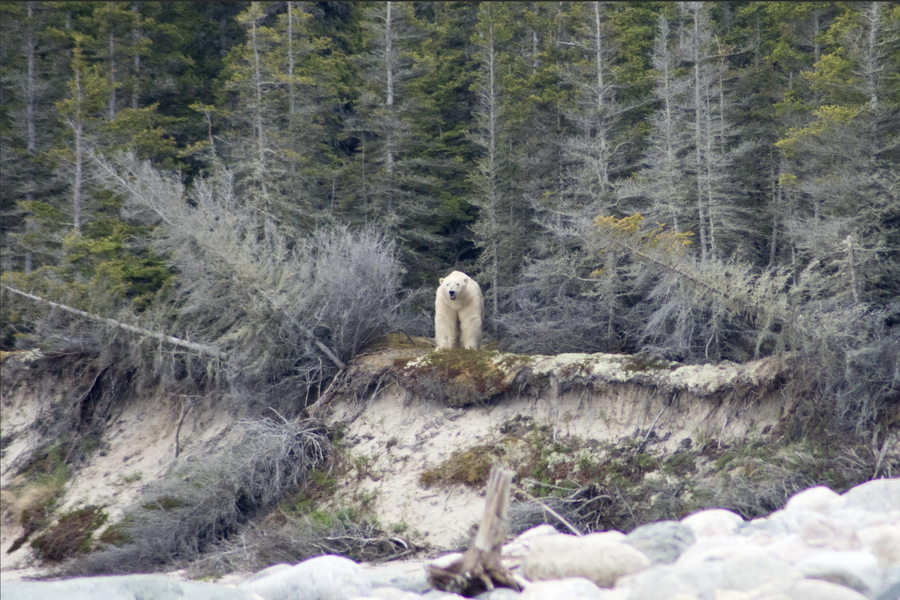
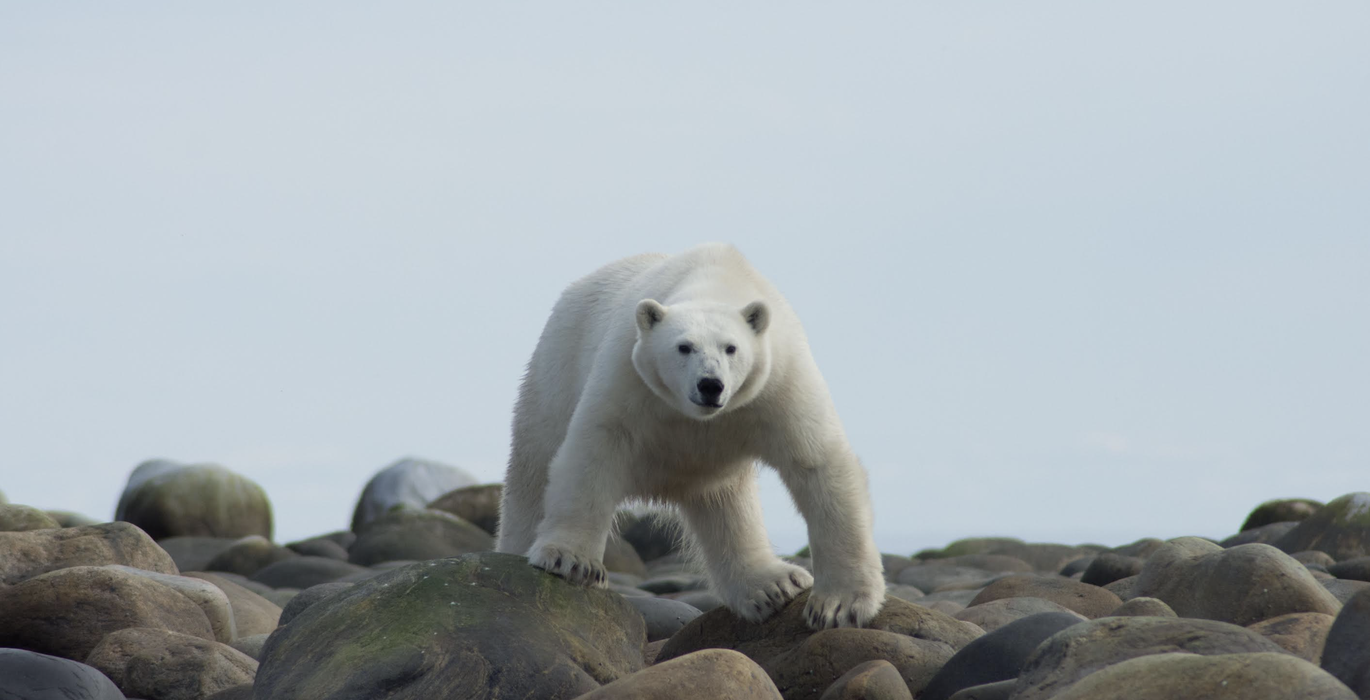
The question is not whether science matters, but who defines the rules and how those rules reflect the realities of harvesting on the land. (Credit: Felix Boulanger/Eeyou Marine Region Wildlife Board)
The proposed change is advancing through a formal process led by the Nunavik Marine Region Wildlife Board (NMRWB) and the Eeyou Marine Region Wildlife Board (EMRWB), the bodies responsible for polar bear management in their respective jurisdictions within the Southern Hudson Bay region.
Over the past several years, both boards have worked through a shared decision-making pathway across overlapping areas. Public hearings brought together hunters, community representatives, and technical experts to examine whether NQLs could play a stronger role in management.
In Nunavik, the argument for emphasizing NQLs is also cultural. Inuit harvesting has historically been guided by shared norms rather than by rigid numerical allocations.
According to Palliser, for decades, quota systems have produced social consequences that were largely unrecognized by regulators. Dividing limits between communities sometimes created resentment when boundaries were crossed, and enforcement responses deepened mistrust. Similar tensions have also arisen in the management of beluga harvests, where quota systems have generated comparable social pressures among communities.
“It pits Inuit against Inuit,” he said. “The government just makes sure the numbers are respected, but they’re not sensitive to the social impacts.”
Seasonal approaches align more closely with Inuit harvesting patterns. In practice, this can mean concentrating harvest in late winter and early spring while protecting denning periods when pregnant female polar bears remain in snow dens to give birth and nurse their cubs, through closures and den protections. The approach shifts from a hard cap to safeguarding vulnerable periods and reinforcing expectations about how harvesting is carried out, rather than simply regulating how much is harvested.
“We’re not trying to eliminate science. We’re trying to balance it"
Polar bear management in Southern Hudson Bay involves multiple jurisdictions and Indigenous rights-holders.
The NMRWB makes decisions for Nunavik’s marine region under the Nunavik Inuit Land Claims Agreement, while the EMRWB, representing Cree and Inuit interests in the Eeyou Marine Region, has its own decision-making authority.
In areas where their jurisdictions overlap, the two boards deliberate together through joint hearings and coordinated decision-making processes. Inuit representatives participate directly in these processes, shaping management decisions through the institutions created under the region’s land claims agreements.
Inuit voices have driven the push for management approaches that reflect local realities, while Cree participation remains important where responsibilities intersect. Angela Coxon, Director of the EMRWB, noted that modern Cree interaction with polar bears is largely limited to the occasional defence kill rather than subsistence or cultural harvest. Even so, Cree representation is required within joint processes to ensure their interests are formally considered.
Gathering testimony through hearings and submissions, the Boards deliberate internally, while staff prepare resolutions and rationales that accompany decisions forwarded to the federal minister for approval.
The proposed approach does not exclude Western science, but uses it to inform decisions, rather than define quotas in isolation
Federal researchers regularly conduct aerial population surveys, then use the data to produce population modelling and risk analysis, estimating potential outcomes under different harvest scenarios. These models are further refined using harvest data, reproductive rates, habitat conditions, and estimates of data uncertainty.
“We’re not trying to eliminate science. We’re trying to balance it,” Palliser said.
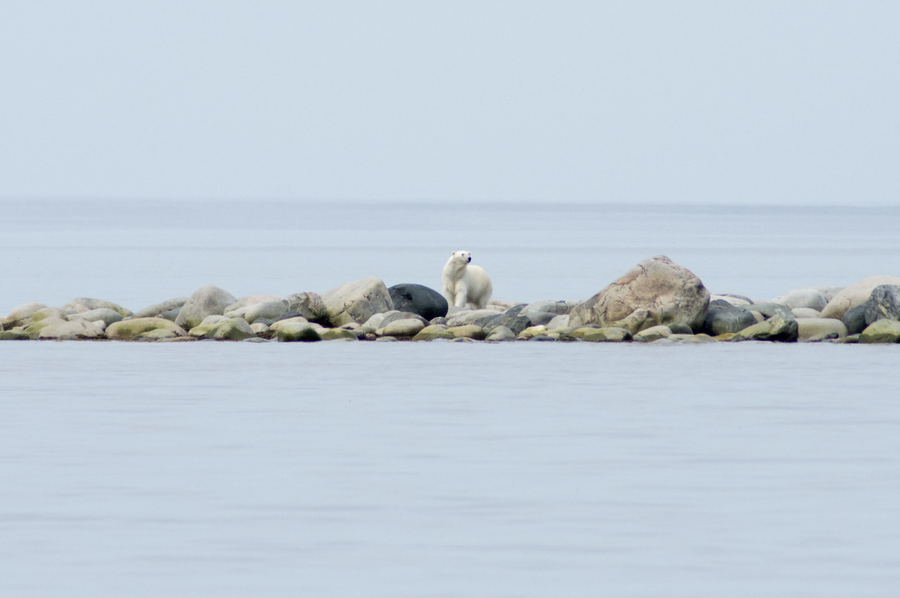
For decades, quota systems have produced social consequences that were largely unrecognized by regulators. (Credit: Felix Boulanger/Eeyou Marine Region Wildlife Board)
Accountability measures are part of that balance. During the hearing process, discussions included improved reporting and sampling requirements as potential components of a management approach that will rely less on fixed quotas. Inuit leaders argued that increased authority over management tools must be matched by clear expectations that demonstrate stewardship and responsibility.
These expectations are also grounded in cultural perspectives that shape how polar bears are understood. In Inuit knowledge systems, respect for the animal is central to the hunt. For instance, nanuq (polar bear) is not simply a wildlife species but a powerful animal with social and spiritual significance. These practices reflect a broader worldview in which animals are understood to possess agency and spirit, and where successful hunting depends as much on respectful conduct as on skill or technology.
Such dimensions rarely appear in policy frameworks, but remain part of the cultural context within which management decisions are made.
Currently, the Boards are finalizing their decision on polar bear management, including which measures should apply to the Southern Hudson Bay subpopulation under their jurisdiction based on the information gathered through public hearings and consultations. This decision will be forwarded to the federal Minister of Environment and Climate Change Canada, who must respond within 60 days by accepting, rejecting, or requesting a variance to the decision.
The final decision will determine not only the management tools used in the near term, but also how Inuit-led governance continues to shape wildlife management approaches. It will signal how Indigenous authority, legal frameworks, and knowledge drawn from generations on the land intersect in the management of a species that carries ecological, cultural, and political significance across the Arctic.
Palliser describes this progress as the result of years of work and reflection, geared toward governance grounded in Inuit knowledge, decisions led by Inuit institutions, and science woven into a broader system of stewardship.
“You can’t just oppose something for the sake of opposing. You have to do your homework, put your facts together, and show that there’s a better way.”