June 18, 2026
Leadership in the Arctic rarely follows a hierarchical model. Like moving through shifting sea ice, it requires awareness, responsibility, and the judgment to change course when conditions shift.
Jason Edmunds, an award-winning Inuk expedition leader and educator from Nunatsiavut, an autonomous Inuit region in northern Labrador, has built a career guiding travellers through both the Arctic’s physical landscapes and the deeper cultural perspectives of its communities.
“On the land or water, you learn quickly that leadership is not about control,” he said. “ The people who are respected are those who listen, observe carefully, and make decisions that keep everyone safe.”
Through his work with Adventure Canada, a travel company specializing in small-ship expedition cruises to remote destinations, he leads expeditions throughout the Arctic aboard ice-strengthened vessels. These expeditions blend Zodiac shore landings, wildlife observation, and onboard learning programs that connect travellers with northern environments and Inuit communities, fostering cultural understanding, environmental awareness, and meaningful dialogue about the social and ecological changes shaping the North.
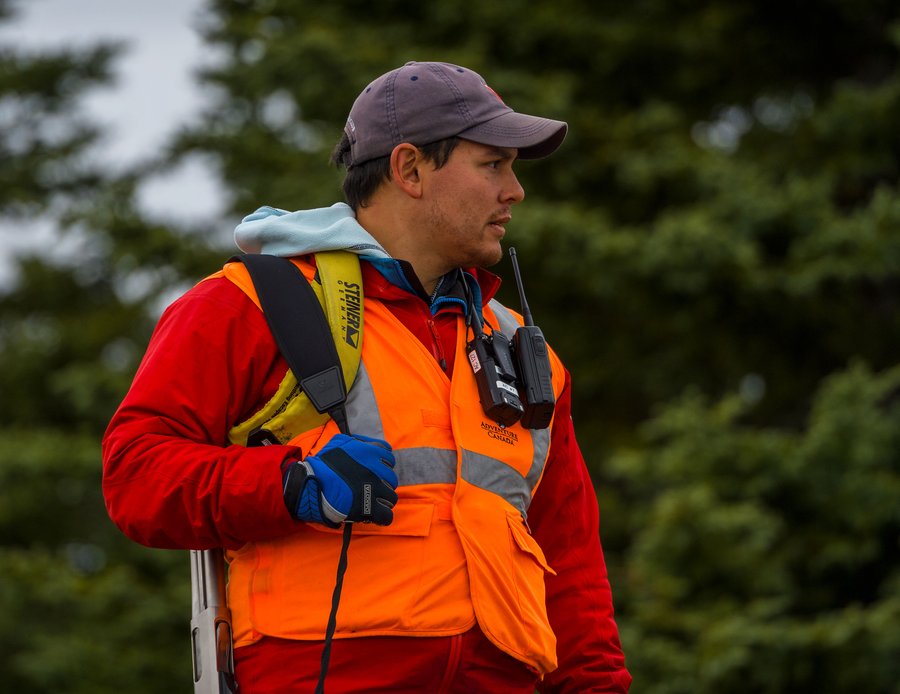
Edmunds’ approach to leadership is shaped by his upbringing, prioritizing attentiveness and collaboration over authority. (Credit: Scott Forsyth)
Edmunds’ approach to leadership is shaped by his upbringing, prioritizing attentiveness and collaboration over authority.
“Whether we are navigating sea ice or working with communities, the goal is the same: proceed with intention, listen well, and make decisions that respect both the environment and the people connected to it.”
As an expedition leader, Edmunds works alongside the ship captains and crew. He sees a parallel between navigating frigid Arctic waters and engaging with the cultural realities of the Arctic.
“Like travelling through ice, cultural learning comes with obstacles. Some conversations are open and productive. Others are uncomfortable,” he says. “In those moments, you may need to slow down or take a different approach. The goal isn’t to push through every barrier, it’s to guide people toward a better understanding of the place and the people connected to it.”
According to Edmunds, many guests to the region arrive with preconceived ideas about the Arctic. One of the most powerful shifts occurs when they begin to recognize that the region is not merely a remote wilderness, but a lived-in homeland.
For many visitors, this realization reframes national conversations about climate change, reconciliation, and development, illustrating how these issues directly affect people whose lives are rooted in the North.
“That idea can be difficult to process, but when it lands, it changes how people see their role,” he said. “Visitors often leave with a deeper sense of responsibility and an understanding that participation matters.”
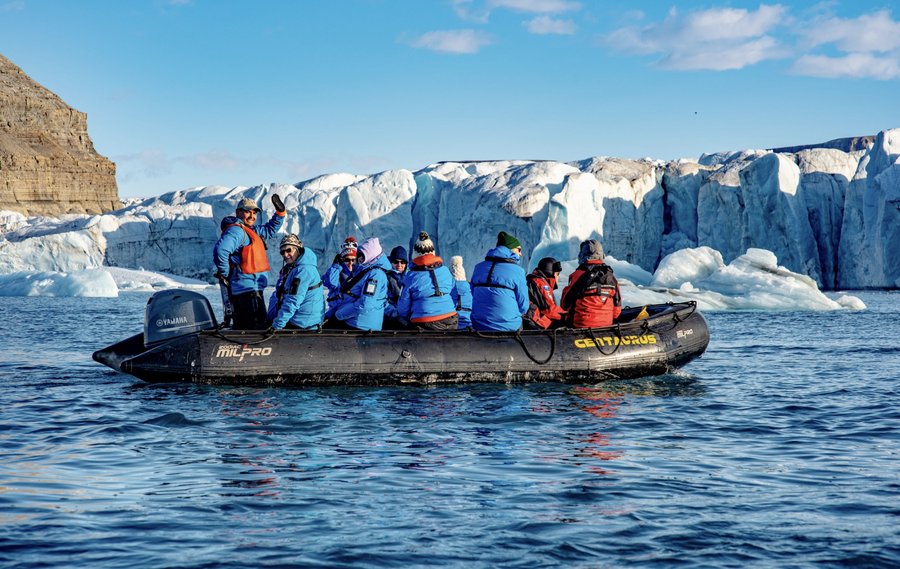
Jason Edmunds guiding guests along a tide water glacier at Devon Island. (Credit:Victoria Polsoni)
Hearing directly from Inuit voices is often central to that transformation, encouraging guests to reconsider their assumptions and view the Arctic through a more informed lens. The shift tends to unfold gradually through observation, reflection, and a willingness to adapt one’s perspective.
“How we interpret a place can shape what they carry with them when they leave,” he said. “Done well, it builds understanding and respect. Done poorly, it can reinforce stereotypes.”
Also a Director with Adventure Canada, Edmunds operates at the intersection of community, culture, and tourism, grounding every decision first in his perspective as an Inuk and community member. This foundation helps him navigate the realities of the places they operate while balancing sustainability and the practical needs of running an organization responsibly.
“I try not to see them as competing forces,” he said. “I’ve always believed that business and community can work together when the relationship is built with thoughtful intent. The word I come back to is alignment rather than balance.”
Edmunds acknowledges conflicts can arise when different priorities collide. Some opportunities may make financial sense but require careful consideration of community relationships and cultural context, as a purely "business as usual” approach risks creating extractive, rather than mutually beneficial, outcomes.
“In those moments, the work becomes about approach rather than compromise. You ask questions, involve the right voices, and move forward thoughtfully. If you do that well, the outcome can strengthen both the business and the communities connected to it.”
He emphasizes the importance of guiding visitors, helping them understand what it means to be a guest in this place.
“Coaching rather than correcting can shift perspectives, one person at a time.”
At its core, his approach reframes tourism as a relationship rather than a transaction. He often returns to the idea that Indigenous tourism can serve as a form of reconciliation in practice, echoing a phrase from Keith Henry, President of the Indigenous Tourism Association of Canada, who described Indigenous tourism as “reconciliation in action.”
“When those elements are in place, expedition travel can become something restorative rather than extractive, something built on partnership, not use.”
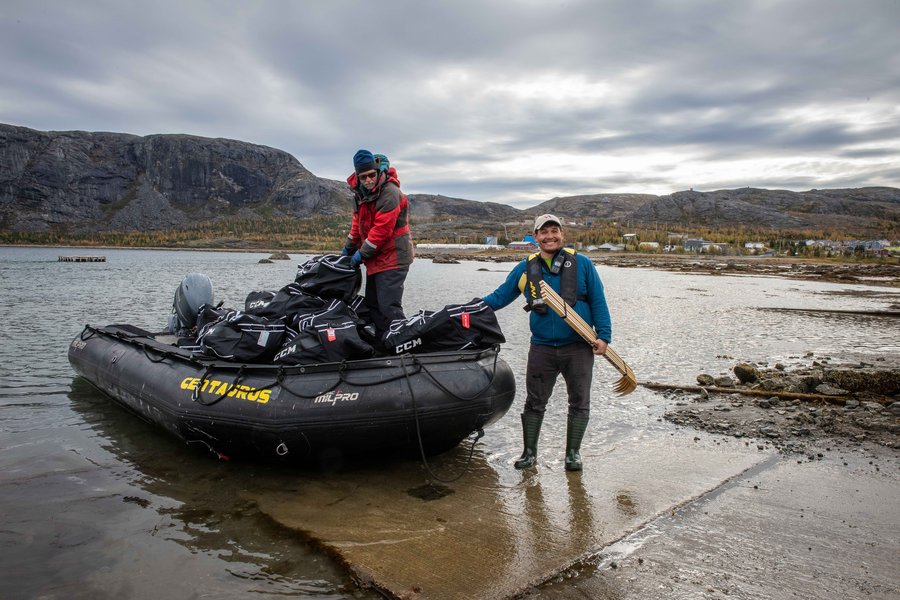
Edmunds emphasizes the importance of guiding visitors, helping them understand what it means to be a guest in this place. (Credit: Scott Forsyth)
Approaching communities with respect, he says, shapes how relationships are built and sustained over time. Reciprocity develops through listening to local priorities, supporting community-led initiatives, and ensuring residents are active participants in shaping what happens in their home.
“When that takes hold, the relationship shifts. It becomes less about a company visiting a place and more about a shared effort to create something meaningful together.”
He noted that this approach has long been part of Adventure Canada’s ethos, requiring ongoing care and commitment rather than one-time engagement. Edmunds also founded Nalunaiqsijiit: Inuit Cruise Training in collaboration with the Government of Nunavut and AECO (Association of Arctic Expedition Cruise Operators). The program, designed to help create training opportunities for Inuit interested in expedition work, combines marine safety training, guiding skills, cultural interpretation, and industry exposure.
“Expedition ships regularly travel through Inuit homelands, but historically there have been limited pathways for Inuit to participate directly,” he said. “That meant many ships operated with few, if any, local voices onboard.
The program has already shown encouraging results, with participants gaining certifications required to work as expedition cruise staff, building confidence, and developing pathways into the expedition industry. Equally significant is the presence of Inuit guides onboard, helping ensure that the stories shared about the Arctic reflect the perspectives of the people who live there.
Jason has received national and international recognition, including the Royal Canadian Geographical Society’s Martin Bergmann Medal and inclusion in The Explorers Club 50.
As an Inuk leader, he views these honours as recognition of the broader network of communities and colleagues contributing to the work. The awards reflect a wider shift in how the Arctic is understood—moving away from interpretations shaped primarily by outside voices and toward greater recognition of Indigenous perspectives as essential to understanding the region.
“If these honours help amplify those perspectives and encourage more Inuit participation in leadership roles, then they carry real meaning.”
Banner image credit: Scott Forsyth