November 19, 2026
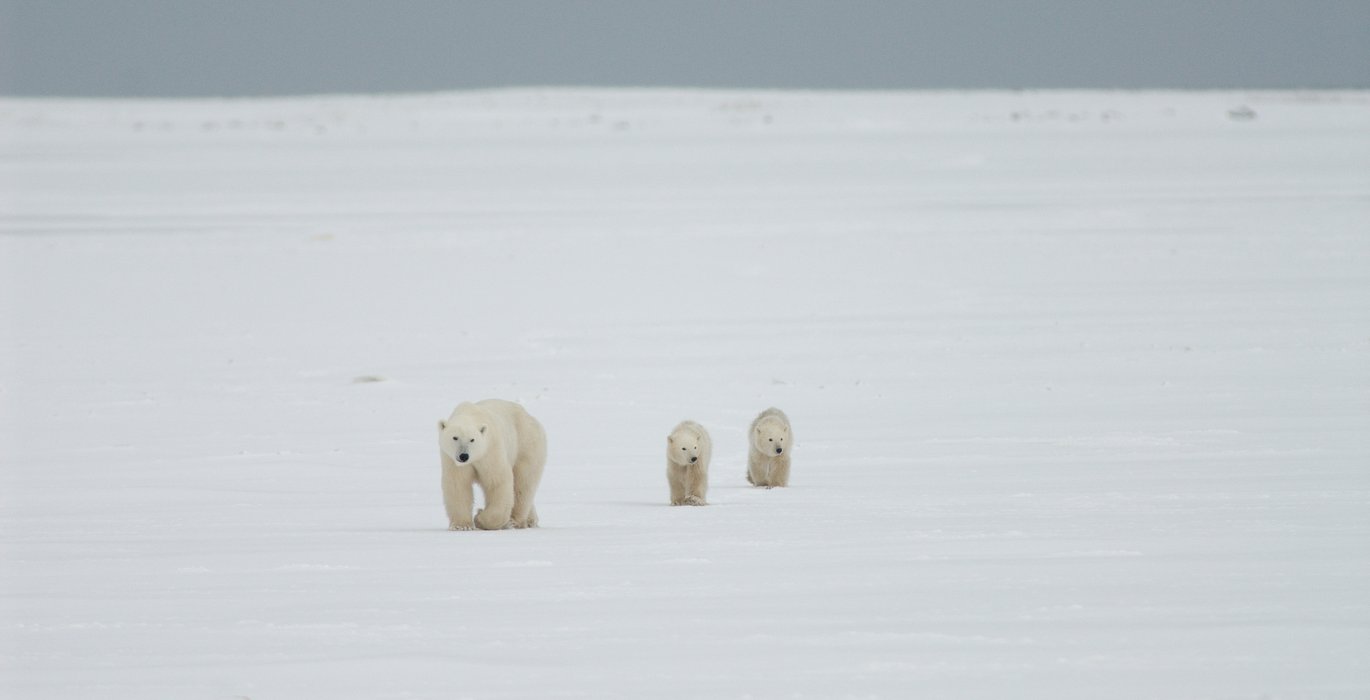
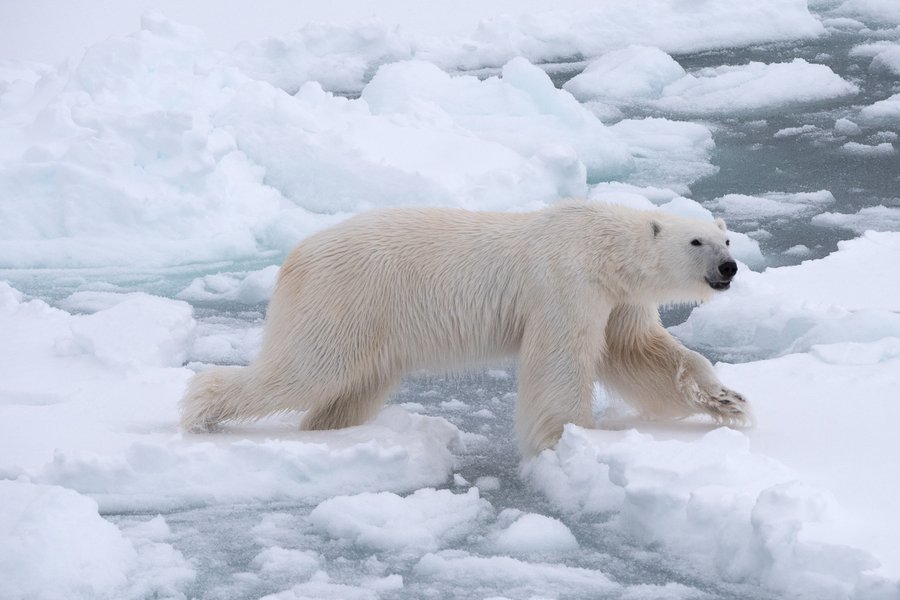
Just off Kvitoya Island in the Svalbard Archipelago, scientists are using a satellite collar to track Ettra, a 19-year-old female polar bear, as she follows retreating ice.
Thanks to a collaboration between the Norwegian Polar Institute (NPI) and Polar Bears International (PBI), anyone with access to the internet can now follow along on her journey via the Barents Sea Polar Bear Tracker.
(Credit: BJ Kirschhoffer/Polar Bears International)
Known to scientists as N26479, Ettra was last seen in person by scientists during spring, with a male in pursuit. They believe the two bears likely mated and, if reproduction is successful, she will likely den and have one or more cubs over the winter.
The tracker, which went live in mid-July, is also following another bear with very different habits: an 11-year-old female bear dubbed Tuva.
“In this region, bears have essentially two different lifestyles,” said PBI vice president of science and policy Geoff York.
Ettra is what scientists call a pelagic Svalbard bear, which means she follows the receding sea ice each summer in search of seals. She covered more than 650 kilometres from April to early August. Tuva, by contrast, is a coastal Svalbard bear who has moved only about 23 kilometres since tracking began.
(Credit: Kieran McIver/Polar Bears International)
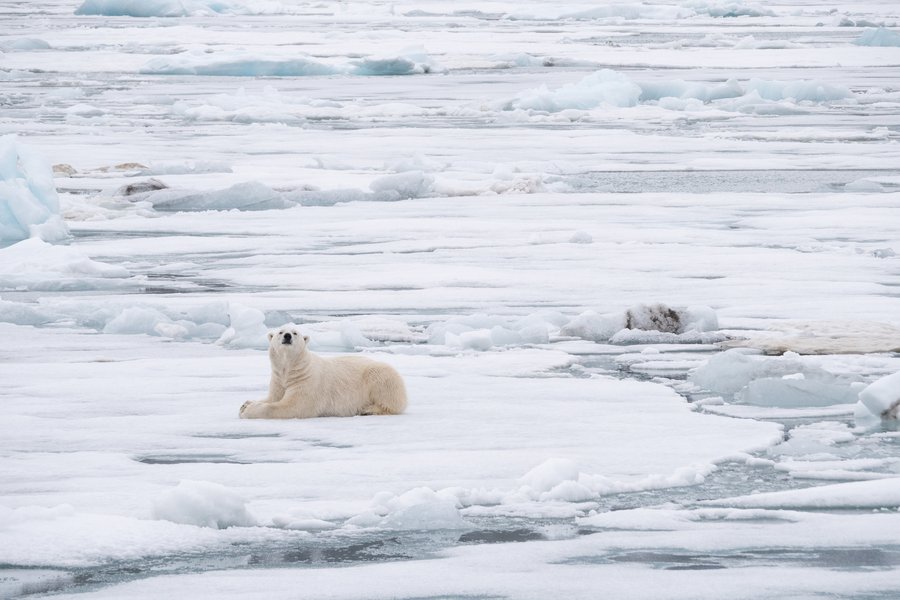
Coastal Svalbard bears have much smaller home ranges than pelagic bears, and they generally stay close to fjords and landfast ice while hunting ringed seals and reindeer, and foraging for bird eggs.
The Barents Sea tracker is modelled after the Hudson Bay Polar Bear Tracker, a partnership between PBI, the University of Alberta and Environment and Climate Change Canada that has been tracking bears near Churchill for more than a decade.
Scientists are following these Svalbard bears, along with more than a dozen bears near Hudson Bay, to learn about their movements and habits. The data they collect supports long-term research projects, and some is now being shared with the public through the trackers.
According to York, sharing information with the public through polar bear trackers is a great way to help people become invested in polar bears' lives and experiences.
“It allows us to create a connection with people,” he said.
However, location information is time-delayed to discourage people from pursuing the bears for viewing or other purposes.
(Credit: Kt Miller/Polar Bears International)
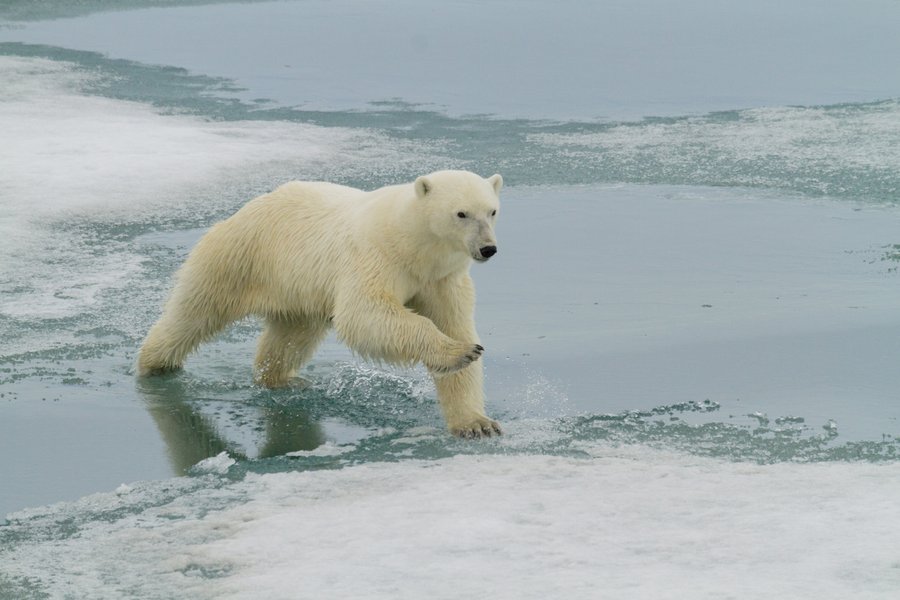
In addition to recording movements, these collars can be equipped with other features such as saltwater switches that indicate if the bear is on land or swimming, accelerometers providing detailed movement information t, and temperature sensors that can reveal if a bear is snuggled in a den or outside exposed to the elements.
“As a scientist, you want all of these things, but there's a cost in battery life,” York said. “There's a cost in the size and the weight of the collar, and so a lot of researchers have dropped back the number of add-ons that they put on collars.”
Although the collar stores all the data it collects, making it a treasure trove of information for scientists, only a small portion of that data, such as the bear’s location, is transmitted via satellite a few times a day to preserve battery life.
Since polar bears can cover vast areas of land, ice, and water, retrieving these collars can be daunting. As a result, each collar has an auto-release mechanism set on a timer so that it falls off after a set period, often around a year.
“You try to set those at a time when you think bears might be on land or closer to land, if that's possible, or when you know there will be significant sea ice, and you hope that they might drop those collars where you could go get them,” York said.
(Credit: Kt Miller/Polar Bears International)
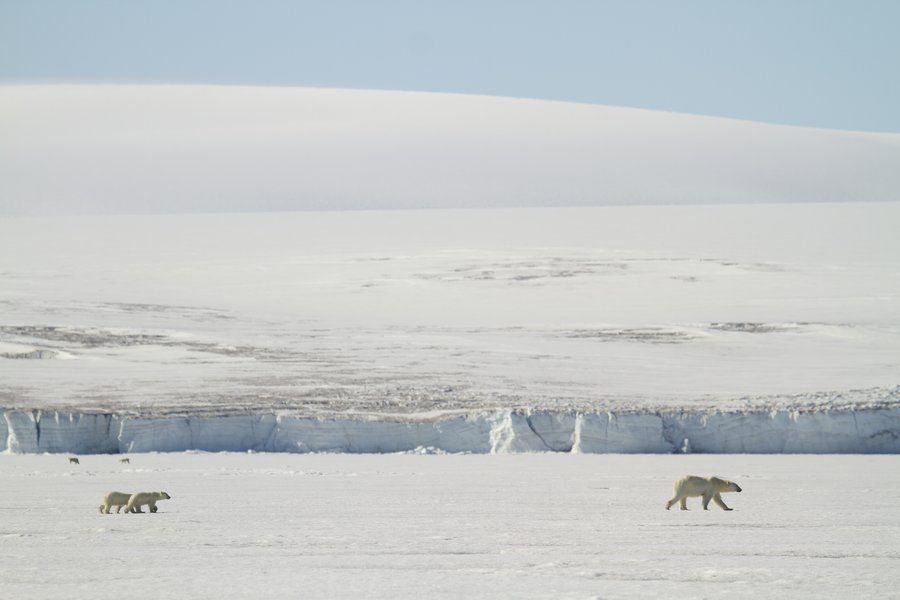
The collars are used only on female bears because male bears’ necks are so massive that a collar can slip right off.
“Males’ necks are much larger than their heads, and it's one of the ways you can identify a male from a distance,” York said.
Researchers use other methods to track male bears, such as small satellite ear tags and a burr-on-fur device that can attach to their fur for a few months at a time.
“We're unable to actually observe them for most of their lives, unlike their terrestrial relatives, where you could look in one valley and study a family of bears throughout their life, because they stay in that one valley,” he said. “[Having] that kind of data has been absolutely critical and continues to be for our understanding.”
He added that learning how bears use their habitat, where they den, the impacts of sea ice change, and locating bear hotspots can help inform conservation decisions and answer questions about how many bears might be using certain areas during specific times of year. This information could, for example, help assess the potential impact of something like increased ship traffic or an oil spill, if one were to occur.
“It’s really only through periodically putting out these tracking devices and understanding changes over time, and how bears are moving and using different habitats, that we're able to answer these kinds of applied management questions, and decide what protections are needed, both spatially and temporally.”