October 22, 2026
High in the Arctic, an alert sounded, giving a remote research station’s staff just enough time to avoid a potentially deadly encounter.
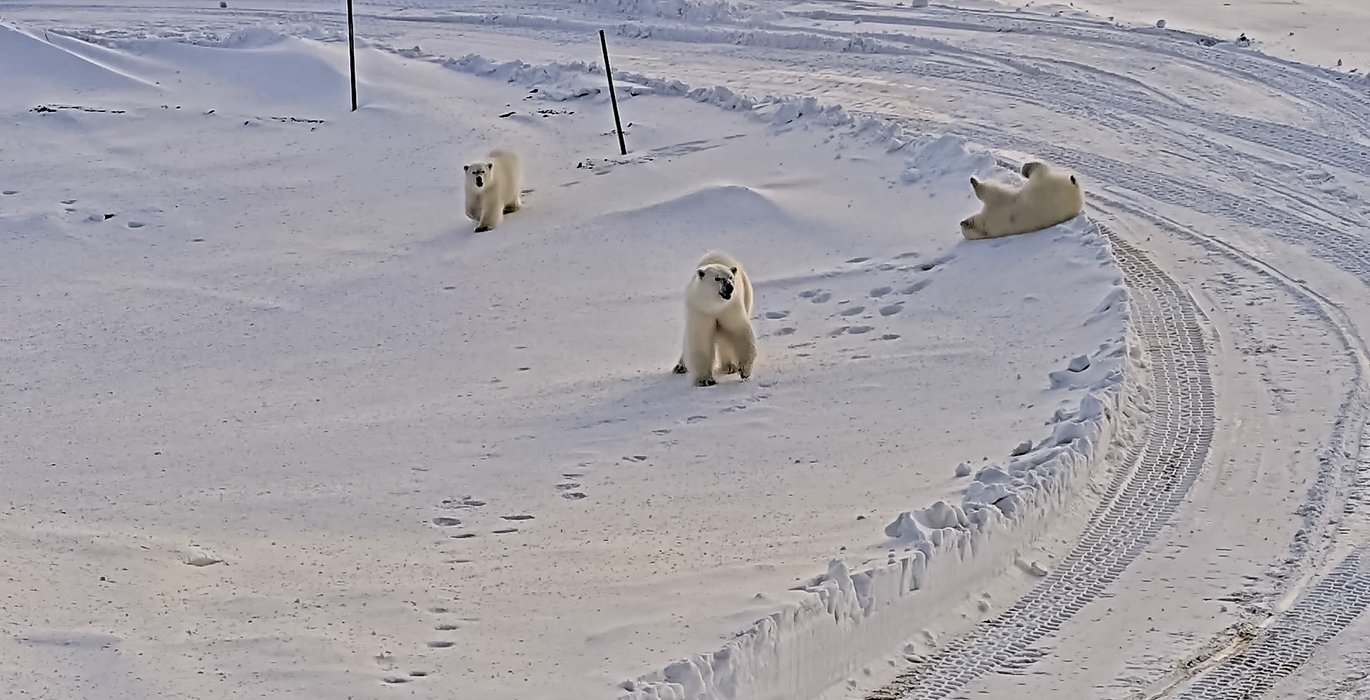
In May, when a mother polar bear and her two cubs approached the Environment and Climate Change Canada weather station in Eureka, Nunavut, the station’s new Bear-dar early detection system quickly detected the bears and alerted its workers.
Monitoring a live camera feed, staff kept people away from the bears before using a pick-up truck with a track conversion for snow travel to safely guide the family away from the station and back toward the sea ice, ensuring that no humans or bears were harmed.
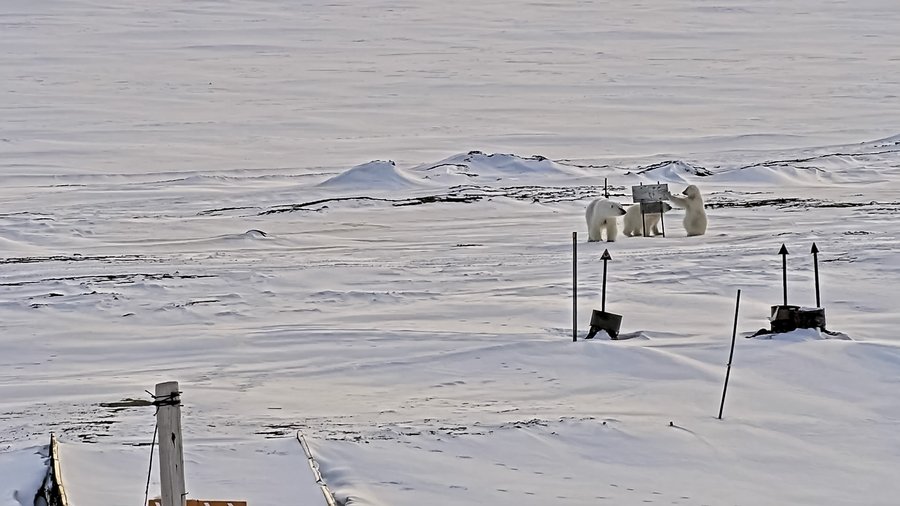
A mother polar bear and her two cubs approaching the Environment and Climate Change Canada weather station in Eureka(Credit: Polar Bears International)
The station, located on Ellesmere Island in the High Arctic, has been operational since 1947 and is home to a small number of staff members. With polar bears regularly moving through the region, Bear-dar—a system built largely around the SpotterGlobal Compact Surveillance Radar—represents a significant advancement in the station’s polar bear detection capabilities. Originally a nickname, Bear-dar has since become the system’s official name.
“In the past, the station would only, and kind of could only, respond if a person saw a bear personally, like looking out the window or walking while they're outside, or if they saw footprints, and so it really was kind of a reactive response to ‘there’s a bear right near the station’,” Bakker said.
This incident marked the first successful field detection and deterrence using the Bear-dar system, developed by the nonprofit Polar Bears International (PBI), and Spotter Global, which produces radar and surveillance systems.
As climate change continues to erode polar bears’ sea ice habitat, some populations are forced to spend more time on land, leading to increased conflict with humans. This new technology, which helps people proactively avoid harmful interactions with polar bears, protects both humans and wildlife.
“If we can prevent surprises, then people can plan ahead, and we can keep both people and polar bears safe,” said Elbert Bakker, Research Support Specialist with Polar Bears International.
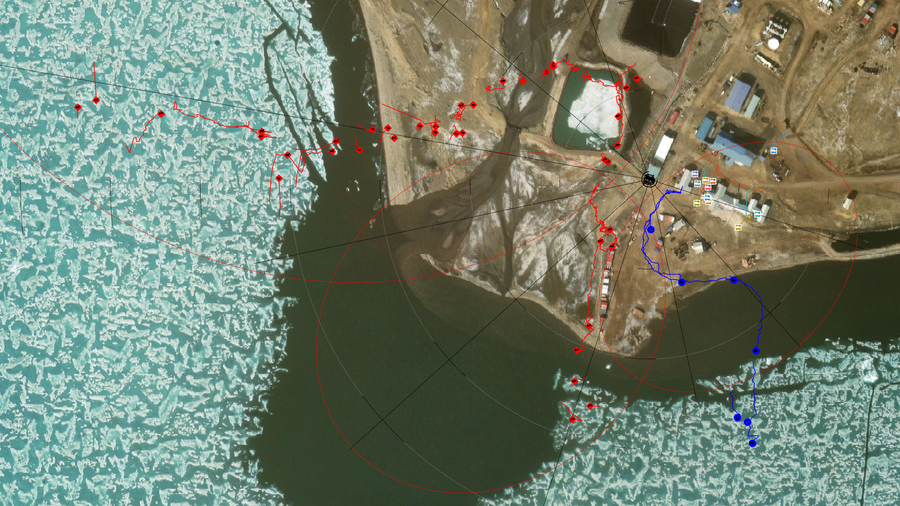
The radar map shows the tracked approach of polar bear family (red) and the weather station staff later steering the family away from the station with a truck (blue). (Credit: Polar Bears International)
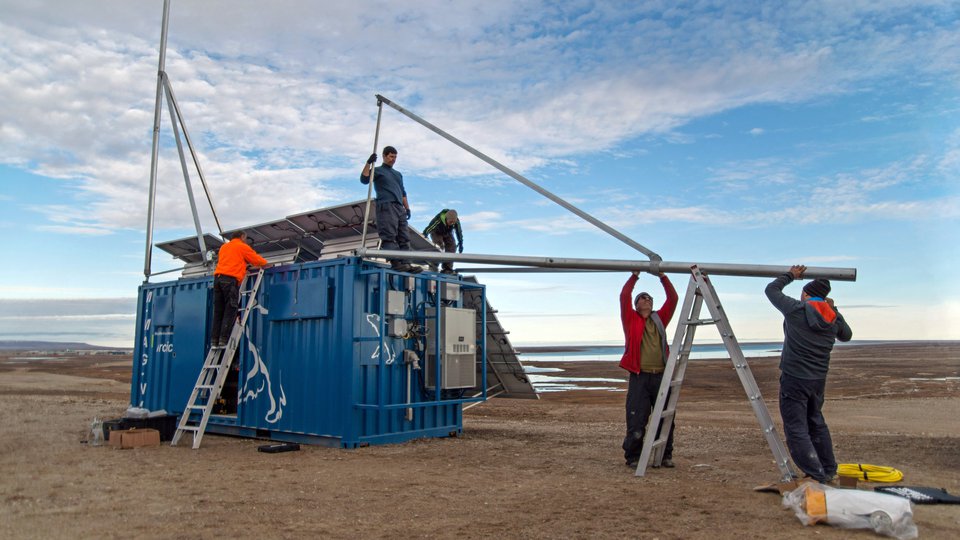
The Bear-dar system at Eureka includes three radar panels facing towards the buildings and down the coastline, allowing it to detect approaching bears at distances of 250 metres, 400 metres, and up to 1.2 kilometres. While future versions of the system may use a single radar panel, researchers are using the current three-panel setup to collect additional data to refine the technology.
The system combines radar detection with infrared-equipped cameras to monitor movement across the landscape. It operates around the clock, which is important as 24-hour darkness envelops the station for months at a time each year.
Bear-dar works by detecting motion on the landscape, using a 10- 10.5 GHz frequency to pulse, then listening for its bounce back, scanning around eight times per second to see if anything has moved. Once it detects a moving object, the system uses AI to analyze the object’s size, speed and appearance to determine what it may be.
If the system identifies a potential polar bear or can’t determine what a moving object is, it sends an alert to staff—like the one received by Eureka Weather Station personnel in May. A beep from the office workstation notifies staff when an animal track is active, and a second alert sounds if the animal appears to be moving toward the station. Outside, a beacon light activates to warn people of approaching wildlife, though staff can turn it off if they determine it is not needed.
From the safety of the station, staff can follow the animal’s movements on a map of the area and use the system’s cameras to monitor it in real time. At Eureka, this allowed personnel to track the polar bear family as they were safely deterred from the station and guided back toward the sea ice. The cameras also allowed staff to continue monitoring the bears’ movements afterward, including observing the family at a seal kill.
While the Eureka weather station was the first field deployment of this technology, it has been in development and testing for years. Much of this testing has taken place near Churchill, Manitoba, popularly known as the polar bear capital of the world.
“There are so many bears that come through Churchill in the fall every year waiting for the sea ice to form, so there's a known gathering of bears,” Bakker said. “So we trained the system on the bears there, and it could pick up the bears moving on the landscape, so that was good confirmation.”
Researchers taught the AI system to use prediction modeling to recognize a variety of different moving objects, including animals, people, and vehicles. The team also brought the Bear-dar system to the Assiniboine Park Zoo in Winnipeg for a few weeks, placing it near a polar bear enclosure to help train it to recognize polar bears.
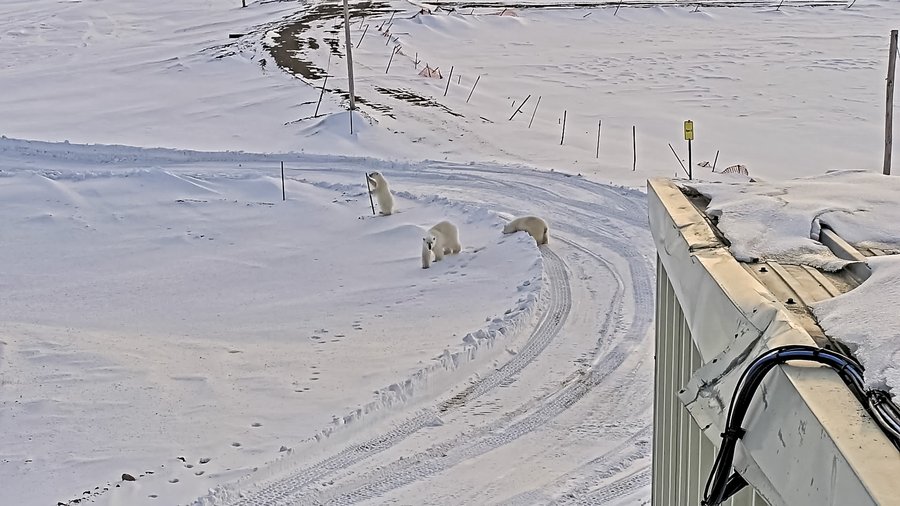
From the safety of the station, staff can follow the animal’s movements on a map of the area and use the system’s cameras to monitor it in real time. (Credit: Polar Bears International)
Once the system was installed, the team spent time working with the AI system to ensure it recognized common human activities at the station, including trucks, tractors, snowmobiles, and 4x4s, and to train it so it wouldn’t alert on these everyday movements.
“If it’s not human, that’s what we want to hear about,” Bakker said. In addition to polar bears, Eureka’s Bear-dar has also detected other wildlife, such as wolves, Arctic terns, and muskox.
While stormy conditions can make it difficult for cameras and the human eye to spot wildlife, Bear-dar’s radar can continue to detect movement even in rain and light snow.
“It really does extend the detection quite a lot past what a human or a camera could do,” Bakker said. He noted, however, that major winter storms, such as blizzards with gusty winds, can trigger movement alerts.
PBI and partners hope to bring Bear-dar technology to other remote camps and are working to make more portable systems for easier transportation, especially since shipping to remote communities and camps can require months of lead time.
They hope the technology will provide an additional layer of safety by giving people in remote camps and villages information about approaching bears, helping them avoid negative human-bear interactions.