December 11, 2025
The Inuit Art Foundation (IAF), in collaboration with the Canada Council for the Arts, has launched Kajungiqsaut Grants, a new funding initiative dedicated to supporting Inuit working in the arts.
“The Kajungiqsaut Grants offer an alternative path forward that actively works to encourage artists, build confidence and put agency back in the hands of Inuit artists,” Amy Norman, IAF’s Artist Services Manager.
Co-developed with the Canada Council for the Arts, the Kajungiqsaut Grant program is offered to all Inuit Nunangat. Applicants can apply online, by hand, or verbally over the phone, in both English and Inuktitut, ensuring accessibility for those facing challenges around language, technology, or the sometimes complicated application process.
“A lot of arts funding feels inaccessible and full of barriers to the Inuit,” added Norman.
IAF has been supporting Inuit artists for the past 30 years. The foundation comprises a series of programs, including its flagship magazine Inuit Art Quarterly (IAQ).
The program has given away more than $1 million directly to Inuit artists.
Launched in April 1986, the magazine was created to showcase and promote Inuit art from across the North, providing a platform for discussion, sharing, and recognition of artists’ work. Its ongoing mandate continues to help Inuit artists in any medium connect with audiences both locally and internationally.
In addition to IAQ, the foundation offers Artists Services, providing practical support to help Inuit artists succeed and achieve self-reliance.
For painter and illustrator Saima Romito Kalluk of Iqaluit, Nunavut, that support has been transformative. The Kajungiqsaut Grant enabled her to undertake a larger-scale project, which she says can be challenging as a young artist balancing her creative work with earning a living.
“The ability to get these big supplies to do a big-scale project like this is so exciting. It’s the first time I’ve had an opportunity to do anything like this,” she said. “It’s just so helpful and incredible that I got this opportunity, and I’m definitely excited to showcase what I can do through the Inuit Art Foundation.”
In August 2025, the Inuit Art Foundation made history by electing its first Inuk Executive Director, Lindsay McIntyre. With a board composed mainly of Inuit members, the foundation strengthens the development and distribution of programs such as the Kajungiqsaut Grants, ensuring that funding reflects the needs and vision of Northern artists.
This Inuit-led funding initiative, created by Inuit artists for Inuit artists, emphasizes self-determination at its core. Through it, the Inuit Art Foundation is helping shift the narrative around Northern creativity—from being defined by outsiders to being shaped and celebrated by the artists themselves.
Jury panels for the grants are also assembled by Inuit to ensure cultural relevance. This helps put the decisions being made about the future of Northern art back into the hands of Northern artists.
“The grants are now in their fourth year,” Amy Norman said. “The program has given away more than $1 million directly to Inuit artists.”
The Kajungiqsaut Grants are divided into three streams, each designed to support different stages of an artist’s practice. The first, Sutaarutit, meaning “to gain materials,” provides $500 or $1,000 to help artists purchase supplies and tools. This is especially important to new artists, but it can also help restart projects for those who have run out of tools or supplies. Eligible applicants are Inuit artists living in Canada who are 18 or older.
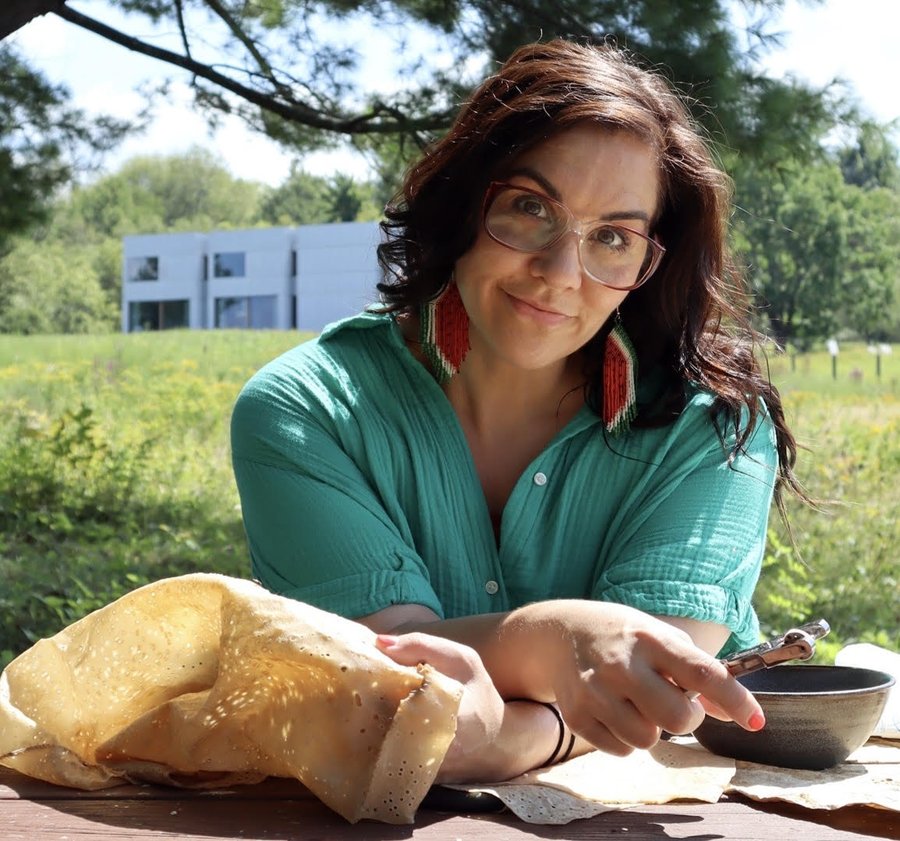
Lindsay McIntyre, first Inuk executive director of the Inuit Art Foundation. (Credit: Frances Cathryn Forge Projects)
Iniqarvik, meaning 'to have space,' offers funding of $ 3,500 to $ 5,000 to give artists the time and resources to experiment and develop new ideas. The purpose of these funds is to allow artists time to practice their skills, develop new ones and have fun with the process. Having an opportunity to try and fail, with learning at its core, is a vital second step for those artists looking to expand their practice.
Finally, Turaagaq, meaning vision, is aimed at artists with large-scale projects and a clear goal. Grants range from $10,000 to $15,000, encouraging recipients to share their vision, engage their communities, and foster the benefits of a creative life for others. This stream aims to help artists turn ambitious ideas into tangible, impactful work.
Over 200 artists have received funding through these grants.
“Kajungiqsaut Grants have helped hundreds of Inuit artists over the last few years,” Amy Norman said. “We’ve heard from artists who have gotten to try new artistic mediums, and it’s so fun to see the work they create.”
The IAF also offers grants for Inuit artists living in Ontario through the Indigenous Visual Artists Materials grant. There’s the Watt Scholarship for Inuit post-secondary students studying in the arts and culture field. Additionally, the Kenojuak Ashevak Memorial Award is available to mid-career Inuit artists who are looking to start or follow through on projects.
The foundation continues to offer online workshops, skill-building sessions and learning opportunities to help those with lifelong learning ambitions. They introduce new ideas to youth, help them get started in their careers and then offer assistance to keep artists working, creating, educating and inspiring others.
“The Kajungiqsaut Grants are important to Northern artists because without them, hundreds would be missing out on funding,” Amy Norman said.
You can find out more about what the IAF does, the grants they offer, and check out all their Northern Art collective at InuitArtFoundation.org.
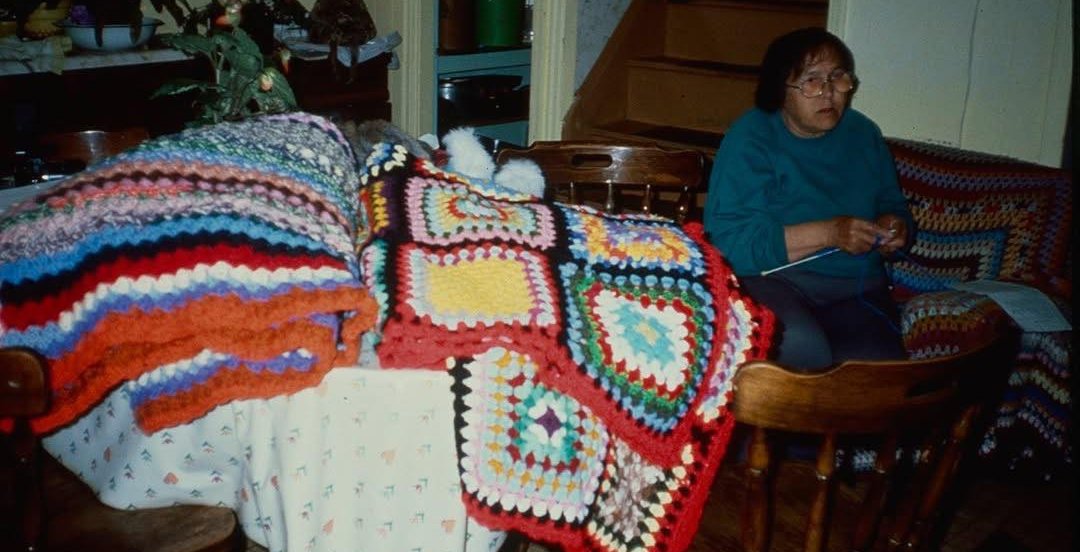
Banner image caption: Peace McNeill Crocheted Blankets (1989) COURTESY IAF © THE ARTIST