August 13, 2026
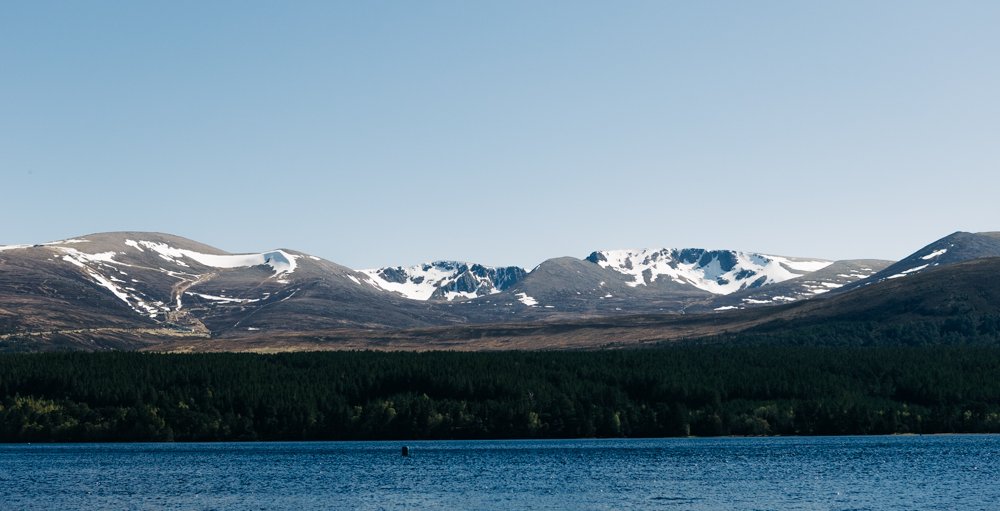
High in Scotland’s Cairngorms, Britain’s highest and coldest mountain range, pockets of Arctic-like tundra cling to existence amid a warming climate.
While Scotland is not part of the Arctic, it is considered the world’s most northerly non-Arctic nation. The country’s northernmost mainland point, Dunnet Head, lies just 550 miles south of the Arctic Circle.
In the Cairngorms, the plateau’s unique conditions support species and habitats more commonly associated with far northern latitudes. As temperatures rise, this fragile ecosystem has become both a refuge for Arctic biodiversity and a frontline for understanding the impacts of climate change.
“This habitat really is the frontline of the rapidly shrinking Arctic tundra up North, and we are really clinging onto it here,” said Joe Mann, Operations Coordinator at Wilderness Scotland.
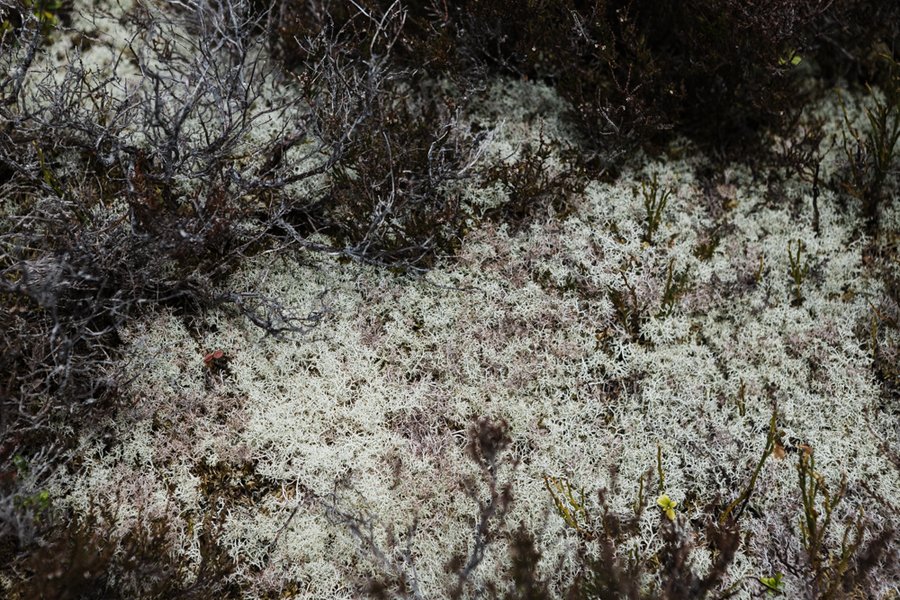
Reindeer lichen in the Cairngorms. In the Cairngorms, the plateau’s unique conditions support species and habitats more commonly associated with far northern latitudes. (Credit: Karthika Gupta)
The Cairngorms now serve as a living laboratory for climate science and ecological restoration, with initiatives such as the Scottish Arctic Network and Scotland The Big Picture using the region to strengthen research, conservation, and knowledge exchange connected to the rapidly changing Arctic.
An Arctic plateau in the Highlands
The Cairngorms, sometimes described as Scotland’s “Arctic plateau,” is a high-altitude desert shaped by glaciers, ice, relentless wind, and extreme weather, especially in winter. The UK temperature record was set at Braemar at −27.2 degrees Celsius in 1982.
“On exposed summits, wind chill can plunge below −40 degrees Celsius during severe storms, and we sometimes have snowdrifts and whiteouts even in Spring,” added Mann.
These extremes, combined with a short growing season, make the region scientifically valuable for research because alpine and subalpine ecosystems are among the most climate-sensitive in the world.
One of the most distinctive features of the Cairngorms is the presence of snow patches that can persist year-round in sheltered corries. Their survival depends on a fragile balance of snowfall, temperature, wind, and rainfall, which also supports the mites, springtails, and other soil organisms responsible for nutrient cycling. But in recent decades, Scotland’s best-known snow bed, the Sphinx snow patch in Garbh Choire Mòr, entirely disappeared for some years.
“We’ve been losing our snow at these mid-levels in as early as May,” said Mann. “This hasn’t been a common theme until recently.”
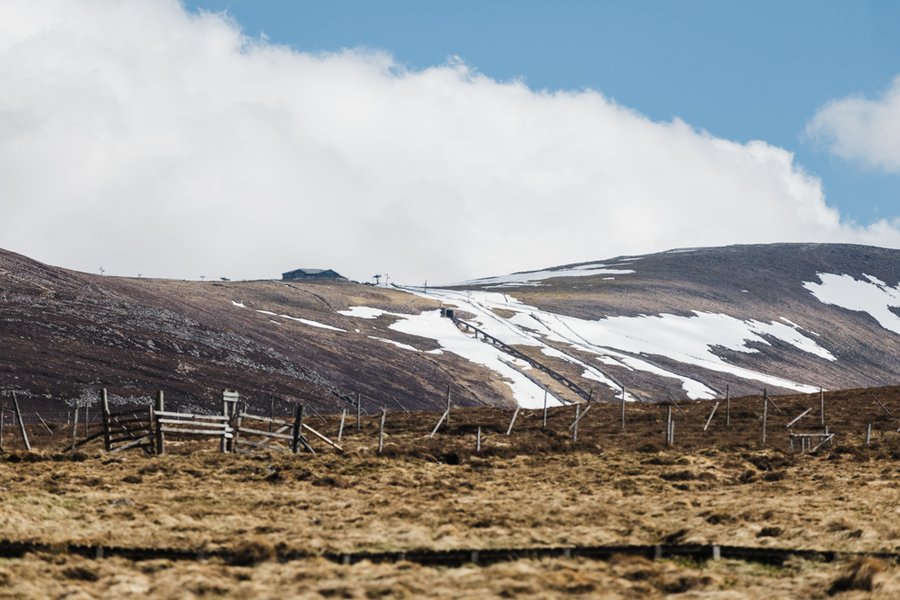
An area near Cairngorms plateau. The Cairngorms, sometimes described as Scotland’s “Arctic plateau,” is a high-altitude desert shaped by glaciers, ice, relentless wind, and extreme weather, especially in winter. (Credit: Karthika Gupta)
A recent study by the UK Centre for Ecology & Hydrology found that when snow beds shrink due to climate variations, it alters soil processes and ecosystems long before visible species loss occurs, thereby shifting the ecological calendar of the mountains. Spring arrives earlier, species fall out of sync with food availability, and vegetation steadily creeps uphill, compressing the already limited alpine zone.
“As that habitat keeps getting squished even a little bit, we start competing with other rare Arctic-alpine plants like Alpine lady’s mantle,” added Mann.
Bringing back iconic species
Few visitors expect to find reindeer in Scotland, a species that went extinct in the 12th century due to over-hunting and habitat loss. Yet the Cairngorms are home to the UK’s only free-ranging herd of about 150 animals, which were reintroduced in the 1950s by Swedish Sámi herder Mikel Utsi and his wife, Dr. Ethel Lindgren.
“Utsi was actually on his honeymoon in the park when he noticed the conditions resembled his native Sweden, and it took him five years from ideation to bring the first few reindeer here,” said Mann, who is also a ranger at the reindeer center.
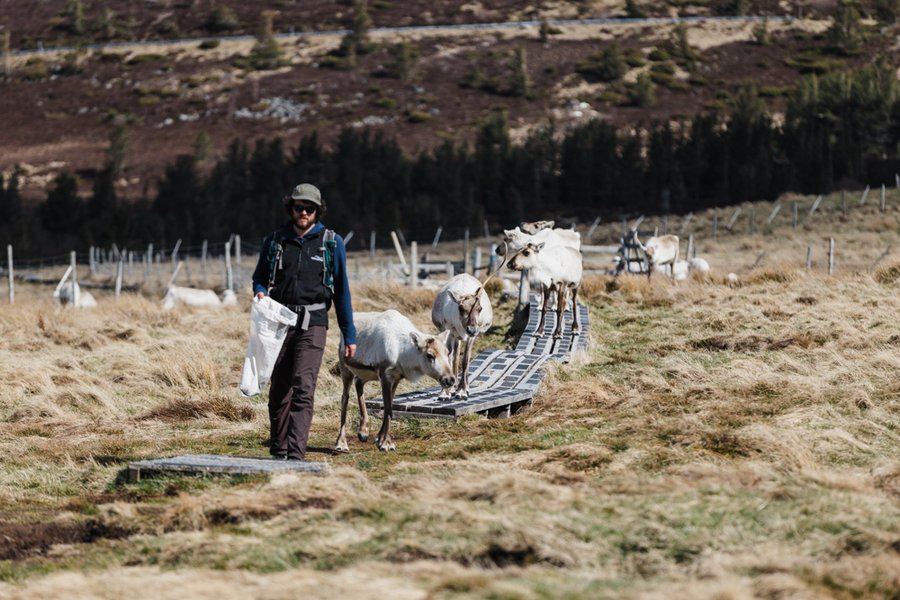
Joe Mann and Cairngorms reindeers. the Cairngorms are home to the UK’s only free-ranging herd of about 150 animals. (Credit: Karthika Gupta)
During warmer months, this herd remains on the high ground, grazing above 3,000 feet where fragments of a near-Arctic ecosystem still survive. The herd has become both a conservation symbol and a reminder that Scotland once successfully supported ecosystems associated with Arctic environments.
In the absence of natural predators, population control is key for herd management to prevent overgrazing.
“The Cairngorm plateau is such a fragile environment that if we put too many reindeer up there, we could have a negative impact,” added Mann.
Another responsibility of the center is to support wider reindeer research and collaboration. According to Mann, the organization recently added a new charity, The Reindeer Trust, and hopes to fund future scientific studies that will benefit remote, nomadic reindeer herding cultures and herds.
“One idea is to strengthen genetic diversity through artificial insemination with reindeer populations elsewhere to make the stock resilient to disease or environmental changes.”
Rewilding ecology
Beyond the plateau, a broader restoration movement is reshaping the Highlands. Centuries of deforestation, drained wetlands, overgrazing, and unnaturally high red deer populations have stripped away many of the region’s natural ecological processes. Now, conservationists across the park are focusing on keystone species to fix those processes from the ground up.
“It is easy to think of the Highlands as 'wild,’ but much of that wildness is from the forced removal of forests and predators over centuries,” stated Mann. “Perhaps it is better to call it reintroduction or rehabilitation instead.”
A leading example is the return of the beaver in 2023 after more than 400 years.
“Their dams and wetlands slow water, improve drought resilience, and support a wide variety of wildlife,” said Dr. Sarah Henshall, head of conservation at the Cairngorms National Park.
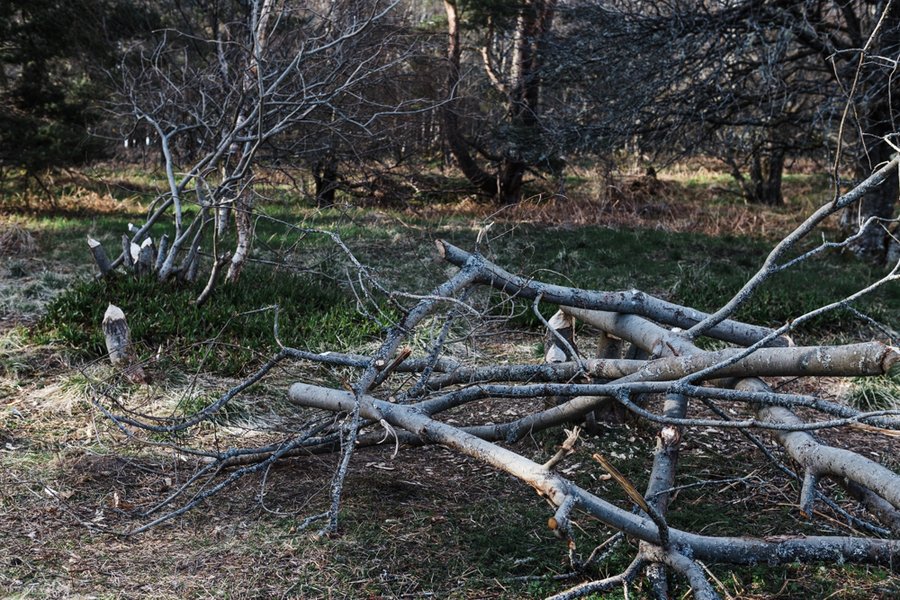
Beaver activities on shores of rivers. The Cairngorms had a return of beavers in 2023 after more than 400 years. (Credit: Karthika Gupta)
These changes reduce flood peaks, improve water quality, and create habitat for amphibians, insects, birds, and fish.
“In effect, they make rivers into complex, braided networks that function more naturally, improving ecological resilience in freshwater systems.”
And further downstream, these shifts affect Atlantic salmon, which have declined by almost 70 percent. Warmer water, sedimentation, and simplified channels degrade spawning and juvenile habitat. Restored wetlands and rivers help reverse that trend by cooling water, stabilizing flows, and creating shelter for these iconic fish.
Peatlands
While beavers are reshaping rivers, peatlands are Scotland’s closest equivalent to Arctic permafrost systems and cover almost 20 percent of the park.
“Healthy peatlands act as enormous carbon stores, locking away carbon accumulated over thousands of years,” said Henshall. “When degraded, peatlands can switch from storing carbon to releasing it into the atmosphere.”
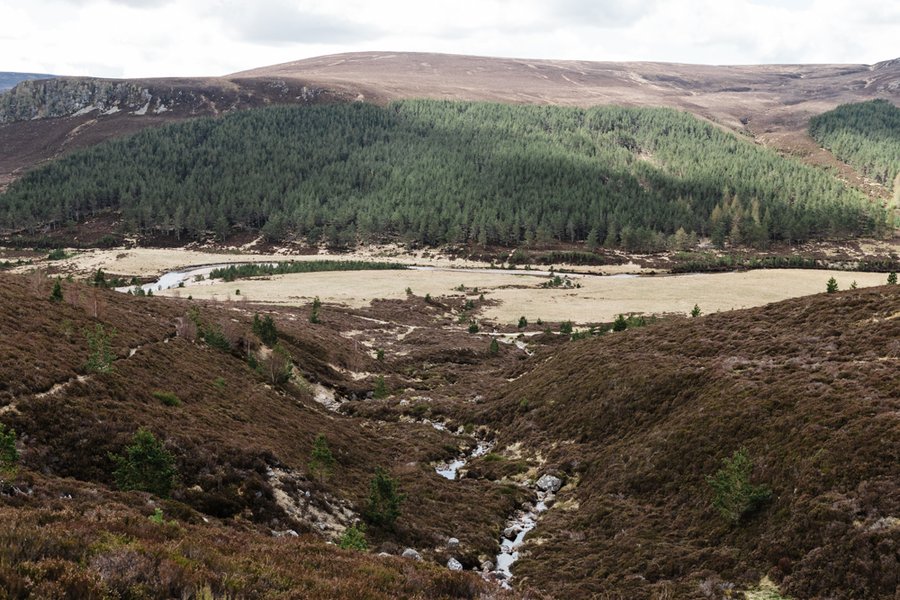
Glen near River Dee with peatland and bogs. Healthy peatlands act as enormous carbon stores, locking away carbon accumulated over thousands of years.(Credit: Karthika Gupta)
Restoration efforts focus on rewetting bogs and blocking drainage channels that help sphagnum moss recover. These mosses play a vital role in rebuilding carbon stores and stabilizing water systems. Through the Cairngorms 2030 initiative, the park authority aims to restore more than 3,200 acres of degraded peatland each year until 2028.
“Any peatland bog in Scotland will store more carbon than any rainforest in the world,” added Mann. “For us, that’s the best thing we can be doing as a nation to really try and keep as much carbon as we can.”
Henshall also notes parallels between peatland and permafrost systems that act as major long-term carbon stores and are increasingly vulnerable to climate change. She acknowledges that peatland restoration is important not only for reducing emissions and protecting ecosystems but also could inform future permafrost research and conservation strategies in other Arctic regions.
Reshaping at scale
Across the Highlands’ rivers, peatlands, uplands, and snowfields, a single pattern is emerging—the interconnectedness of the environment. Beavers help restore hydrological processes, salmon promote nutrient cycling as they spawn from oceans to rivers, peatlands lock carbon, and reindeer symbolize an Arctic-aligned past.
“Together, these projects reflect broader, catchment-scale restoration in the Cairngorms,” said Henshall. “We are rebuilding ecological processes, so landscapes can become more resilient to climate change while also supporting biodiversity and local communities.”