October 8, 2026
This spring, two researchers from the University of Alaska Fairbanks’s Institute of Northern Engineering spent 19 days completing a nearly 2,000-mile snowmachine traverse of Alaska’s western and northern coasts to study how climate change is reshaping coastal communities and ecosystems.
The trip comes at a critical time when rapid permafrost thaw, changing snow and ice conditions, coastal erosion, and storm-surge flooding are transforming the communities in this region and the ecosystems they depend on.
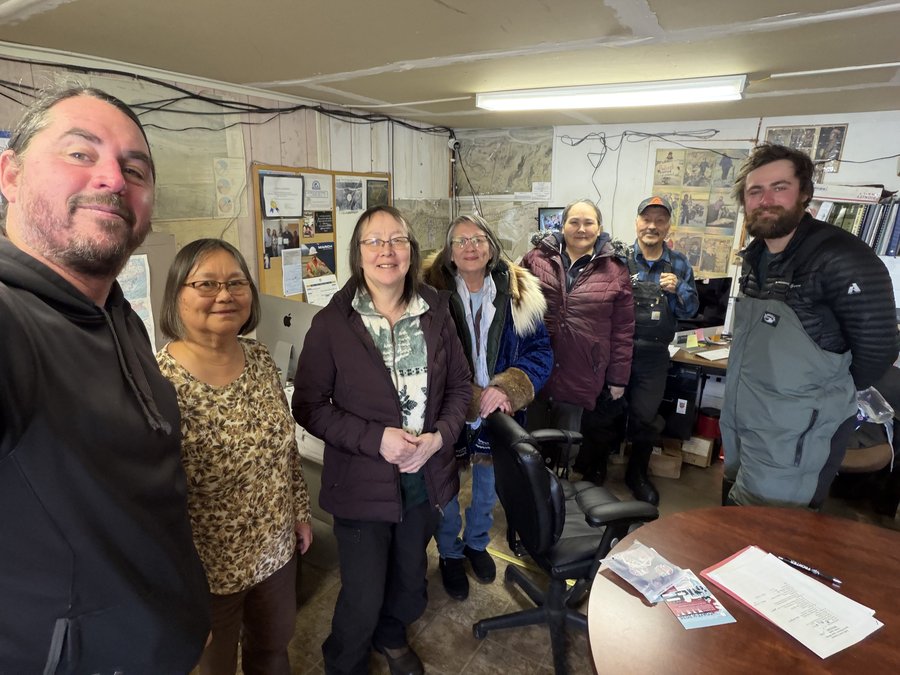
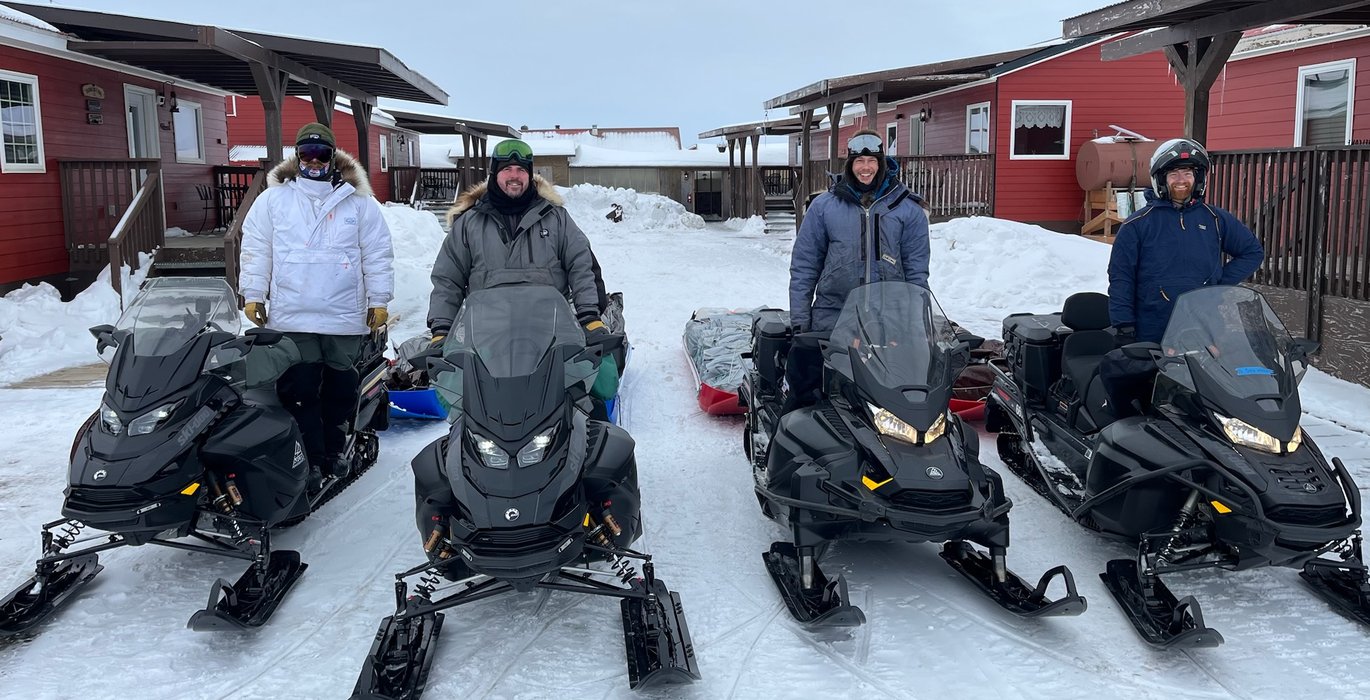
Coast-X 2026 team with community members. Climate change is transforming the communities in this region and the ecosystems they depend on.
During the 19-day expedition, known as COAST-X 2026 (Collaborative Observations of the Arctic Shorezone: A Traverse for Knowledge Exchange), research associate professor Benjamin Jones and research professional Phillip Wilson travelled from Bethel to Utqiaġvik, visiting more than a dozen communities along the way.
The researchers travelled with camping gear, science equipment, food, fuel, and other supplies, and stopped in villages to refuel and grab some food along the way. Hauling more than 1,000 pounds of gear, they had everything they needed to hunker down in a storm or fix broken equipment along the way.
“You also don't want to travel with so much stuff that it becomes the issue of why you're breaking everything,” Jones said. “We walk that fine line in terms of travelling safely, having everything we could possibly want to have or need, but not having too much stuff.”
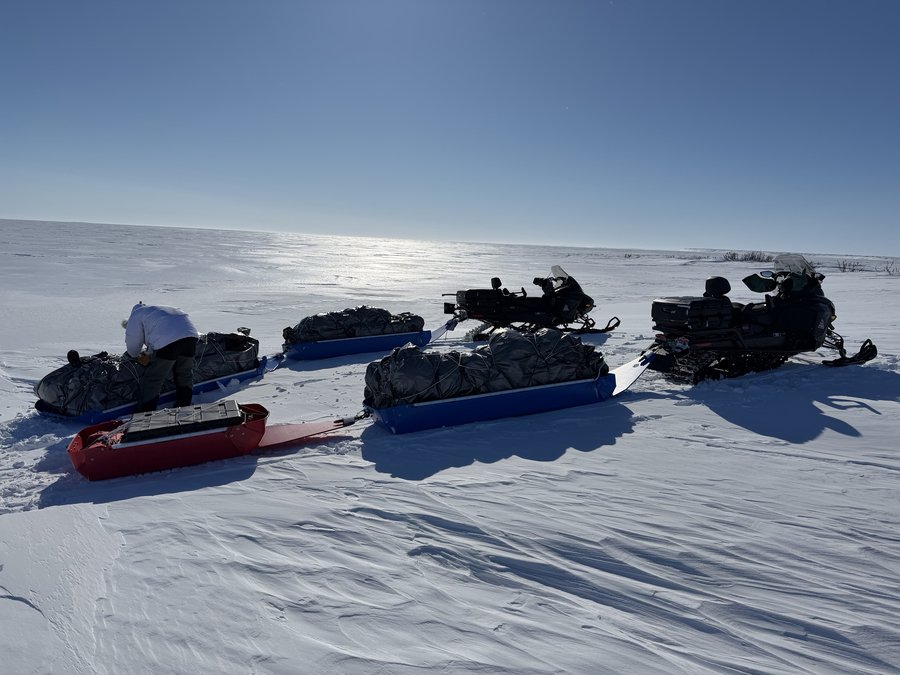
Hauling more than 1,000 pounds of gear, the researchers had everything they needed to hunker down in a storm or fix broken equipment along the way. (Credit: Ben Jones)
Jones and Wilson, who describe COAST-X as "a mobile platform for knowledge exchange,” sought to better understand how these changes are affecting coastal ecosystems, local infrastructure and residents’ ability to travel across the land.
“The main objective of the trip was connecting with communities and stopping and meeting with folks,” Jones said. He added that travelling by snowmachine, one of the most common methods of transportation in the region, made conversations with residents easier.
A typical travel day was about 120 miles of riding, though their longest stretch was 205 miles from Kivalina to Point Lay. In most villages, they would purchase fuel, spend time talking with local residents, give school presentations, and meet with community boards and tribal elders. In Hooper Bay, Wilson recounts giving a talk to a couple of hundred eager students, who then came out to inspect their snowmachines.
“It was nice to see the next generation of people who live in these areas and just see what their attitudes are about where they live,” Wilson said.
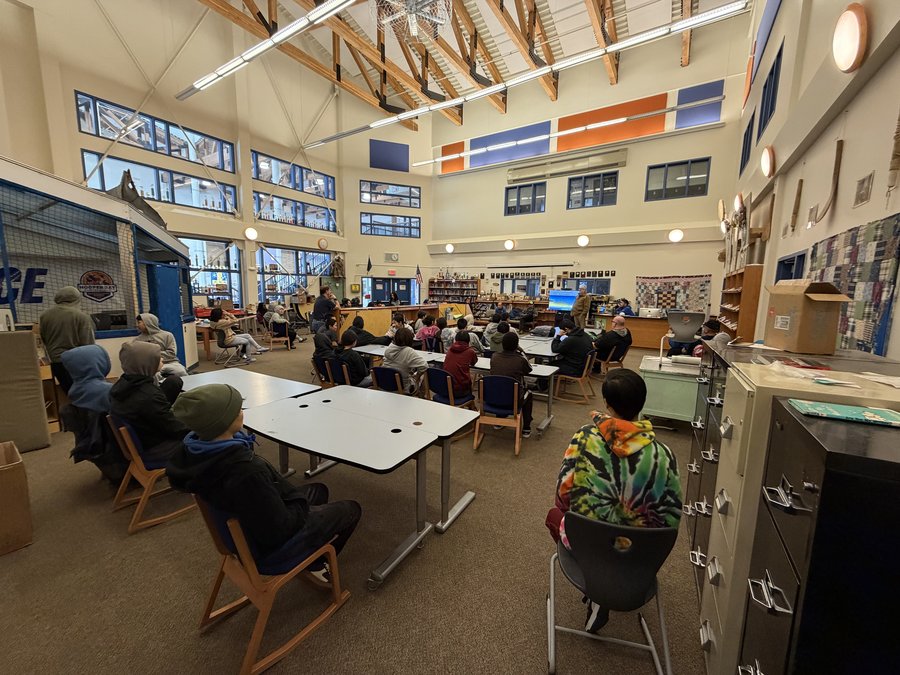
The main objective of the trip was connecting with communities and stopping and meeting with folks. (Credit: Ben Jones)
As they travelled, community members would often share their place-based knowledge, offering recommendations and advice on their travel routes.
“They would point us in a slightly different direction, which was much safer,” Jones said.
Along the way, the researchers visited communities ranging from Nome, which has around 3,700 residents in town to Kali (Point Lay), a village of roughly 300 people, where nearly 90 percent of residents are Iñupiat.
The researchers listened as residents shared lived experiences, including changes they observed in land and sea ice, altered travel routes, and the issues faced when major fall storms like Typhoon Merbok and the remnants of Typhoon Halong caused extensive damage to communities.
They discussed the damage and impact of these strong storms, as well as the idea of relocation, which isn’t new in Alaska. Kivalina has discussed relocation for years, and the village of Newtok relocated nine miles from its original site to a new village of Mertarvik, due to coastal erosion. However, ProPublica recently reported that Newtok relocation has been marked by challenges, including electricity, sewage, and other infrastructure concerns, as well as homes that are inadequate for the harsh climate.
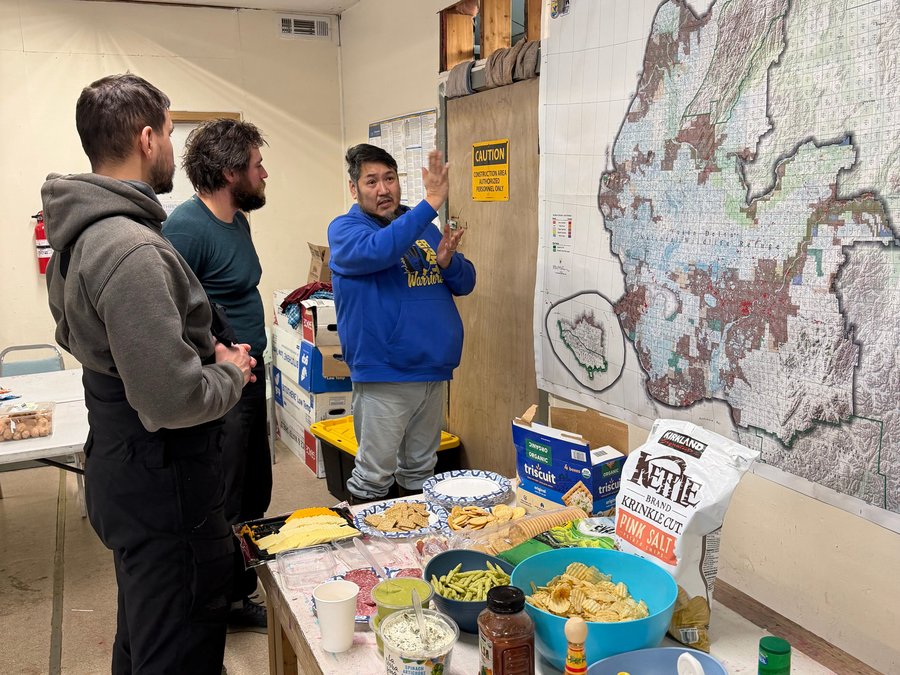
As they travelled, community members would often share their place-based knowledge, offering recommendations and advice on their travel routes. (Credit: Ben Jones)
As the researchers travelled further North, they found community members were increasingly concerned with thawing permafrost, which is significantly impacting infrastructure and especially damaging to homes built on pilings.
“Some of the homes there are on permafrost that has subsided so much under the home that the home will kind of sway in the strong winds,” Jones said. He added that the thawing impacts the water and sewage systems, forcing many residents to rely on “honey buckets” (buckets used to collect human waste when indoor plumbing isn’t available).
The team also worked to identify travel and logistical obstacles in the near-shore zone — examining permafrost, coastal erosion, snow, ice, sea ice, river crossings, coastal travel hazards, and the impacts of environmental changes on local communities.
They worked to ground-truth data sets and map obstacles that existing digital elevation models don’t show due to coarse resolution or outdated data. These obstacles include areas where shrubs trap snow and dynamic obstacles where sea ice may pile up near snow. They also created a Geographic Information System (GIS) database layer to visually represent their findings, using green, yellow and red colours to indicate recommended travel routes, areas to avoid and areas where caution should be exercised.
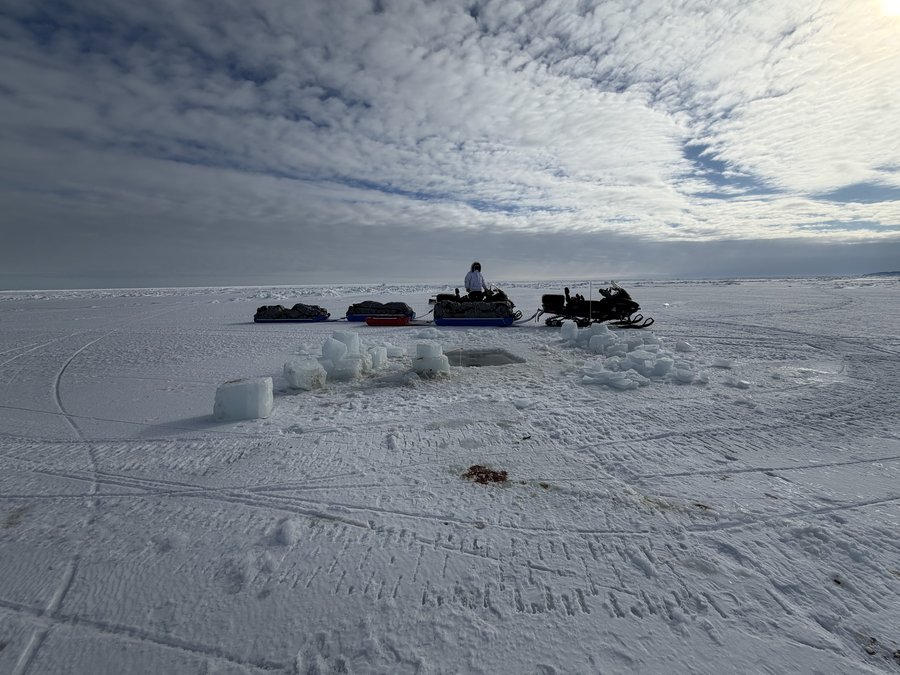
The team worked to ground-truth data sets and map obstacles that existing digital elevation models don’t show due to coarse resolution or outdated data. (Credit: Ben Jones)
Along the way, the duo usually set up camp and slept in tents, though sometimes they stayed in alternate lodging, such as a Fish and Wildlife Service bunkhouse, schools, or hotels in Nome and Kotzebue.
While the wind chill plunged to -40 degrees at times, the team lucked out on the weather, with blue skies for most of the voyage, allowing them to truly see the area with great visibility.
“The really cold weather made the ice really strong and really thick, and then the snow made the travel kind of ideal for us,” Jones said.
Getting to know community members and exchanging knowledge made the researchers feel like part of the community. As they travelled, communities would share their progress on Facebook, and the next community would be expecting them when they arrived. They hope to return to some of the communities soon to continue their work.
“It made us feel very welcome,” Jones said, noting how open people were to having conversations and sharing their local and traditional knowledge.
The researchers hope to return soon to some of these communities to continue their work.
Banner image courtesy: Ken Tape