March 12, 2026
Tagak Curley is a prominent Inuk leader and political figure from Coral Harbour, Nunavut. He is widely regarded by many as a “living Father of Confederation in Canada,” thanks to his instrumental role in the territory’s creation.
Born and raised in a community governed by the rhythms of the land, Curley grew up in a way of life rooted in hunting and trapping. Selling Arctic Fox pelts, furs, and polar bear skins. was the main economic activity, and hunting for food security was a full-time occupation for the strongest and healthiest men in the community.
“Our way of life depended heavily on dog team travel, which was a source of pride and joy for us as young boys,” he said. “Learning the survival skills about the outdoors was essential to build our confidence.”
Those formative years instilled a deep respect for survival skills, the land, and Inuit traditions, despite the coming introduction of the colonial school system
“Families were moved into town from hunting camps in the early 1950s so children could attend school, fundamentally altering our traditional lifestyle,” Curley said. “No question about it, my life as a boy included respect and honour for our ancient way of life, including being proud to speak in our language and secure with confidence in our identity as Inuit.”
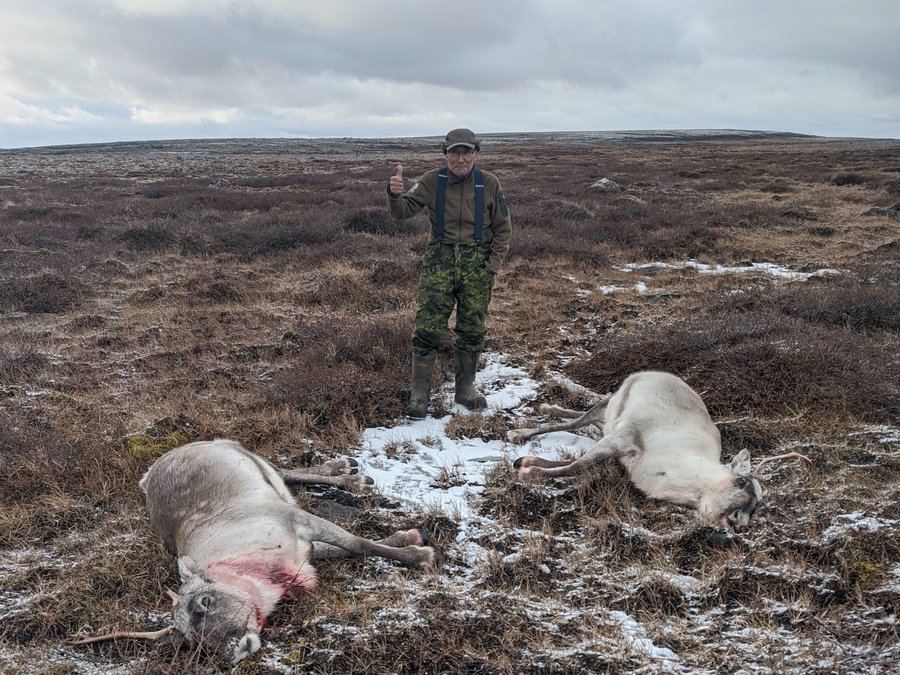
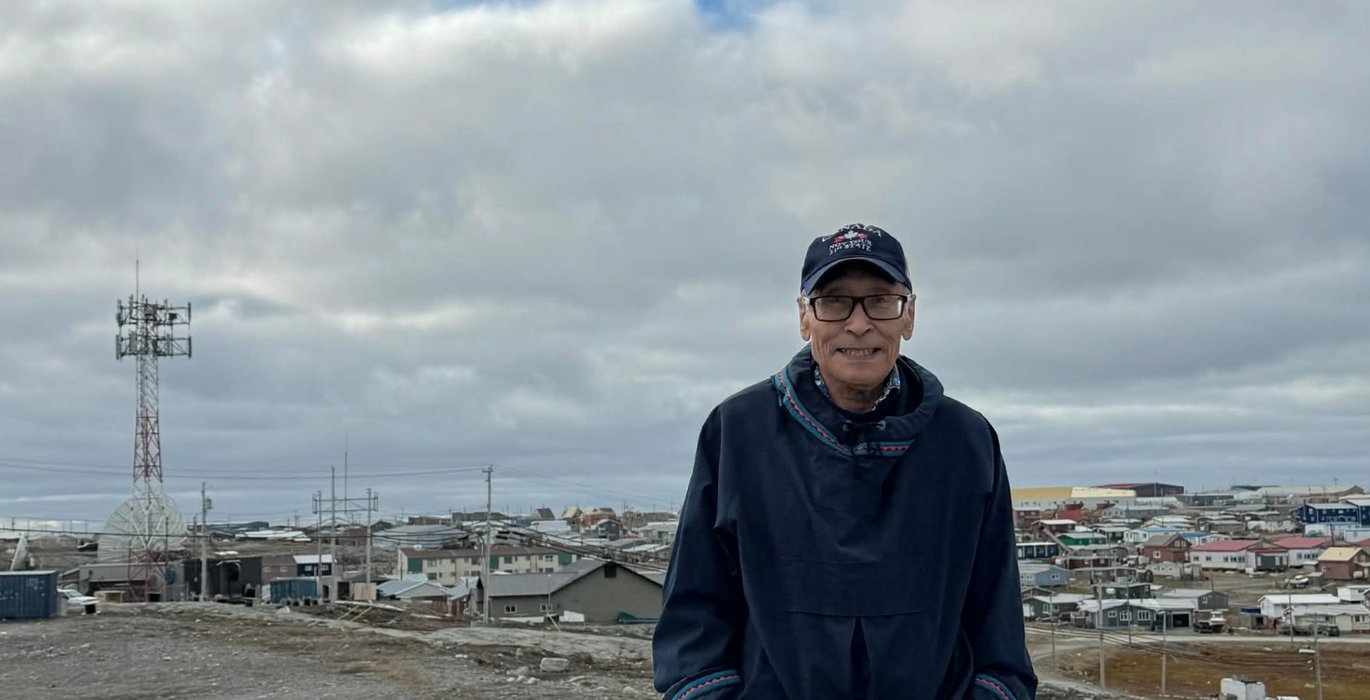
Curley at Coral Harbour.
In 1979, he was elected to the Northwest Territories legislature in Rankin Inlet, where he spent the next eight years pressing for territorial division from within the halls of government.
“The reality is that Inuit in the 1950s and 1960s had no clout. We had little ability to influence policy or to engage meaningfully with federal officials in Ottawa," he said. “Having that formal setting helped establish and strengthen the debate, and that debate was essential."
The groundwork of shaping Nunavut was complex and included official debates and a plebiscite on division, which achieved overwhelming support. This process was challenging, particularly during the preparatory work on self-determination.
For Inuit, he explained, the process often felt like being caught in winter storms, where survival had to come first
"Very few people were thinking about restoring our way of life on our own land. Most of the educated Inuit at the time had been assimilated into Canada; I was an exception.”
Reframing History Through Storytelling and Tradition
Beyond territorial politics, Curley has worked to reframe Canadian history through an Inuit lens. He collaborated with historian Ken McGoogan to challenge long-standing misconceptions about the “failed” Franklin expedition and the accounts of it reported by explorer John Rae.
“Ken made no reference to the two Inuit who were part of those crews. That’s why I confronted him. I have all the journals, so I speak with a clear conscience about those expeditions,” Curley said.
Curley appeared before the British House of Commons to present the Inuit perspective on these events. The meeting took place not in the main chamber but in a room dedicated to Arctic exploration, a setting that underscored the history he was confronting. He pointed to the legacy of Sir John Franklin’s expeditions—the first, via the Coppermine River, was deadly; the second, via the Mackenzie River, had no fatalities; and the third, an attempt to find the Northwest Passage, ended in disaster after Inuit guidance was excluded, with all crew members lost.
"The lingering question has always been: why didn’t he involve the Inuit as he had on his first two Arctic expeditions?”
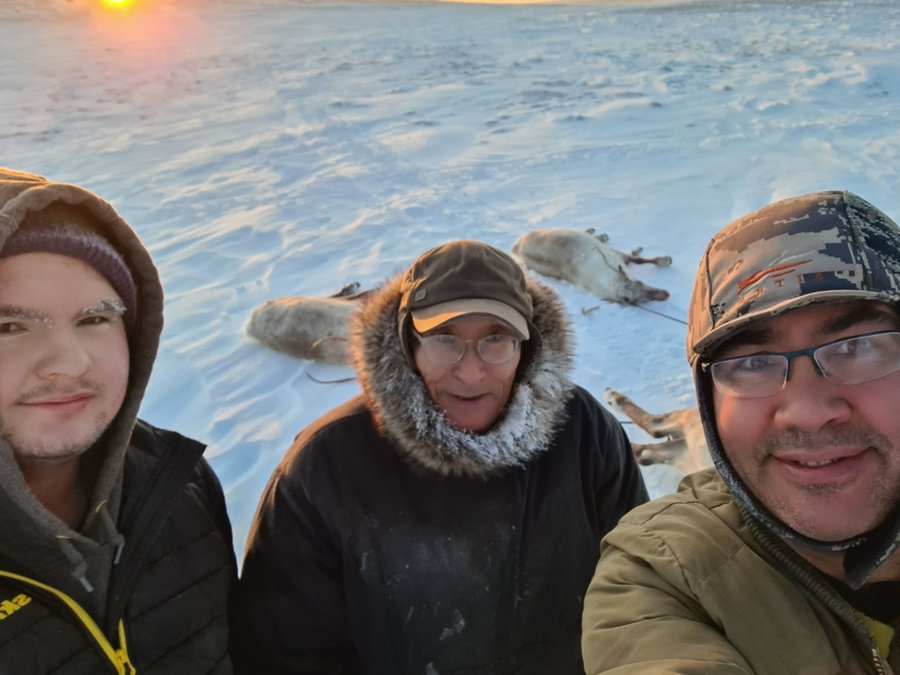
Curley with his son, Sebastian (right) and his son's friend, Robert (left).
Curley has served not only as a statesman and advocate but also as a cultural bridge, carrying stories, traditions, and truths with remarkable humility. His personal and political actions reflect broader themes of Indigenous knowledge, colonial misrepresentation, and cultural resilience, linking his own life to the history of his people and the creation of Nunavut.
"When I meet people from outside Nunavut, I don’t expect them to understand Inuit life, it’s too complex. What I hope instead is that Qablunaat (White people) are patient with us and willing to listen,” he said.
Leadership Rooted in Inuit Tradition
Curley’s understanding of Inuit life and traditions remains inseparable from his leadership. After the establishment of the Inuit Tapirisat of Canada, a national advocacy organization that promotes awareness of political, social, cultural, and environmental issues affecting Inuit communities, he moved from Ottawa to Rankin Inlet and served for several years as the organization’s first president. The organization’s early years were slow and logistically challenging, relying largely on letter writing to coordinate across the vast Northwest Territories. Despite these limitations, Curley helped lay the groundwork for Inuit self-determination.
He remains a bridge between worlds, honouring Inuit traditions while shaping the future of Nunavut and inspiring new generations of leaders. He continues to urge young Inuit leaders to bring together the wisdom of the past with hope for the future.
“Speak often to your elders, be ready to learn, and always carry pride in your heritage and Inuktitut language.”