January 8, 2026
In many northern communities, a child’s birthday party is not just a celebration—it’s an economic hurdle.
Families in fly-in communities across Nunavut and other remote regions often face grocery shelves where a single tub of icing or a box of cake mix can be significantly more expensive than in other parts of the country. Decorations are rare, themed party supplies are virtually nonexistent, and ordering from Amazon or major retailers is often impossible.
"They're paying over $10 a box for one cake."
So when a birthday comes around, some families simply go without.
The Northern Birthday Box Project, a volunteer-run Facebook initiative launched in 2016, was created to fill this gap. Nearly a decade later, it has become a lifeline for thousands of northern families, connecting them with sponsors across the country who assemble festive birthday packages—each one tailored to a child’s age, theme, and preferences and ship them to families in remote communities.
The concept is simple; the impact is huge.
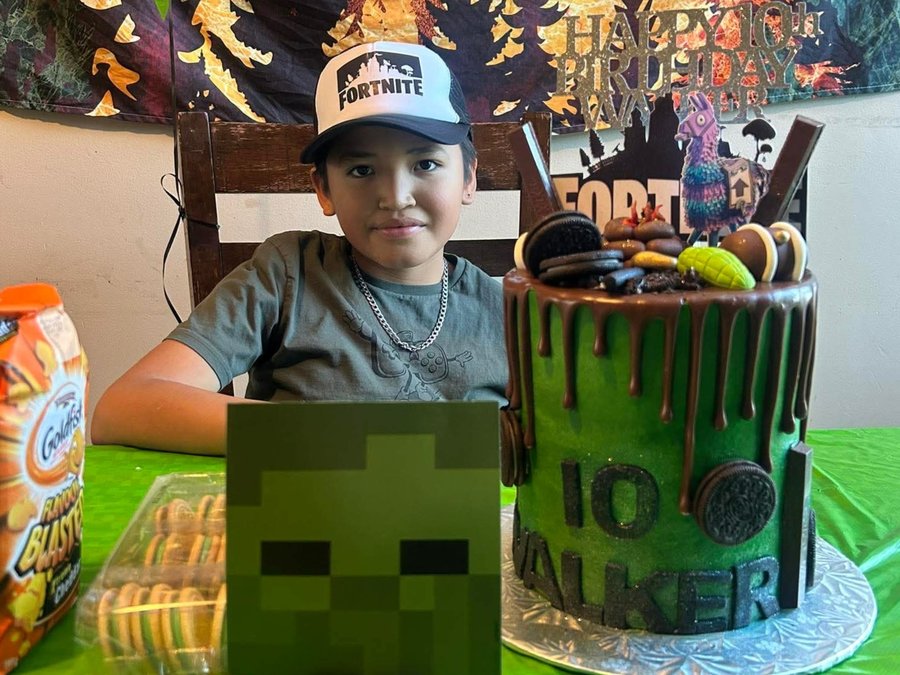
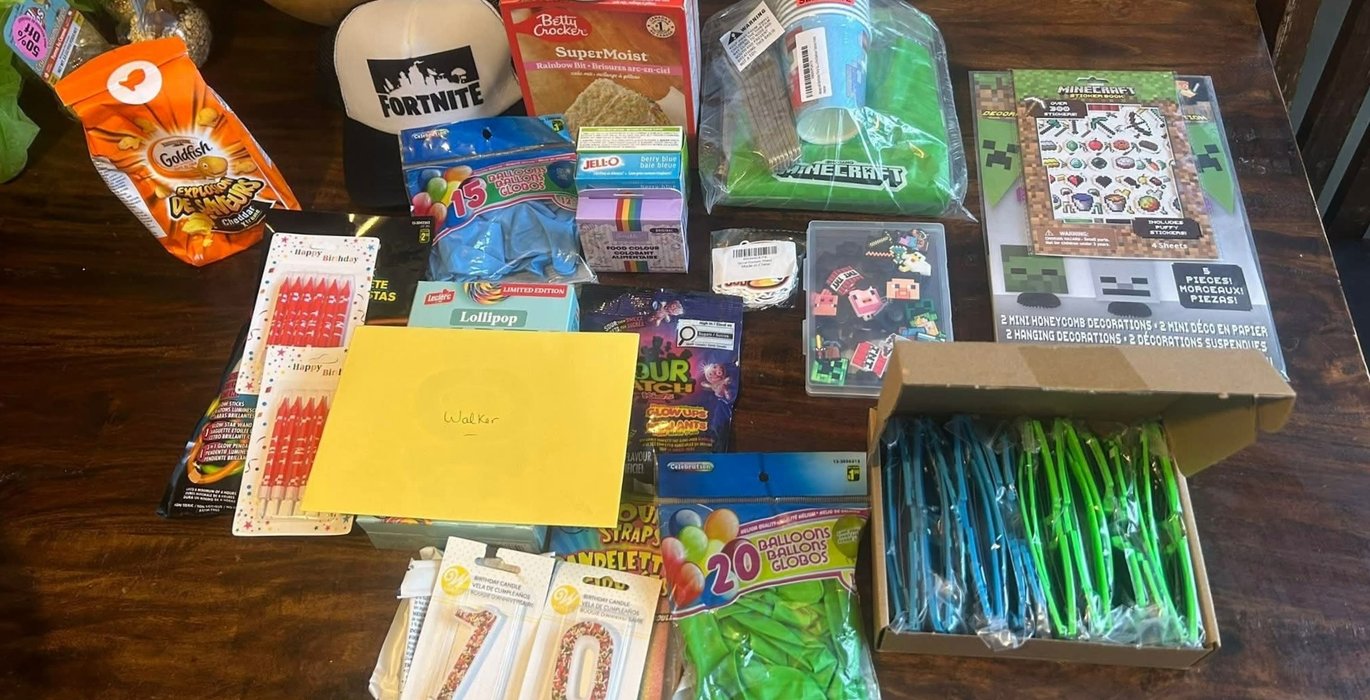
The Northern Birthday Box Project, a volunteer-run Facebook initiative. (Credit: The Northern Birthday Box Project)
A project built out of necessity
The project emerged from Feeding My Family, a grassroots movement that brought national attention to food insecurity in northern communities in 2016. As those conversations grew, a few individuals attempted small birthday-box initiatives. But the work was overwhelming for one person, with all the coordination needed between sponsors, shipping timelines and ensuring the boxes arrived on time for the child’s birthday. Eventually, the work grew into the Northern Birthday Box Project (NBBP).
Currently, Korean Peterson and Janelle Jaggernauth are two of the three project administrators, along with two other moderators, who help with connecting sponsors and families in the north.
“We realized that birthdays are an additional line on your budget. You have to save, and they can be expensive. Little birthdays can be very expensive. And so by providing the birthday, we were hoping that we could lessen that part of their budget,” said Peterson. “So whatever money that they have set aside for the birthday portion, they could use on other things they can treat themselves to, some things at the store that they don’t normally get.”

For many families, the project has become a trusted annual resource. (Credit: The Northern Birthday Box Project)
In its early years, the program was even busier, accommodating as many as 400 children each month. Participation later dipped as COVID-19 and rising living costs made sponsorship more difficult. Today, the group connects roughly 2,400 children per year with volunteer sponsors.
For many families, the project has become a trusted annual resource. But for its administrators, the project is a full-scale operation run entirely on volunteer time.
“There’s no funding. We both have full-time jobs,” Jaggernauth said.
Between responding to applicants, verifying community eligibility, coordinating sponsors and managing the Facebook page, the project often becomes a second job.
However, the administrators know these birthday boxes matter. In many communities, families broadcast celebrations on local radio so the whole community can attend. With a donated box, a single child’s party becomes a community-wide experience.
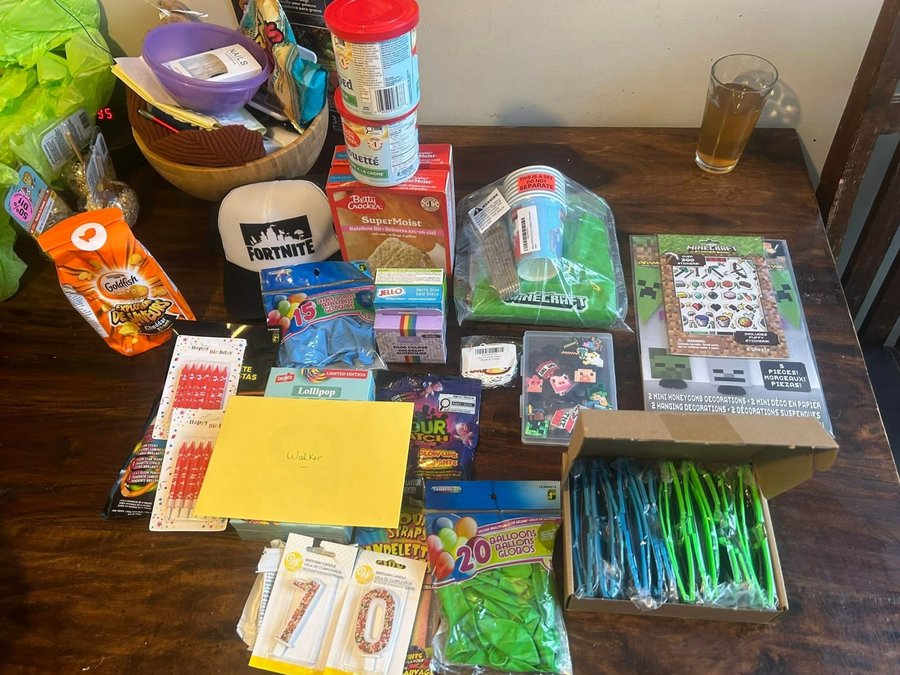
With a donated box, a single child’s party becomes a community-wide experience. (Credit: The Northern Birthday Box Project)
Each box follows a basic formula: cake mix, icing, birthday decorations based on the child’s chosen theme, and small gifts.
“Cake mix and icing are horrendously expensive in these communities,” said Donna Blas, a longtime sponsor from Bowmanville, Ontario.
Boxes must fit into Canada Post’s prepaid flat-rate boxes, which cost around $35 to ship north. That constraint leads to creative problem-solving, and, occasionally, some frustration.
“I did learn the hard way, don’t seal the box until they weigh it at the post office, because then you have to open it up and take stuff out if it’s too heavy,” Blas said.
Still, the constraints don’t stop sponsors from pouring their hearts into the process.“I remember one that stood out to me was this child who wanted a zombie-theme box. And so everything that they put in there, they redecorated it so it was zombies,” said Peterson. “When the child opened the box, it wasn’t something you could easily buy, but she still created this lovely gift for the child.”
"Everything is coming with the high freight costs added to those costs."
Why a birthday box reveals a national divide
Behind each box is a stark reminder of Canada’s ongoing failures to support northern Indigenous communities.
“There is so much that the government could do; the prices of living up there are incredibly high. I mean, you go right back to colonization,” said Peterson. “ It's the history of how the Inuit people were moved around to pretty desolate areas and forced to live.”
Today, many northern communities rely on a single store for all their groceries. With no road access, everything arrives by plane or boat. While the federal government offers a food subsidy program, it applies only to basic staples, not items like birthday supplies.
“So everything is coming with the high freight costs added to those costs, which is why things like the cake mixes and the icing, what we're paying $1 or $2 a box for, they're paying over $10 a box for one cake,” Jaggernauth said.
How classrooms are getting involved
For Elizabeth Semple, a teacher in Beamsville, Ontario, the birthday boxes offered a hands-on way to teach her class about inequity in the North.
“In Attawapiskat, they had a housing crisis, and so my class became really interested in helping students in Indigenous communities,” Semple said. “So we sent up some things. And then through that, I came across the Northern Birthday Box Project.”
Semple has been sending boxes since 2018. Her class assembles one box per year, each student bringing in one item: candles, plates, napkins, and small toys.
“I've sent eight boxes, and I'm at a Catholic school, so usually we will tie it into Lent.”
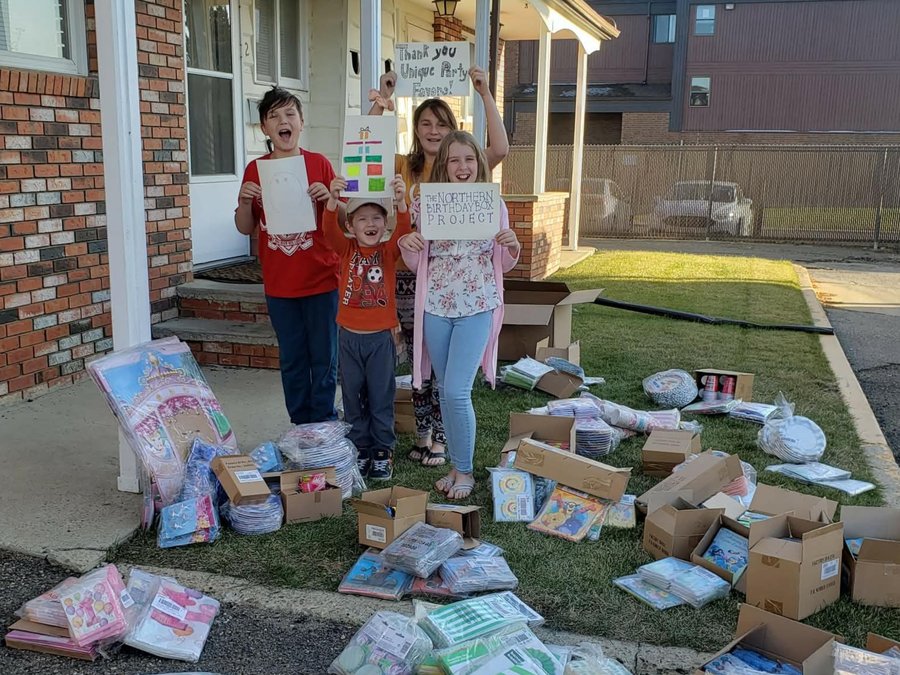
Behind each box is a stark reminder of Canada’s ongoing failures to support northern Indigenous communities. (Credit: The Northern Birthday Box Project)
Semple’s students research the community they’re sending to, learn about the cost of food in northern shores, and compare those prices with those in the south.
“I think that aspect that the Northern Birthday Box is from child to child; there's just such a special piece that connects for kids, because who doesn't love their birthday,” she said. “And for them, it's hard to imagine that some kids in the world or in Canada may not have access to the same things that they have here.”
Semple believes the project sparks lifelong awareness for students and opens up bigger conversations about accessibility in these northern communities.
What needs to change
When asked what government action is needed, Peterson and Jaggernauth say the list is long. They point to the need for food subsidies that truly reflect freight costs, greater investment in northern infrastructure and transportation routes, and more substantial support for traditional food harvesting and cultural practices. They also highlight the importance of more equitable federal funding for northern communities, along with policies that make it feasible for workers to remain in the region, where high living costs often drive out essential staff.
The Northern Birthday Box Project doesn’t expect to solve food insecurity or systemic inequities in the north. But in the face of staggering grocery prices and limited access to supplies, it offers something powerful in its simplicity: a celebration.
“My daughter, ever since she was one year old, always had a birthday party, and it's something that she always really enjoyed,” Blas said. “And I thought if I could bring a little bit of happiness like that to another child's life, it would be so rewarding.”