June 11, 2026
Aquifers worldwide are becoming dangerously depleted.
In January, a United Nations report declared that the world had entered the “global water bankruptcy era,” with basins and aquifers worldwide draining at a dangerous rate that far exceeds their natural ability to replenish.
More than half of the world’s large lakes have lost water volume since the early 1990s, plunging one quarter of the global population into water insecurity. The report emphasized that many of these changes are due to the irreversibility of these conditions, which require both a deliberate combination of mitigation efforts and adaptation to new, lower water-availability levels.
There is no “getting back to normal,” the report warns.
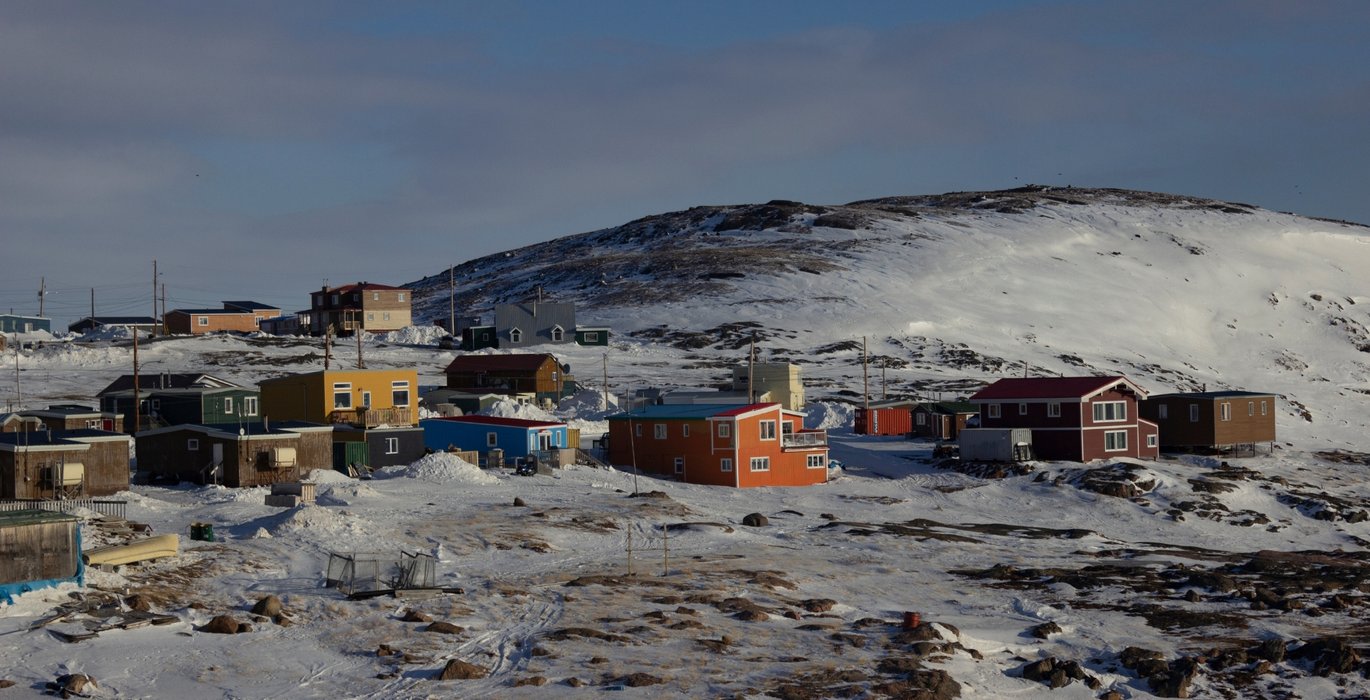
This reality is especially stark in the Arctic, which is warming at four to six times the global average, leading to severe droughts in areas such as Canada’s northern territories. In Nunavut, water shortages have significantly affected the availability of potable drinking water. Due to increased demand from cascading climate impacts and a rapidly growing population, Nunavut’s water infrastructure is under increasing stress.
According to Senator Dennis Patterson, who represented Nunavut in the Senate until 2023, at the last annual general meeting of the Nunavut Association of Municipalities, the territory’s mayors unanimously identified water as their top priority.
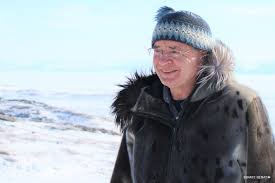
At the last annual general meeting of the Nunavut Association of Municipalities, the territory’s mayors unanimously identified water as their top priority. (Dennis Patterson)
In October 2025, councillors in the City of Iqaluit unanimously approved a 2026 budget, of which over half of the funds will be used to improve the city’s water infrastructure.
In the Northwest Territories, water levels in Great Slave Lake and the Mackenzie River reached historic lows due to drought conditions that first began in 2022. Low water levels have had economic impacts, making it nearly impossible to navigate the Mackenzie River, which connects Northern communities such as Fort Simpson, Inuvik, and Tuktoyaktuk to supply routes from Yellowknife, Hay River and other Great Slave Lake communities. The drought also threatened NWT’s hydroelectric capacity.
“Hydropower output was reduced from its typical 98% of the regional energy supply to about 50%, with diesel generation used to make up the difference,” said the NWT’s Department of Infrastructure.
The severity of the water crisis, particularly in the Northwest Territories, should not be ignored, said Jesse Cardinal, Executive Director of Canada’s Keepers of the Water, an umbrella group of First Nations, Metis, Inuit and other water conservation advocates.
“It’s so bad you could walk across the Hay River in 2024,” Cardinal said.
This anecdote reinforces recent research at the University of Ottawa and Laval University. Professors from these universities used AI to map Canada and identify which regions are most susceptible to drought. According to their research, Canada’s northern territories are expected to experience severe drought conditions in the coming decades.
It may come as a surprise to many who perceive Canada’s north as water-rich, said Dr. Hossein Bonakdari, one of the researchers at the University of Ottawa.
“There’s an ‘Arctic paradox’,” he said. “This means, ‘more water, less moisture.”
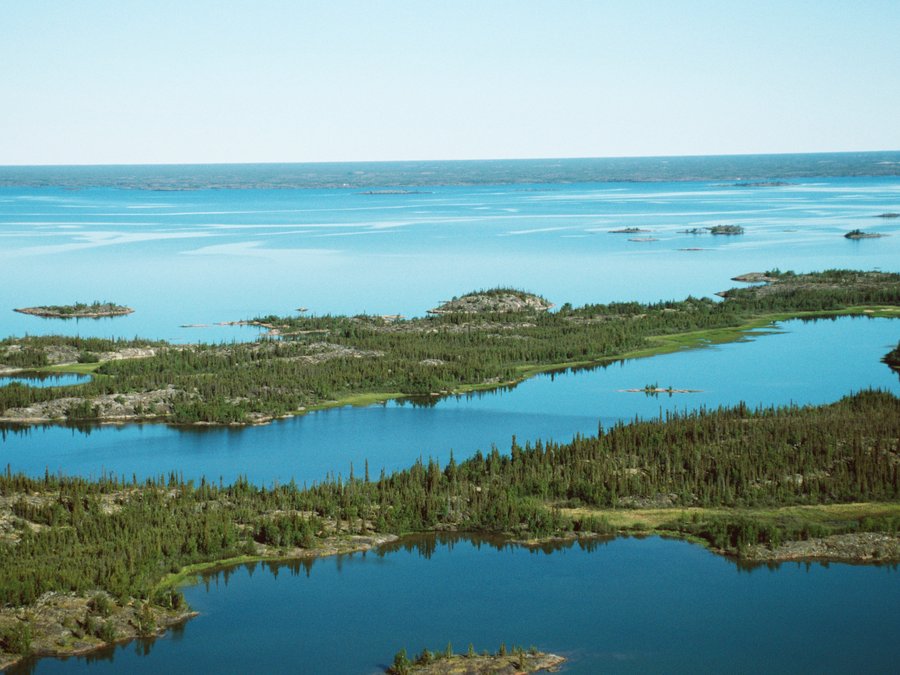
(Credit: Jupiter Images/Canva)
While precipitation in the Arctic is increasing by five to 10 percent, the rates of evaporation from rivers and lakes, and transpiration from plants, are increasing even faster due to the region’s extreme heating.
“This situation is creating a moisture deficit,” Dr. Bonakdari said. He pointed to a new tendency in the Arctic regions of “flash droughts”. “Based on our AI model, we observe almost a 30 percent increase in rapid drying.”
This drought and moisture deficit is contributing to lower lake and river levels, a higher risk of landslides, and an increase in ‘zombie fires’ or wildfires from previous seasons, that continue burning underground or in peat bogs, sparking back up in summer months.
Federal and territorial governments are working to address the drought problem.
In the NWT, where the crisis is arguably most acute, the territorial government created a stabilization fund to address the high costs of diesel back-up generation when low water levels limit hydroelectricity outputs.
Federally, the Canadian government’s recently established Canadian Water Agency announced in February that it would provide $1 million for six new projects to protect and restore the health of the Mackenzie River.
The projects include the Gwich’in Renewable Resources Board, which will study the health of freshwater systems in the territory over the next two years to better understand how climate change affects these systems and the food security of local communities. Another project will study the development of the permafrost-lake land system to understand how this system is affected by climate change.
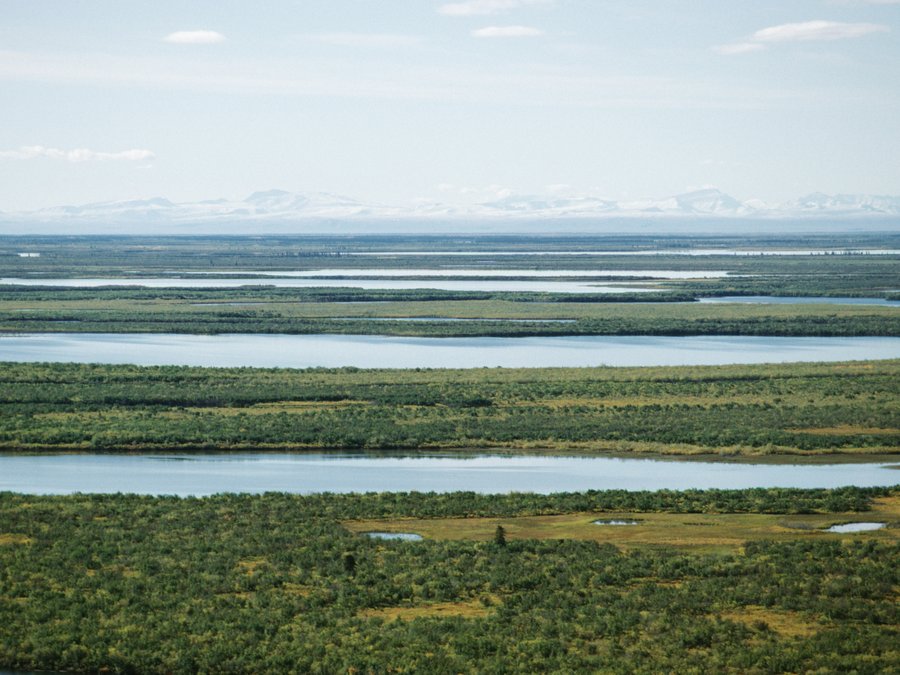
While precipitation in the Arctic is increasing by five to 10 percent, the rates of evaporation from rivers and lakes, and transpiration from plants, are increasing even faster due to the region’s extreme heating. (Credit: Canva)
Climate Change Preparedness in the North (CCPN) is another federal program addressing water issues.
Launched in 2019, this program aims to prepare local communities to manage water challenges and the effects of permafrost thaw. In 2023 and 2024, the program funded the Dene Nation’s Water and Health Summit to identify climate change risks and adaptation priorities. It also provided funding to help the community of Whatì in the Great Slave Lake region understand how climate change will affect its groundwater and drinking water supply.
According to Dr. Bonakdari, more data on drought and pre-drought conditions are needed.
One Indigenous-led organization, SmartICE, has been working to provide this data in the last few years. First launched in the winter of 2010 by the Nunatsiavut government, the initiative became a northern social enterprise in 2017 to provide services for coastal communities across the three northern territories.
SmartICE has developed sensors to track ice and measure ice thickness. These tools, known as thermistors, then send measurements to local satellites, and can then be checked by communities on SIKU.org. Another type of sensor, the SmartQAMUTIK, is a sensor placed on sleds, which are then towed by a snowmobile. These sensors provide real-time readings, which are immediately uploaded to SIKU.org. These data are collected weekly.
“We need to adapt water infrastructure to improve water storage, and to have resilient roads and buildings."
The enterprise has also launched the Sikumik Quajimajjuti training program, in which SmartICE partners with community management committees to help young locals contribute to ice tracking.
Youth are trained to document and share critical information about ice levels and density to encourage safe travel practices, given the precarity of crossing possibly semi-melted ice - a condition made more common by climate change. Participants in the program are also taught to interpret satellite imagery to monitor ice conditions outside their communities and to create products that promote safety when travelling over ice.
Dr. Bonakdari also called for more investment in infrastructure to prepare for more intense climate change impacts.
“We need to adapt water infrastructure to improve water storage, and to have resilient roads and buildings,” he said, adding that indigenous and local communities need to be supported.
Keeper of the Waters’ Cardinal cautions, however, against expecting local Arctic communities to be fully responsible for addressing drought and water shortage issues.
She criticized various governments in Canada for failing to prioritize water conservation, instead opting to allow water to be used for industrial processes, particularly Alberta’s Bill 7 (Water Amendment Act), to improve water availability for businesses.
“These governments are just reckless, and they’re not thinking about future generations,” she said. “We’ve been forced into economic growth models that are colonial and capitalist… at the cost of land, water, and communities.”
Banner Image Credit: Henry Baillie-Brown | Canva.