February 05, 2026
Within the Arctic Circle, far above the northernmost tip of Norway, lies the Svalbard archipelago. For those who call it home, living in the land of ice and polar bears has never been easy. But it has become even more difficult now that the region is experiencing temperature increases six to seven times higher than the global average.
For longtime resident Hilde Fålun Strøm, these changes are deeply personal. “It’s scary to see your world kind of disappearing,” she said.
To those far from Svalbard’s shores, the wildness is enticing – a treeless landscape with tall mountains made of ancient geological layers, and a chance to see a variety of Arctic creatures, including the polar bear. However, even when just visiting, one cannot escape the discourse surrounding melting glaciers, sea ice thinning and retreating, and the ways that this impacts many Arctic species.
Originally from mainland Norway, Fålun Strøm has lived and worked in Svalbard for 30 years. She began as an adventure tour guide for one of two Svalbard operators at the time, eventually advancing to a leadership position. Over time, by spending so much time outdoors, she began to see that the Svalbard she had first encountered was changing.
When she moved to Svalbard in 1995, it was known as the Arctic Desert, a place with limited precipitation and very specific species that could grow in such dry and cold conditions. Over time, she has witnessed the impacts of climate change on the landscape, as well as on polar bears and other wildlife.
“Now the whole island is green. [And] the biodiversity in the ocean has changed dramatically.”
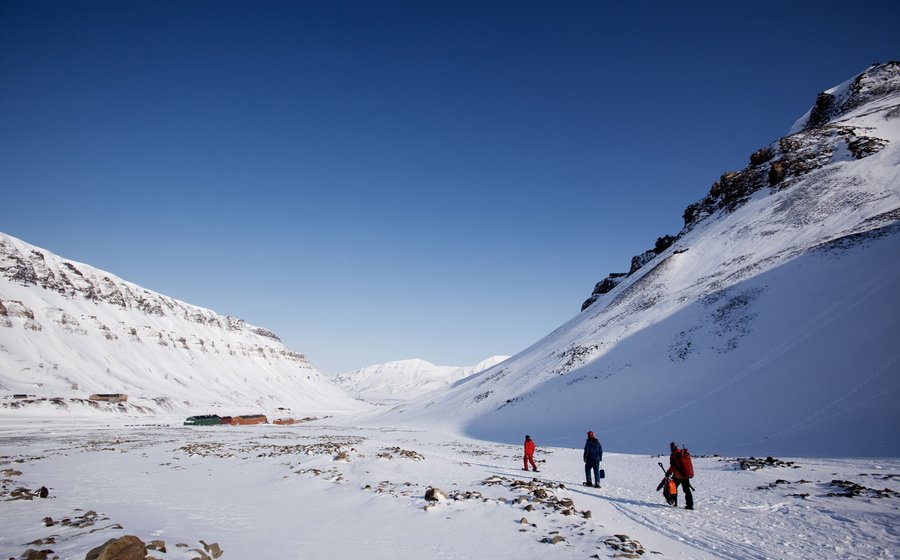
A group of people walking along a path outside Longyearbyen, Spitsbergen, Svalbard, Norway. (Credit: Canva)
Christian Zoelly, who moved to Svalbard from Switzerland in 2010, echoes her observations. He first came as an adventure guide, planning to stay for only a few months. However, Svalbard’s natural beauty drew him in, and now, 15 years later, he still calls it home.
After first working in the tourism industry, he used his background in mechanical engineering to shift into the world of Arctic research. Over time, Zoelly advanced to become the Chief Engineer for the Norwegian Polar Institute, a prestigious research institution that conducts and supports research on various Arctic subjects. His role leading research logistics gave him a first-hand look at what was happening to the place he called home.
In 2010, when Zoelly first arrived in Svalbard, he heard tales of the reduced ice coverage compared to previous years. On September 10, 2010, Arctic sea ice extent declined to 4.76 million square kilometers (1.84 million square miles). It was the third-lowest recorded since 1979.
He stated that residents tell stories from years preceding his arrival, “where they could snowmobile from Longyearbyen to Ny-Ålesund all the way over sea ice in just 3 hours, while nowadays you go over land/glaciers and some sea ice, making it a trip of around 6-9 hrs.”
Both Fålun Strøm and Zoelly have witnessed how changing weather patterns are reshaping daily life. For Zoelly, more precipitation has led to summer landslides in previously stable areas, while less stable weather increases winter avalanche risk. Milder temperatures have also led to a noticeable increase in large swarms of insects.
For Fålun Strøm, the turning point came in 2015, when an avalanche plummeted down Mount Sukkertoppen, which overlooks the main settlement of Longyearbyen. It missed Strøm’s home by mere meters, but her neighbours were not so fortunate.
She recounts helping her friend search for her daughters under a mountain of snow that felt like concrete. Two people died, others were injured, and 11 houses were destroyed that day. The abnormal weather and precipitation patterns themselves, caused by climate change, were to blame.
“It really made me realize that this power of nature that I've always been so fascinated by was all of a sudden a big threat. You were no longer safe in your own home.”
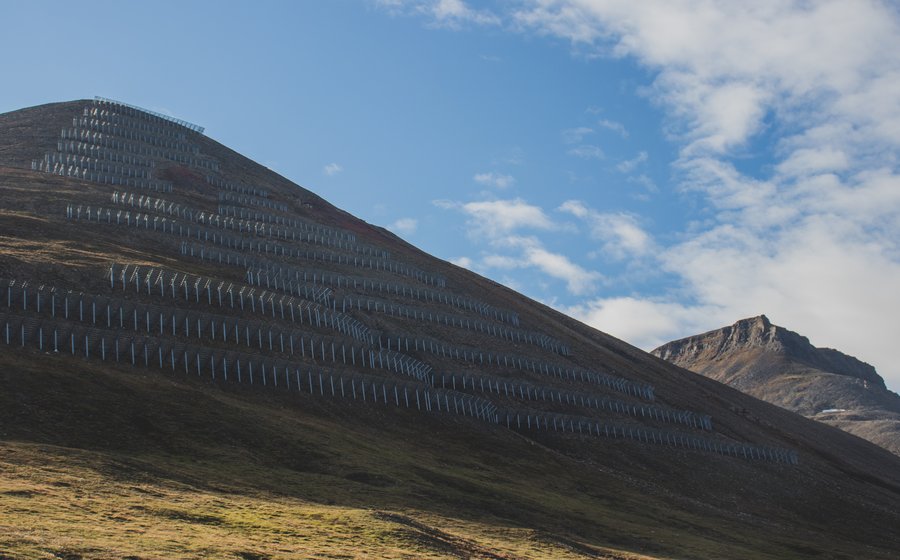
Snow fences installed in recent years on Mt. Sukkertoppen to help prevent new avalanches. In 2015, an avalanche plummeted down Mount Sukkertoppen, which overlooks the main settlement of Longyearbyen.(Credit: Larissa Thelin)
These changes affect not only their safety but also their work and recreation. Zoelly notes that each year’s snowmobile routes differ wildly.
“When travelling by snow machine, the route I have taken this year can look very different next season, with both new and bigger crevasses, meltwater channels, or even parts of glaciers that have disappeared.”
He added that sea ice conditions around Svalbard have become increasingly unstable, with some years being better than others. Nowadays, the ice may not form until late in the season, around February. In many places, it never gets thick enough to travel on safely. Landslides have also altered the landscape, closing off hiking routes that were once accessible.
According to Zoelly, some residents have had to relocate due to the risk of landslides or the increased avalanche risk. Additionally, thawing permafrost makes building foundations unstable and requires significant effort to stabilize them again.
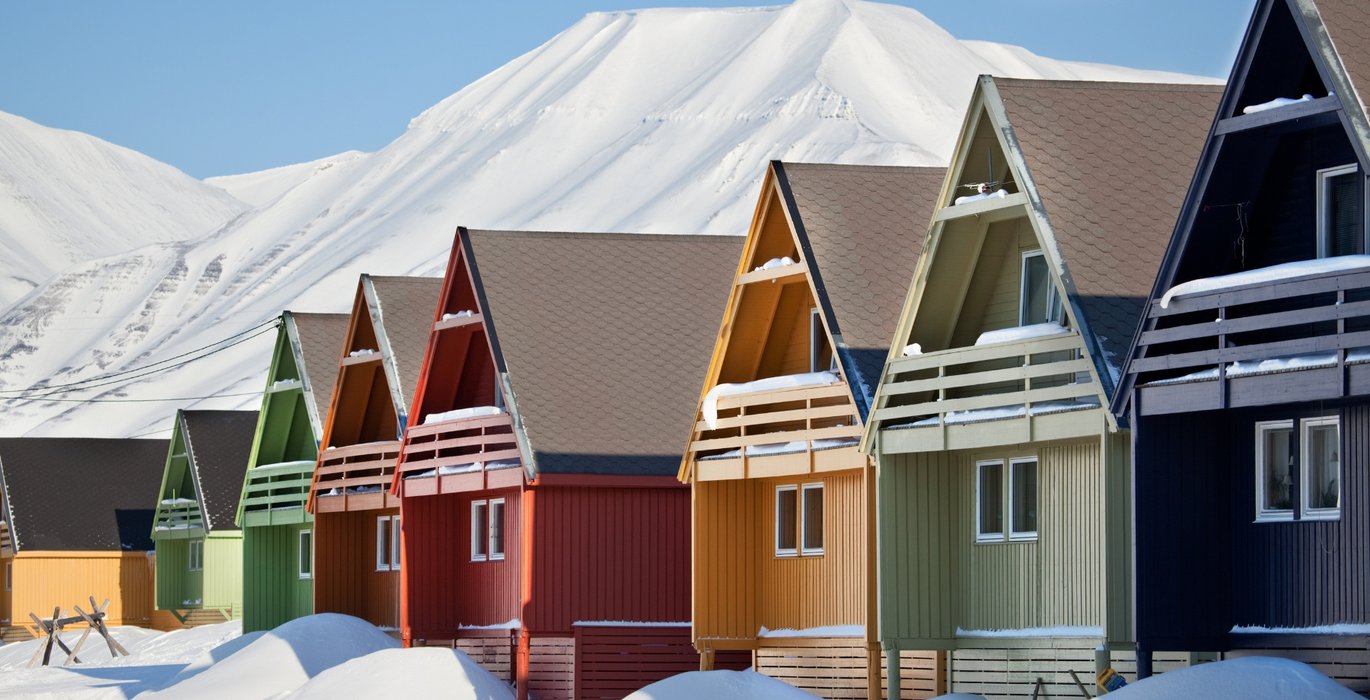
Fålun Strøm is deeply concerned about the homes in Longyearbyen that are built on stilts or the roads that have begun to shift and crack. She also worries about the community’s dependence on coal and fuel for energy.
“We need more sustainable energy."
Yet both find ways to respond. After the avalanche in 2015, Fålun Strøm went on to develop Hearts in the ice, a climate change communication and advocacy organization. She offers lectures on the warming Arctic and works to connect leaders, scientists, and educators to help inspire change.
She has also kept her tourism roots and has been instrumental in both teaching guides how to discuss climate change with guests, as well as pushing for sustainable tourism on Svalbard. Tourism there has already been impacted by climate change, both negatively by increasing avalanche and landslide risk, and positively by opening up more fjords to boat travel. However, she notes that the tourism industry is changing – stricter regulations have been implemented to ensure the protection of Svalbard’s wildlife in times of environmental change.
Along with her colleagues at Polar Bears International, Fålun Strøm has helped to inspire adventure guides to teach guests about the ways that Arctic wildlife is impacted by climate change. Strøm believes that these operators are in a unique position to teach as many people as possible about our changing climate.
“I think that as long as we have tourism, there is an obligation from the tourism side to educate all our guests coming here.”
She emphasized the importance of discussing the impacts, particularly on polar bears, which serve as a powerful symbol of the changes occurring across the Arctic.
“They’re struggling. We’re all struggling.”
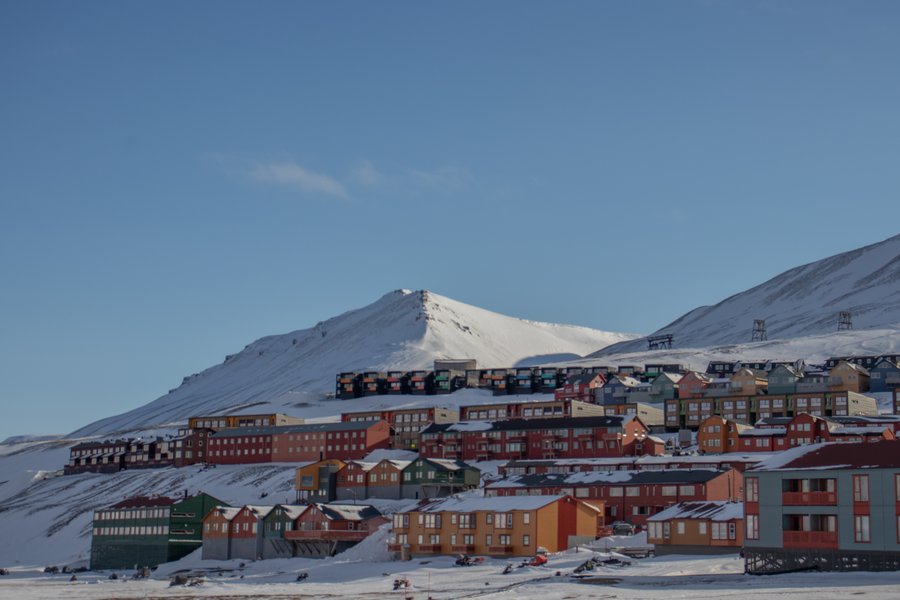
Fålun Strøm is deeply concerned about the homes in Longyearbyen that are built on stilts or the roads that have begun to shift and crack. (Credit: Larissa Thelin)
For Zoelly, changing weather patterns and clear climate change signals in the research he was supporting meant that research institutions across the world wanted more Arctic research to be conducted. While the funding increase is positive, the increased risk meant that his work became more dangerous. The rapidly changing terrain necessitated changes in safety routines as well as the need for developing better planning tools.
Even with these impacts, Zoelly urges people to visit Svalbard to see it for themselves because it is a “fantastic place with a lot of biodiversity, history, and amazing nature to discover and experience”. Perhaps then, we may be more inclined to help ensure its future.
Despite the challenges, both Fålun Strøm and Zoelly highlight the love that residents feel for Svalbard and the hope they hold for its future. According to Fålun Strøm, visitors, too, often find themselves captivated, and many continue to fall in love with the place.
“It’s the northernmost destination on Earth, it’s the epicenter of climate change, it’s a geopolitical hotspot. But it’s first and foremost, incredible nature and wildlife and a place where I feel at home.”
Fålun Strøm added that it can be both fun and meaningful to join organizations or communities dedicated to protecting our natural world—groups that recognize we are not separate from nature, but a part of it, and that caring for the Earth is ultimately caring for ourselves.
“It’s our legacy. We need to make sure that we have tried.”
Svalbard is certainly on its way to a more sustainable future, from very recently shifting away from coal to prioritizing the protection of large swaths of untouched land. But the weight of climate change mitigation certainly doesn’t sit on the shoulders of the less than 3000 people that call this tiny archipelago home. It sits on all of ours.