April 9, 2026
The future of Polar Bears becomes increasingly uncertain as Arctic sea ice disappears at an accelerating rate.
Decades of research and advocacy have made one thing clear—while well-meaning “quick fixes” may ease public anxiety and appear beneficial on the surface, they miss the larger issue at hand: climate change.
The Flaws of Artificial Feeding
Polar bears depend on seals as their main source of sustenance, and to hunt seals, they require sea ice.
There is a misconception that artificial food sources can provide the necessary nutrition to sustain these bears since sea ice loss is affecting their ability to hunt. What is often overlooked, however, is the logistics surrounding such an endeavour.
Sheriden Ploof, Assistant Curator of Marine Mammals at Point Defiance Zoo & Aquarium (Tacoma, Washington), is familiar with the logistics involved. Part of her job is to order the food for all the zoo’s marine mammals, including captive polar bears. She calculated the average annual cost of feeding a single polar bear to be approximately $10,000 USD, with the females costing slightly less and males possibly more, depending on age and size.
“Over the years, we've learned that these bears are designed to process fat and their bodies aren't designed to process lean meat,” said Ploof. She added that in the US, where seal hunting is prohibited, they have to find other sources of fat for the bears.
“We give them lard. They get really fatty fish. We also give them cod liver oil.”
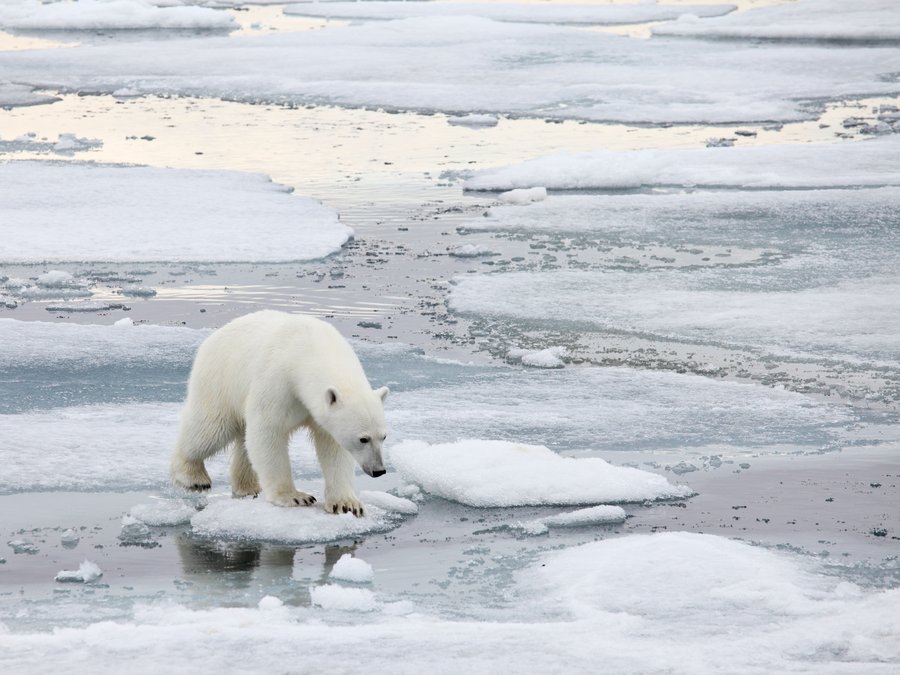
The average annual cost of feeding a single polar bear is approximately $10,000 USD. (Credit: Canva)
With the latest estimate of the global polar bear population at approximately 26,000, feeding all polar bears in the Arctic would cost USD 260 million annually. This also raises the issues of who would be responsible for paying the bill and whether such a logistically challenging feat is even possible.
Five countries comprise the Polar Bear Range States, and they are already struggling to achieve collaborative conservation goals. With accelerating climate change continually increasing the challenges of conservation, manually feeding polar bears is likely impossible.
Beyond costs and geopolitics, artificial feeding introduces additional issues. If polar bears no longer hunt for their own food, they may become entirely dependent on humans, potentially increasing human-bear conflict. Artificial feeding stations would also congregate large numbers in small areas, increasing the potential for disease spread.
Ploof emphasizes that polar bears aren’t the only species struggling with the impacts of climate change.
“We should feed everything then, because there are a lot of things in the same boat.”
The logistics of artificially feeding more than just a single species indefinitely just to keep them alive on this planet are simply too complex to comprehend.
The Trouble With Artificial Sea Ice
The idea of creating artificial sea ice is also often tossed around as a potential solution. If polar bears primarily need ice as a hunting platform, could they use any human-made platform to do so?
Ploof, who is also an Ambassador for Polar Bears International, a non-profit dedicated to the conservation of polar bears, often hears this suggestion and argues against it.
“You're assuming that the animals will use it how you think they're gonna use it,” she said. ” We have some plastic platforms in our Sea Lion exhibit. It's been there for years, and they don't use it at all.”
Wild polar bears, she said, would not have the instincts to use a human-made structure, regardless of how well it might be designed. Moreover, there are additional challenges.
“What’s really gonna last out in the ocean for an extended period of time?” Ploof asked. “Saltwater just breaks down everything.”
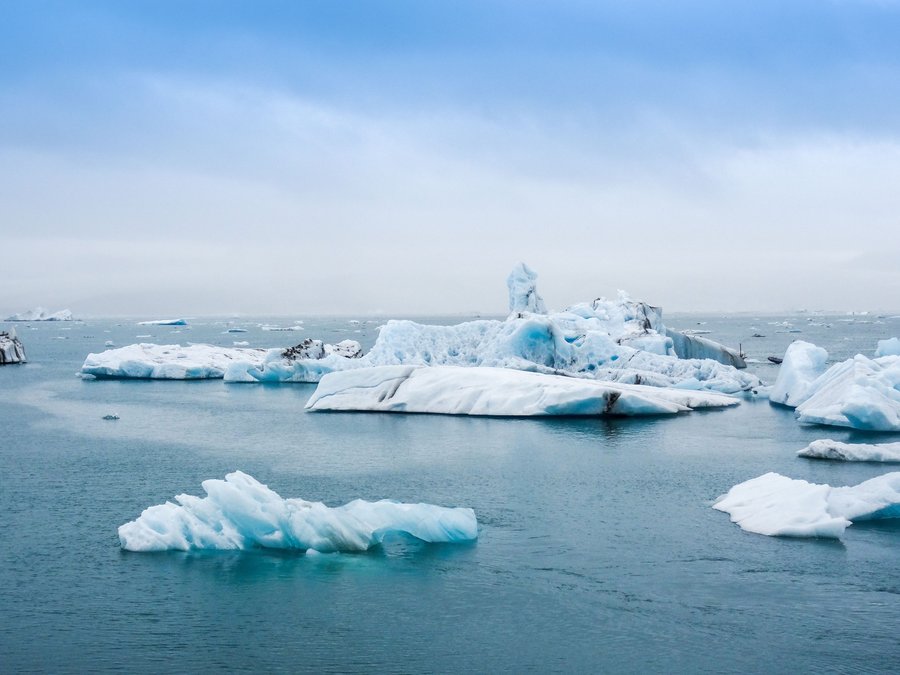
Wild polar bears would not have the instincts to use a human-made structure, regardless of how well it might be designed. (Credit: Canva)
According to Ploof, proposals for artificial hunting platforms also raise significant practical and ecological concerns. These structures would need to be anchored or stabilized in open water and maintained over time in a rapidly changing Arctic environment.
It is also unclear what would happen to the platforms in regions that experience ice-free seasons, as polar bears in many parts of the Arctic have already adapted to spending part of the year off the ice. When sea ice does form, it covers vast areas. Isolated platforms would neither replicate the scale of natural sea ice nor align with the bears’ existing seasonal patterns.
“That’s not how it works,” she said, adding that unless anchored, eventually, faux ice platforms will end up in the Great Pacific Garbage Patch, where all marine trash goes.
Ice also does much more than provide a habitat to animals. It helps keep Earth cool by reflecting solar radiation (much of which is absorbed by dark surfaces, including ocean water) and the associated heat back into space. Without this porous, floating surface, temperatures will skyrocket, and the entire Arctic marine ecosystem will cease to exist. An artificially constructed platform simply cannot fulfill the role that Arctic sea ice plays in our natural world.
The Fallacy of Northward Relocation
Models predict that sea ice in the most northerly portions of Canada and Greenland will persist the longest into the future – in other words, the more southerly a polar bear subpopulation, the more likely it will be the first to experience a complete loss of ice. Unfortunately, southern polar bears are unlikely to simply migrate north.
“We see everything from a bird's eye view; they don’t even know it's up there. They have no concept of moving [north] because they are so programmed to do the exact same thing over and over again.”
Forcing migration is also unlikely to work. Polar bear subpopulations have evolved behaviours closely tied to their specific ecoregions, making them far less interchangeable and thus far harder to relocate than assumed.
"If you take them up there, you're assuming that they're gonna know what to do,“ she said. “I'm not sure they would even survive up there, and then you're increasing the competition and disease.”
Aside from these ecological implications, the costs and logistics of transporting thousands of bears northward are also worth considering.
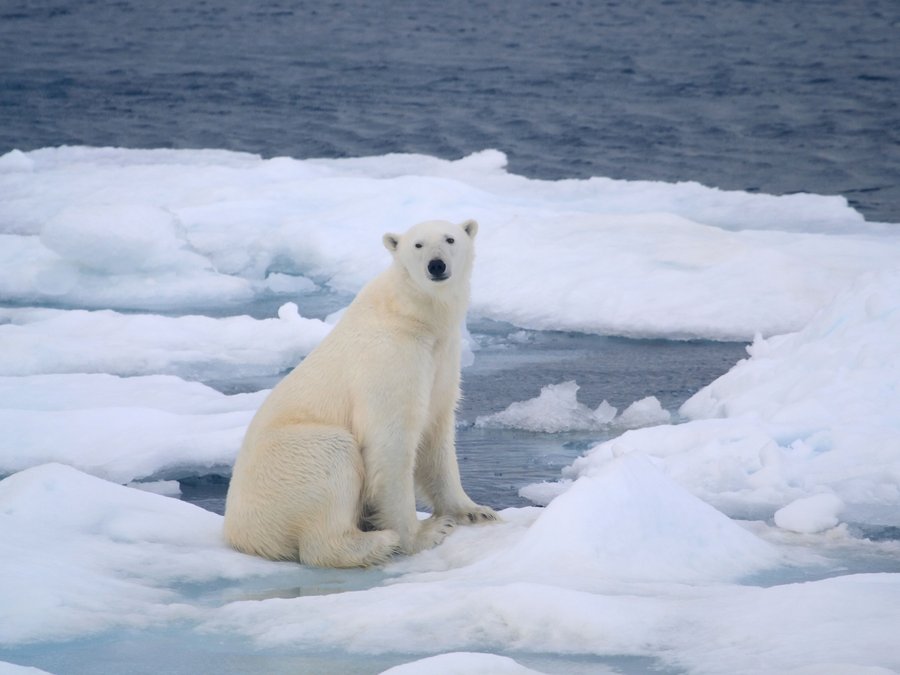
Polar bear subpopulations have evolved behaviours closely tied to their specific ecoregions, making them far less interchangeable and thus far harder to relocate than assumed. (Credit: Canva)
The Myth of an Antarctic Refuge
Another proposed quick fix that Ploof hears both in Churchill and during her keeper talks at the zoo is the suggestion to move polar bears to Antarctica. The logic, simple but flawed, is that if Arctic sea ice is melting, could we not just send them to the other cold end of the planet?
The reality is that such a move would create ecological upheaval rather than offer refuge. Some Antarctic penguins have no natural land-based predators and rely on shorelines and sea ice to escape marine predators such as leopard seals and orcas. Introducing polar bears would eliminate that safe haven entirely. If polar bears suddenly appeared there, penguins would have nowhere to hide.
While penguins lack the fat content required to sustain polar bears over the long term, the bears’ opportunistic nature means they would still prey on penguins, thereby quickly destabilizing penguin populations. As Ploof notes, any such food source would be short-lived, leaving both species worse off than before.
“I don't think there would be enough penguins for it to work. I think they would deplete the penguin population.”
There may also be other ecological implications that we lack the foresight to consider. Humans have attempted to manipulate natural systems, and these attempts often fail.
Compounding the issue is the fact that ice loss is not confined to the Arctic. Antarctica, too, is experiencing accelerating ice melt, meaning relocating polar bears would simply be transporting them to a new place with the same fate.
Addressing Climate Change Is The Only Solution
In the scientific community, these quick fixes are often referred to as “band-aid solutions.” They might alleviate some pressure, but they do not address the primary issue, climate change.
“Their food source is going away because the ice is going away,” said Ploof, noting that reality requires more than temporary fixes.
Climate change mitigation takes many forms, from national energy policy to local planning decisions and everyday choices.
Climate change mitigation takes many forms, from national energy policy to local planning decisions and everyday choices. (Credit: Canva)
At the national level, expanding renewable energy is central to curbing carbon emissions, though options vary by region. While some countries have the infrastructure to transition to solar and wind power, others may be further behind and are simply trying to shift from one source of carbon to another, albeit a cleaner one. The Intergovernmental Panel on Climate Change has identified large-scale market adoptions of global wind and solar adoption in recent years, reflecting a broader shift in energy systems despite continued emissions increases.
Cities also play a critical role. Municipal governments can also help limit cities’ carbon emissions by implementing smaller-scale strategies, such as prioritizing bike lanes in new road developments, creating walkable neighbourhoods, and planting native species in public spaces. Major cities, including Vancouver, Los Angeles, Rome, and Sydney, have linked such initiatives to lower emissions growth.
Individual action matters as well. Voting shapes climate policy by signalling public priorities to elected officials. Beyond the ballot box, people can reduce their own carbon footprint by reconsidering transportation choices, household energy use, and food consumption. Community involvement, whether through neighbourhood groups or school initiatives, can further amplify those efforts.
Ultimately, the survival of polar bears hinges on mitigating climate change itself—a massive feat, but ironically, far less expensive than focusing solely on quick fixes.
Focusing on band-aid solutions is not only ineffective, but also risks diverting resources from the one approach that can secure the species’ future. Even with unlimited funding and global coordination, humans could only manufacture an illusion of survival. The result would not be a thriving species, but one engineered to persist only through perpetual human intervention, and that is not survival at all.