October 15, 2026
Near the beginning of Sara Donnelly’s new book, Seagoing Women: At Work, a line seems at first to offer a simple thesis: “Always remember, the sea does not see gender, only skills.”
The words belong to Captain Tuba Akar, a master mariner and marine pilot who spent much of her career as the only woman in the room. Her message echoes throughout the experiences of the 33 women profiled in Donnelly’s book, many of whom have faced an industry where assumptions about their abilities have too often stood in the way of their careers. The sea may judge competence without regard for gender, but the institutions built around it have not always done the same.
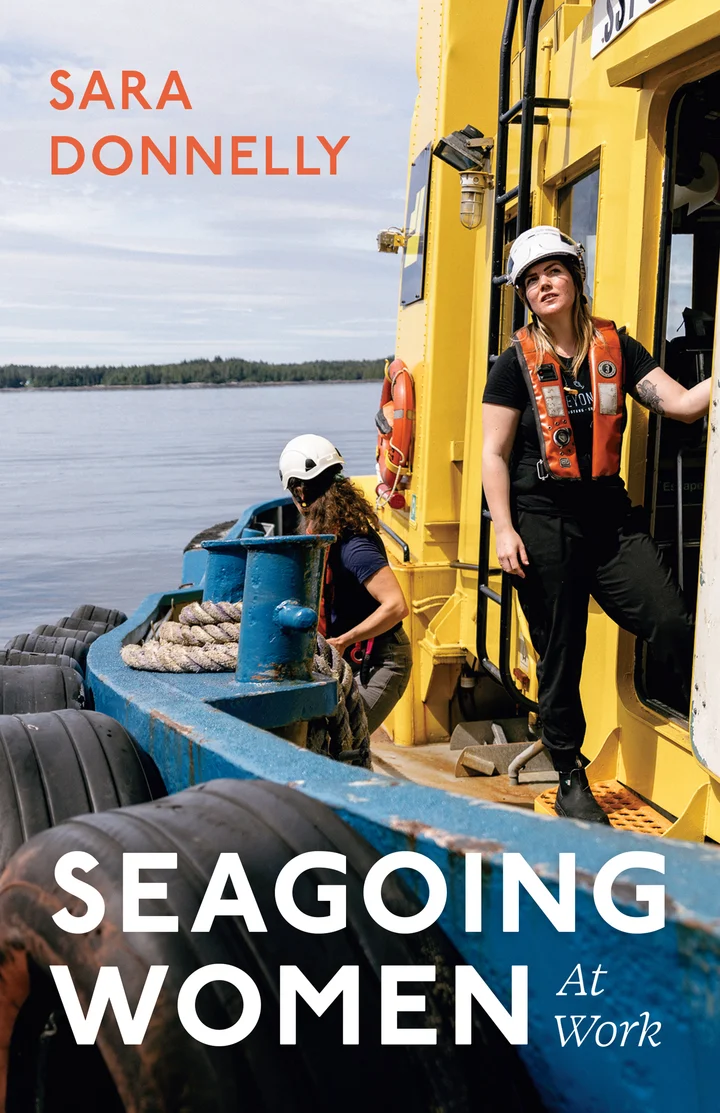
In Seagoing Women: At Work, journalist and mariner Sara Donnelly profiles 33 women whose careers reveal the skill, community and human connections behind life on the water.
Donnelly’s subjects span an extraordinary range of maritime work: captains and deckhands, commercial fishers and marine scientists, engineers, naval architects, artists, divers and kelp harvesters. Some were raised on boats. Others found their way to the water through second careers, chance encounters or opportunities they never expected to take.
Together, their stories offer something more interesting than a catalogue of women succeeding in a traditionally male industry. They reveal the web of people, skills and knowledge that makes working at sea possible in the first place.
Several women featured in the book work with the Arctic Research Foundation (ARF), including Captain Cheri Herbert, who captains the R/V Tiriarnaq, a former Coast Guard vessel that supports scientific and community-led research, and Dr. Kristina Brown and Teresa Heisler aboard the R/V Martin Bergmann. Their stories illuminate a part of Arctic research that can be easy to overlook: behind every sample collected, instrument deployed or dataset produced is a vessel and a crew of people who know how to get scientists safely to the places they want to study.
“I think talking with the women involved with the Arctic Research Foundation really did illuminate that for me,” Donnelly said. “The people involved in making this research possible, and the knowledge they bring to it, are a much bigger part of the story than we often recognize.”
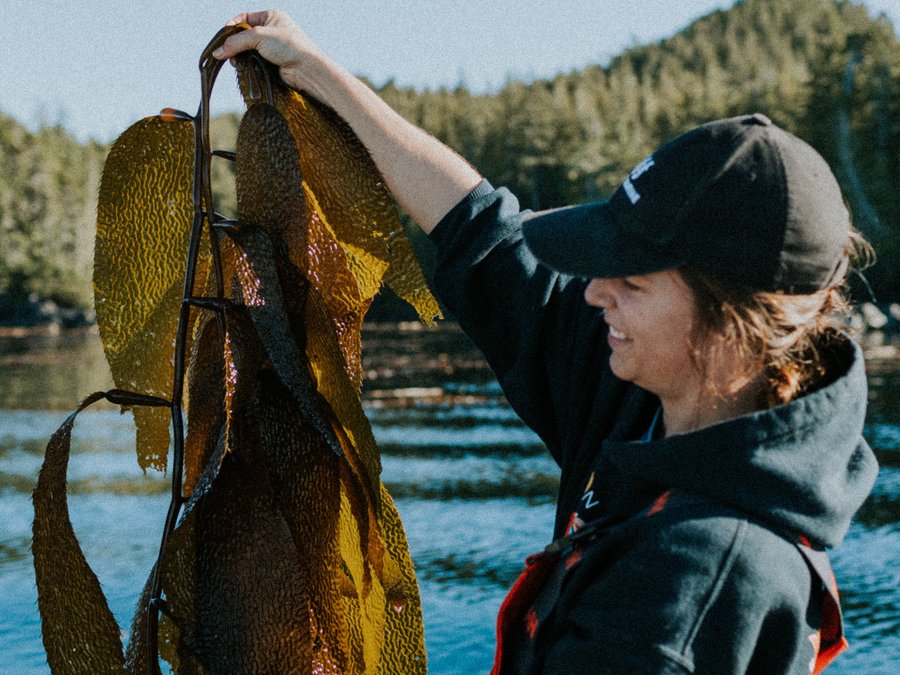
Photo of wild kelp harvester Shaelynne Bood. Donnelly’s subjects span an extraordinary range of maritime work: captains and deckhands, commercial fishers and marine scientists, engineers, naval architects, artists, divers and kelp harvesters.(Credit: Megan Rutledge)
The knowledge behind the science
Herbert has spent more than 25 years in the marine industry, working in everything from whale watching and fisheries research to vessel deliveries and marine training. That experience has shaped how she approaches life aboard a research vessel.
When scientists arrive, she establishes one rule immediately: “You’re not guests, you’re crew.” Everyone shares responsibility for the vessel and works together to make the expedition possible. While researchers carry out projects ranging from whale and bird surveys to water sampling, CTD casts, sediment grabs, and ROV deployments, the crew provides the vessel and seamanship that make this work possible.
The science may be the focus of an expedition, but success depends on much more than the research itself. Reaching remote waters, finding a safe anchorage, reading changing conditions, maintaining machinery and responding when something goes wrong all require specialized knowledge. Herbert and her crew bring that expertise to the expedition, making them essential to the research, even when their contributions happen behind the scenes.
“There is a tremendous amount of skill behind these jobs, but much of it is invisible to us,” Donnelly said.
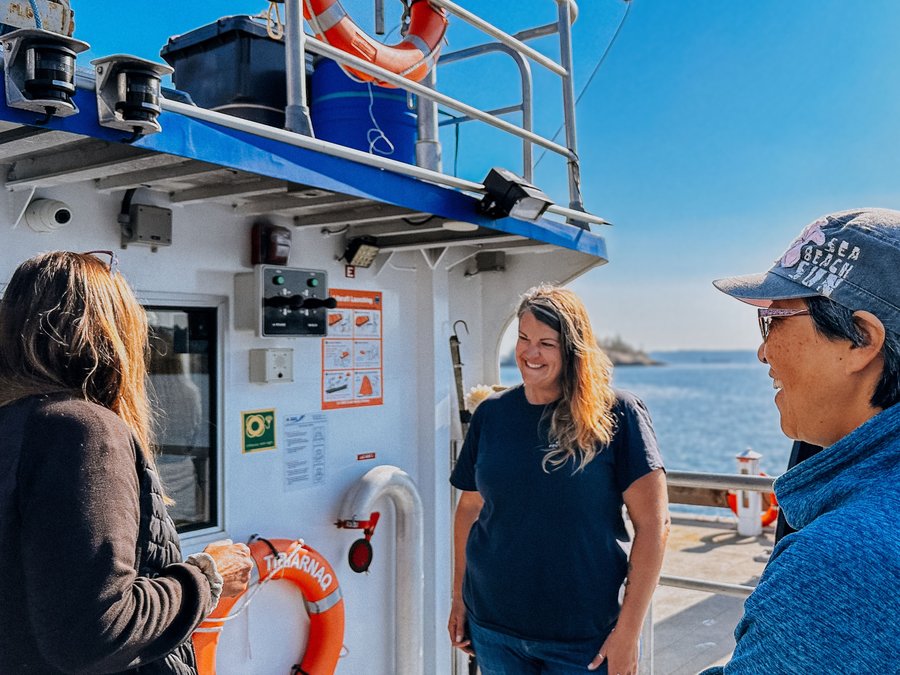
Captain Cheri Herbert aboard ARF's R/V Tiriarnaq. She has spent more than 25 years in the marine industry. (Credit: Cheri Herbert/Arctic Research Foundation)
In the Arctic, that expertise can contribute to scientific research in ways that are easy to overlook. Brown, a chemical oceanographer and Canada Research Chair at the University of Manitoba, has spent years conducting Arctic fieldwork, much of it aboard Martin Bergmann. In her profile, she describes regularly going to the wheelhouse to share observations with the vessel’s crew, many of whom are fishermen who have spent their lives on the water. They share what they have noticed about the ocean, weather and patterns around them, offering perspectives grounded in years of experience that complement her scientific observations.
Brown’s understanding of what constitutes expertise has also evolved through her relationships with northern communities and Elders. “I learn more while having a cup of coffee with an Elder in Gjoa Haven than I can from any instrument,” she said.
For Donnelly, this evolving way we think about science and what constitutes knowledge became one of the book's central ideas.
“There’s Indigenous knowledge, there’s scientific knowledge, there’s the knowledge that comes from lived experience,” she said. When you bring those different forms of expertise together, the result is so much stronger.”
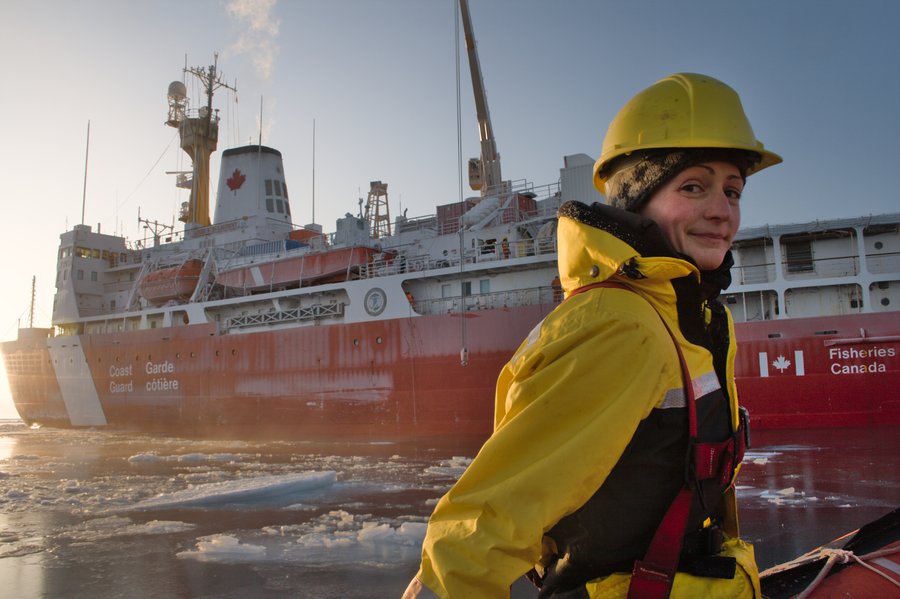
Oceanographer Dr. Kristina Brown is pictured in front of the CCGS Louis S. St-Laurent during the 2009 Joint Ocean Ice Study program in the Canada Basin, off the northern coast of Alaska. (Credit: Jeff Charters)
No straight course to the sea
Many of the women in the book arrived at careers on the water through very different routes. Donnelly knows something about unconventional career paths herself. She began as a journalist, worked search and rescue with the Canadian Coast Guard, fished commercially off Vancouver Island and later trained and worked aboard BC Ferries. That combination gave her what she jokingly calls a little “boat cred” when she began interviewing women for the book. She was not, as she puts it, “parachuting in as a journalist.”
Similarly, Heisler comes from generations of Nova Scotia boatbuilders but spent 20 years bartending before pursuing a career on the water. She now works on LNG escort tugs on Canada’s West Coast and has completed four seasons aboard Martin Bergmann, taking scientists into uncharted Arctic waters that are little known outside local communities.
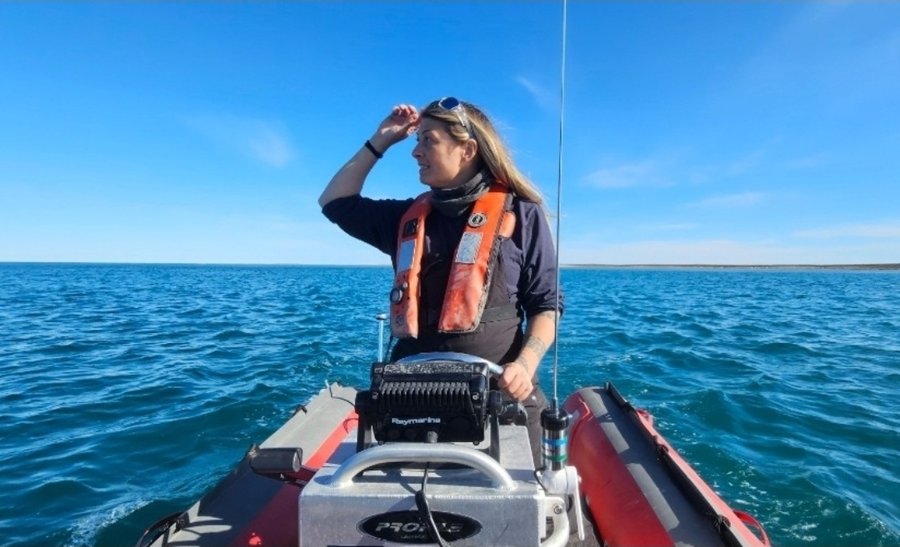
Teresa Heisler working with the Arctic Research Foundation in the Northwest Passage. (Credit: Teresa Heisler)
Others arrive through science, fishing families, the Coast Guard or entirely unexpected opportunities.
“Everyone I talk to, I ask how they got to where they are and what the twists and turns were along the way,” Donnelly said. “You have people with PhDs in biology, people with backgrounds in music, and all of these completely different paths that eventually brought them to working on the water.”
Perhaps that unpredictability is not incidental. Donnelly noted that the people who thrive at sea tend to be comfortable when the plan changes. They are problem solvers, adventurers and people who “thrive in chaos.”
Who gets to belong
Kate Armstrong recalls arriving for her first Coast Guard posting only to be greeted with, “Oh my God, you’re a girl!” The vessel had no accommodation for women, so the crew emptied a gun locker for her to sleep in. Decades later, Hebert is running Tiriarnaq with an all-woman crew.
In 2023, Captain Hailey McIntyre and Ocean Rutherford became the first all-woman tugboat crew in their company’s 70-year history, and are believed to have been the first in British Columbia. McIntyre says she has watched the industry become more inclusive across gender, age and race.
“It’s nice to know the cowboy days are behind us,” she said.
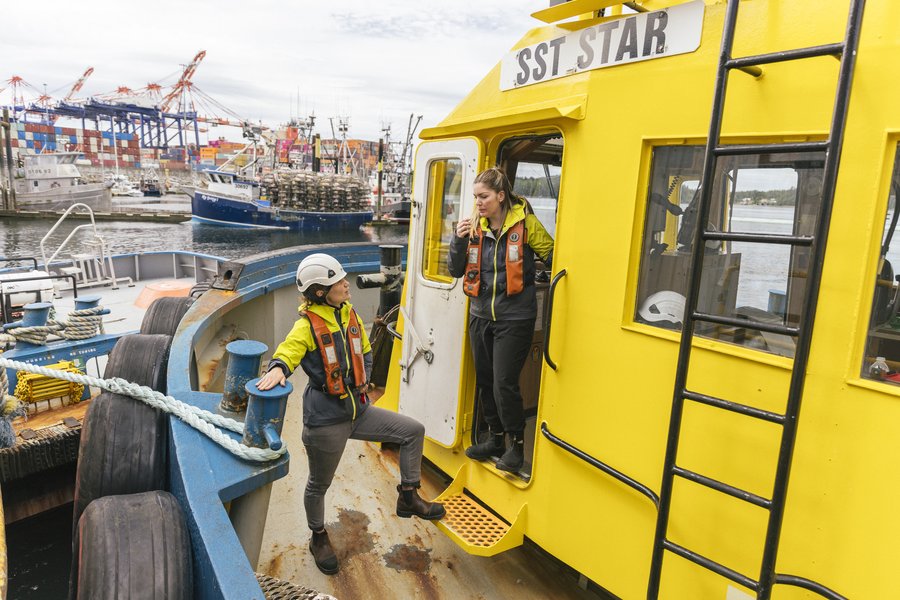
Ocean Rutherford (left) with Captain Hailey McIntyre (right), on board SAAM Towage’s SST Star in Prince Rupert Harbour. (Credit: Ronan Dunn)
Yet Donnelly found the generational story more nuanced than she expected. Some older women looked back primarily with pride rather than resentment. Mid-career women often spoke more explicitly about barriers. Many younger women described their challenges simply as the challenges of maritime work, rather than challenges of being women.
For Donnelly, the goal is not simply to get more women aboard vessels. It is to create an industry in which the people best suited to the work have the opportunity to prove it.
“If you make the industry a welcoming and tolerant place for everyone, you’re going to end up with the best people,” she said.
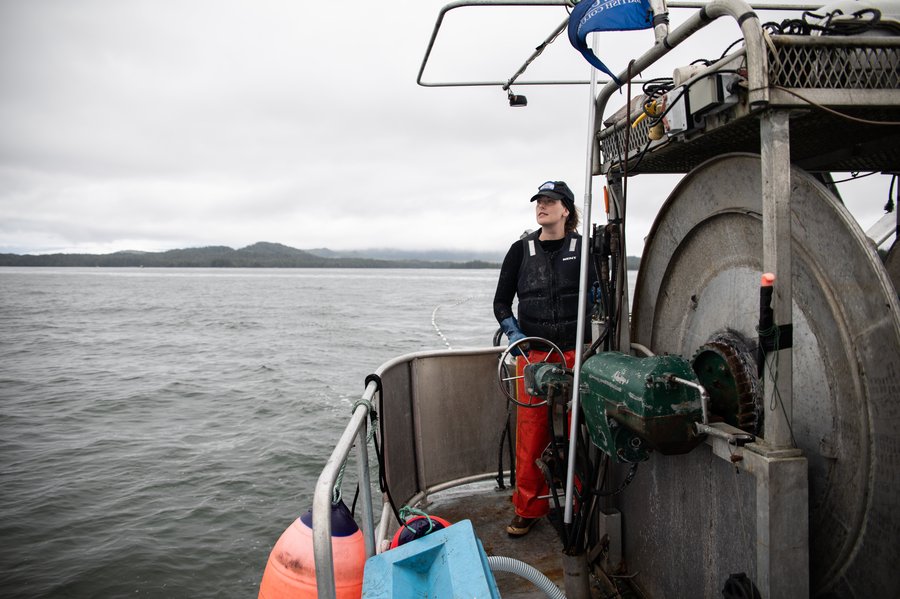
Fifth-generation Sointula fisher Cailyn Siider is pictured in the summer of 2025, gillnetting sockeye in Edye Passage, south of Prince Rupert, aboard the F/V Daniel D. (Credit: Chelsey Ellis)
Connection as a survival skill
For all the remarkable careers in Seagoing Women, the word Donnelly returns to most is neither resilience nor adventure. It is connection.
Working at sea can mean weeks or months away from home, confined spaces, and difficult conditions. Much of what mariners need to know—how to handle a vessel, repair a pump, read the weather or respond in an emergency—is learned through experience and passed from one person to another. “So much of it needs to be taught hands-on,” Donnelly said. “Because the stakes can be quite high, there are so many situations where you really need someone there who can teach you, mentor you and, importantly, believe in you.”
Almost everyone she interviewed wanted, in turn, to be that person for somebody else. Some even wanted their contact information included so aspiring mariners could reach them.
For all its challenges, life at sea offers something that keeps drawing people back. Donnelly acknowledged that the work is not for everyone. “But the people who love it really love it.” Part of that appeal is the proximity to the natural world. “You could see humpback whales and orcas in the same afternoon.”
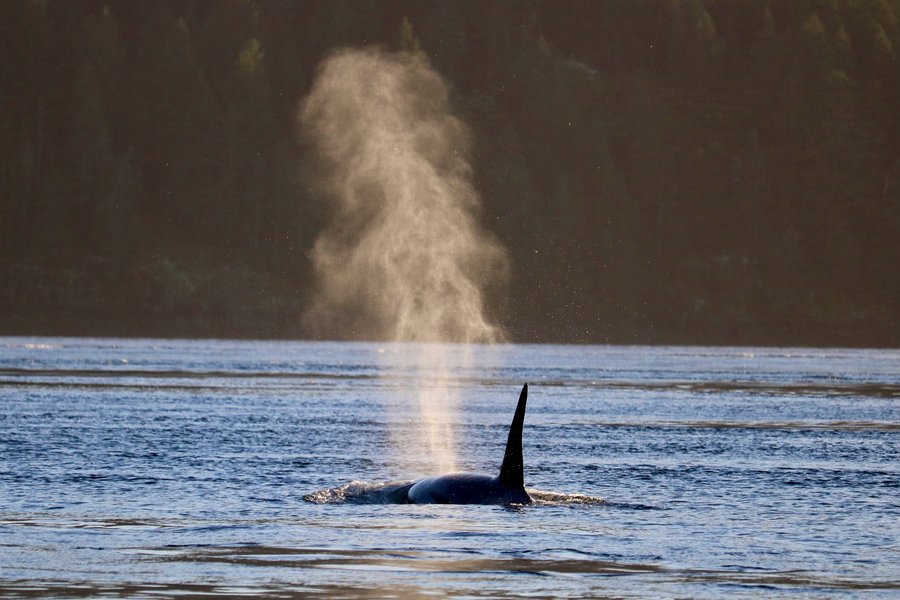
An orca’s colourful blow at sunset near Campbell River, B.C. (Credit: Connie Bell-Irving)
Donnelly originally planned to profile 32 women, one for each point on a compass. She ended with 33. Captain Helen-Anne Beans, a fourth-generation fish harvester from the 'Namgis First Nation who died in 2022, became the book’s “North Star.”
She hopes twenty years from now the barriers women once faced at sea will feel like history.
“I hope what feels dated is any sense that there are barriers standing in the way of someone who has the skills, the aptitude or simply the desire to give this work a try,” she said. “Ultimately, I hope what feels dated is the idea that there could be anything holding someone back from pursuing a career on the water.”
The sea, after all, has plenty of room for different routes.
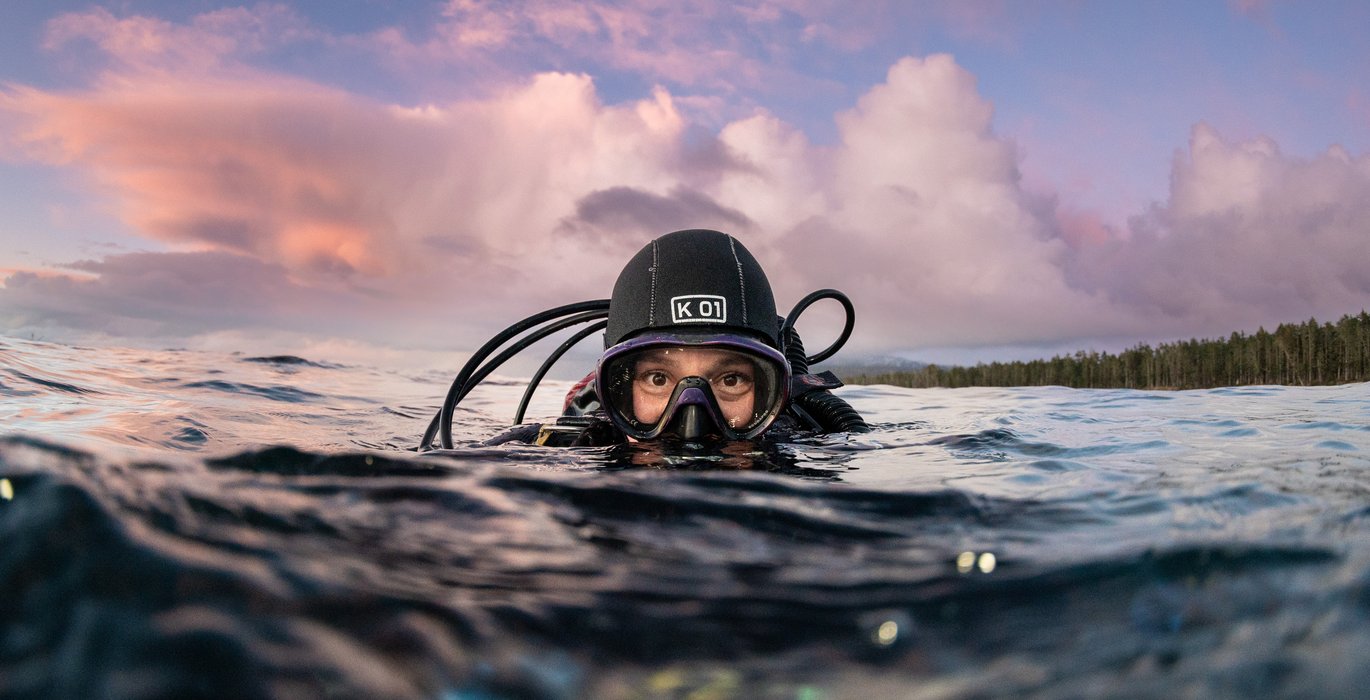
Banner image: Tiare Boyes north of Prince Rupert, near the Canada-Alaska border, working on the North Coast Pacific Herring survey. (Credit: Andrew McCurdy)